You want power. You want sound. But a factory muffler is usually a compromise that stifles both.
Exhaust gas systems are restrictive in their design. The gas has to navigate turns. It must punch through baffles. This resistance creates back pressure. High back pressure is not your friend. It directly reduces engine power. The engine pushes the exhaust gases out harder. Less work is done on the wheels.
There is a better way.
If you want to reduce this limitation, check out absorption dampers. The industry calls them glass pack mufflers. Some know them as cherry bombs. The name changes. The physics remains the same.
These units eliminate the need for complex internal baffling. They are based on simple geometry.
The Straight-Through Design
A standard muffler blocks the flow to reduce noise. The glass pack lets flow run wild.
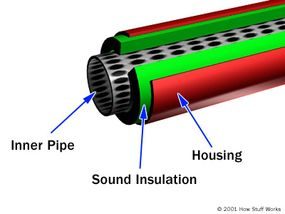
There is a perforated steel tube inside. The exhaust goes into this pipe. It goes through the middle. No U-turn. No sudden stops.
The inner tube is surrounded by a layer of fiberglass insulation. This is a “can” in a glass pack. Insulation serves two purposes.
First, it absorbs sound waves. Fiberglass dampens harsh frequencies. Second, it controls pressure pulses. The material disperses the shockwaves before they leave the exhaust pipe.
A steel enclosure surrounds the entire assembly. It holds the insulation in place. It protects the delicate fiber from heat and dirt.
Why it matters
The difference in flow is dramatic.
Since the path of the exhaust gas is relatively free, the back pressure drops significantly. Your engine will breathe easier. At high RPMs, this translates to noticeable power gains. Not massive gains. But enough to feel the difference.
This setting is popular for performance builds. It provides a deeper sound without the dampening effect of a standard muffler. It’s noisy. But it’s not as deafening as a straight pipe.
The trade-off is longevity. Fiberglass breaks down over time. Heat cycles break it down. Insulation can move. When it moves, the sound changes. Usually, it gets louder. Sometimes it sounds awful.
But for the driver who values comfort over comfort, the glass pack remains a classic choice.
“Exhaust gas flows directly through a pipe with holes in it.”
It’s a simple concept. Effective if you don’t mind replacing the insert every few years. The sound is aggressive. The power loss is minimal.
Is this worth the maintenance? For many enthusiasts, yes. For others, a straight-through core with replaceable packing material makes more sense. But the principle is the same. Reduce restrictions. More flow. Let the engine scream.
Performance and sound: a compromise
Of course, the back pressure is lower. It is the main attraction. Exhaust gases flow out faster, which can help the engine breathe better at high speeds. But here’s the catch. You won’t get the quiet ride you expect.
Traditional mufflers use baffles and packing to dampen noise. They absorb sound waves. Those aftermarket units? They are designed differently. They allow the sound to be released more freely. So while reaching performance potential, keep the volume up at the same time. This is a direct trade. Fewer restrictions means less silence.
This is not an flaw. It’s a feature. Enthusiasts often prefer a louder, more aggressive sound because it connects you to the engine’s work. If you want silence, stick with the stock setup. These mufflers are intended for those who want to hear the operation of the machine, even if it means a little more noise in the cabin.