You want every drop out of the pump. If you could get just 20 extra miles per tank of gas, you’d save three gas station trips a year. This is real money. But getting there is harder than it looks because your dashboard is lying to you.
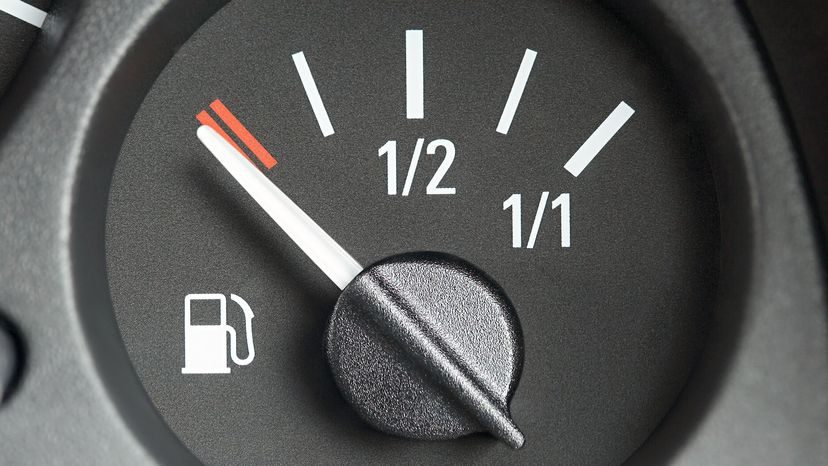
The fuel gauge is notoriously inaccurate. After pumping it stays full for the first 50 miles. Then it says “Empty” when there are still gallons in the tank. This behavior isn’t just bad design. It’s a combination of physics, plastic molding, and simple mechanical constraints. Once you understand how the fuel sensor and gauge actually work, it becomes clear why you can often drive past the “E” mark before running dry.
The Mechanics of the Float
The inaccuracy starts with the sending unit located in the fuel tank. It uses a foam float attached to a thin metal rod. The bar is connected to variable resistor. This device controls how much current flows back to the dash.
The current flows through the resistance strip. A wiper attached to the gauge slides along this strip. When the float is high, the wiper is close to the grounded end. Resistance is low. Electricity flows freely. The gauge looks full.
Fuel drops while driving. A float sinks. The wiper moves. Resistance is growing. The gauge reaches less current. The needle drops.
This mechanism creates the first big gap between reality and the dashboard. When the tank is full, the float is at its maximum height. But the float itself has thickness. It only starts lowering when the fuel level drops below the top of the float. The needle stays in the “Full” position as you burn several gallons. Think you’re emptying the tank. You aren’t.
The problem mirrors itself at the bottom. The float’s trajectory often does not extend to the bottom of the tank. The float reaches its physical limit when there is still fuel left. The needle drops below to empty. It stops moving. You have gas. You just don’t see it.
The Shape of the Tank
There is another culprit. Modern fuel tanks are not rectangular boxes. They are molded from plastic and shaped to fit around chassis parts, spare tires and exhaust systems. The internal volume is irregular.
When the float reaches the halfway mark, the tank may be 30% full. Or 70%. It all depends on the geometry of the shape. The linear movement of the float does not correlate linearly with the amount of fuel. This is why gauges usually jump or stop at certain places. The sender measures height. The driver needs volume. They are not the same.
How the needle moves
The gauge itself is a simple thermal device. The current from the sender flows through a heating coil wrapped around a bimetallic strip. This Strip consists of two different metals laminated together. Every metal expands at different rates when heated.
Electricity heats the strip. One metal expands more than the other. The strip bends. This bending process pulls a rod connected to the needle. More current. More heat. More bend. The needle moves towards full.
Less power. Less heat. The strip cools down. It straightens. The needle falls towards empty.
Some modern vehicles use a microprocessor instead. The computer reads the output of the resistor. It communicates with the dashboard display. These systems can take tank shape and temperature into account. They improve accuracy. However, the core problem remains: the gauge is an Estimator and not a precise measurement tool.
Testing Your Range
You can determine exactly how much fuel is left when the needle is empty. The total volume of the tank can be found in the owner’s manual. Fill the tank when the gauge shows empty. Note the gallons needed. Subtract this number from the total capacity. The difference is your buffer.
The fuel gauge serves as a warning, not as an accurate amount of count.
This buffer varies depending on the car. Some vehicles allow you to go 50 miles further than empty. Others die instantly. The difference depends on the calibration of the sender and the shape of the tank. Knowing the specific behavior of your car helps you plan better. It prevents you from panicking and driving to a station with a low battery and an dead engine.
The next time your needle is almost empty, think about a foam float. It’s still there. The gas is still there. You just need to understand the mechanics of lie.
Smarter sensors and calibration curves
A modern dashboard is no longer just a collection of analog dials. It is a digital interface. A microprocessor in the tank reads the variable resistor. This information is transmitted to a separate processor in the dashboard. Result? Accuracy.
Car manufacturers can optimize the movement of the meter. They compensate for unusual tank shapes. How? Using a calibration curve. This curve maps the physical position of the float to the actual amount of fuel. Irregular gas tanks no longer mess up the system. The needle stays honest.
These systems do more than just display numbers. They trigger a low fuel warning. Most lights come on when a few gallons are left. That’s enough buffer. You won’t get stuck on the highway.
Needle damping
Have you noticed that the fuel needle is late? It’s not broken. It’s software.
Fuel sloshes. Turns, hills and braking move fluid in the tank. Without intervention, the float would jump. The needle would bounce wildly. That’s distracting. That’s unreadable.
Instead, the microprocessor calculates a moving average. It smooths the data. The last several readings are weighted. The movement of the needle is gradual. You could fill up the tank. The pump turns off. The needle still hasn’t hit full.
This is intentional damping. It prevents false alarms. This keeps the meter readable.
Conservative approach
Fuel gauges are inexact instruments. They are not scientific instruments. These are approximations.
But they’re err on the side of caution. If the light comes on, there is still fuel left. When the needle is empty, you have some reserve. The system is designed to gently lie to you. It wants you to keep driving.
For more information about these systems, see the links on the next page.