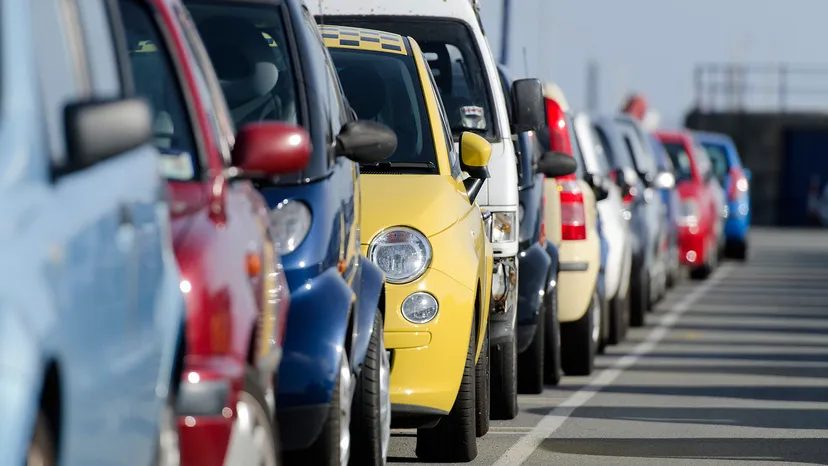
Parallel parking makes your palms sweat. You aren’t alone in that reaction. It’s a rite of passage for new drivers. A rite that is becoming increasingly irrelevant.
Michigan lawmakers are looking at removing the maneuver from the road test entirely. House Bill 4576 landed in the legislature on May 9. Republican Rep. Sarah Lightner sponsored the measure. She heard from constituents who were frustrated. They paid $50 for the test. They failed it on a skill they rarely use.
The bill text is blunt. It says the Secretary of State cannot require applicants to demonstrate proficiency in parallel parking. It removes the requirement from the driving skills test.
“The idea behind the bill is that the skills that underlie parallel parking are important and are taught throughout the driver’s ed process, but few Michigan drivers are typically in situations that require parallel parking.”
Lightner’s office explained the logic. You learn the mechanics in driver’s ed. Steering, spatial awareness, clutch control. But most drivers don’t parallel park daily. The feedback has been mixed. It started a conversation about what skills matter for safe operation.
This isn’t a new concept nationally. Maryland dropped the requirement in 2015. It was the most recent state to do so until now.
Other states already don’t require it.
– Alabama
– Arkansas
– California
– Colorado
– Florida
– Illinois
– Nebraska
– North Carolina
– Ohio
– Oregon
– South Dakota
– Tennessee
– Virginia
– Wyoming
That’s 16 states not requiring it as of May 2019, according to Rob Stumpf at The Drive.
Why did Maryland scrap it? The Motor Vehicle Administration called it redundant. The skills overlap with a reverse two-point turn. They wanted to speed up the test. They wanted to reduce retakes.
Critics raised flags. Older residents felt it was unfair. Younger drivers got an easier test. They didn’t have to earn the skill the same way.
Michigan faces similar pushback. The cost of the test is high. The failure rate for specific maneuvers is high. Is the skill necessary? Or is it just a hurdle?
The debate is back. And it’s loud.
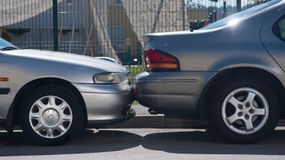

The Tech That’s Killing Parallel Parking
You can memorize the clutch-to-brake dance until you’re blue in the face. It doesn’t matter. If you never nail the actual maneuver, modern automotive tech steps in to save your bumper—and your sanity. Most drivers get away with it anyway. We live in an era of sprawling parking lots, garages, angled street spots, and valet services. But the real shift is under the hood.
Newer cars don’t just hope you’ll park well. They actively prevent you from failing.
Automakers market these systems under a dozen different names. “Advanced safety systems.” “Driver aids.” “Driver assistance.” The more expensive the badge, the more likely you’re looking at “semi-autonomous” or “self-parking” packages. It’s not magic. It’s just sensors talking to actuators.
AAA notes that these driver assistance features are becoming standard kit. We’re talking rearview cameras. Multi-angle lenses that show you exactly where your wheels are. Front and rear sensors that beep when you’re two feet from a concrete pillar. Side sensors that warn you if you’re kissing the curb. Some systems even scan the street to identify a spot wide enough for your specific wheelbase. Others? They just grab the wheel and steer the car in for you. The driver can assist. Or they can just watch.
Why States Are Dropping the Test
This tech didn’t appear in a vacuum. It’s directly influencing legislation.
In Michigan, where auto manufacturing is the economic backbone, state representative Lightner noted that parallel parking is “becoming an outdated practice.” But don’t get it twisted. Her office clarified for HowStuffWorks that removing the test doesn’t mean we’re abandoning skill. The bill wasn’t drafted because of parking assist systems. It just happened that these systems were part of the conversation.
The reality? States that have stopped testing parallel parking still require driver’s ed. You’ll still learn it. You’ll still do it. You’ll just fail the test less often because the test isn’t there.
But look at the trajectory. State lawmakers respond to constituents. Constituents get used to backup cameras. Then they get used to parking sensors. Then they get used to cars that steer themselves into tight spaces. Once that baseline is set, the resistance vanishes. It’s inevitable. The skill becomes obsolete not because it’s hard, but because the alternative is easier.
The Legislative Hurdle
Michigan is watching closely. The bill must pass both chambers. It needs the signature of Governor Gretchen Whitmer. If it passes, Michigan joins the growing list of states where you can get your license without demonstrating perfect geometric precision on a public street.
And let’s be clear. Even if the legislation didn’t start because of tech, the tech ensures the trend won’t stop. We are moving toward a world where the car manages its own real estate.
Where You Park Matters More Than How
The next disruption isn’t about steering. It’s about space.
Parking is a $30 billion industry in the US. The average American spends 17 hours a year just looking for a spot. That’s wasted time. That’s wasted fuel. Deloitte predicts the solution isn’t better drivers. It’s better management.
We’re heading toward airport-style space management. You know the type. You see a green light above a row of empty spots. A rental car lot uses this tech to move cars efficiently. Now, parking facilities will adopt it to cut down the search time.
The car still parks itself. But the city figures out where it goes. The skill set shrinks. The efficiency grows. And somewhere, a driving instructor is quietly packing up their cones.