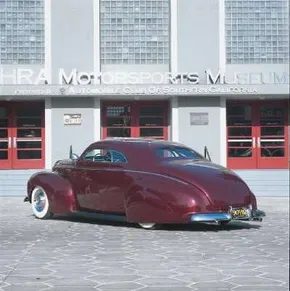
It survived for barely a year. That is the tragic irony of the Matranga Mercury. This 1940 Mercury wasn’t just another hot rod; it was one of the first true masterpieces forged by Sam and George Barris. It defined a generation of builders. Yet, its life as a finished show car was fleeting. Today, it remains a ghost story in custom car history, inspiring restorers and modifiers decades later.
The Build Begins in Compton
Work started at the Barris Kustom shop on Compton Avenue in 1949. The project didn’t move fast. Sam Barris spent over a year planning the modifications. The shop relocated twice during this period. Sam was methodical. He wasn’t just cutting metal; he was engineering a statement.
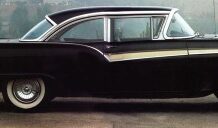
The headline feature was the roof chop. Sam shaved five inches from the front and seven from the rear. This wasn’t his first attempt at the technique. He had previously chopped the tops on Johnny Zaro’s and Al Andril’s 1940 Mercurys. By Matranga’s build, the operation was refined. It was no longer guesswork. It was science.
Mimicking Detroit’s Hardtop Revolution
Detroit was obsessed with hardtops in 1949. Buick, Cadillac, and Oldsmobile all launched pillarless hardtop styles that year. The public loved them. They looked sleek. They looked modern.
The Barrises and Matranga decided to adapt this Detroit trend to their custom project. They removed the center door posts entirely. In their place, they installed smoothly hand-curved 5/8-inch channel stock. The result was a seamless roofline. It looked like a factory design, but it was built from scratch in a garage in California.
The side-window trim followed the graceful arc of the chopped roof. This detail changed the character of the entire vehicle. It was a trick that would be copied by countless other customizers in the years that followed.
Unmodified Sheet Metal and Lucite Taillights
Nick Matranga had specific demands for the front end. He wanted the handsome factory sheet metal left untouched, except for one thing: dechroming. He stripped the brightwork. He wanted it to look mean, not flashy.
The bumpers told a different story. Both the front and rear units came from a 1946 Ford. The rear bumper guards were modified to house taillights made from transparent red Lucite. This was a clever workaround. It provided modern lighting without altering the original body lines.
Fenders were molded directly into the bodywork. A 1946 Ford rear splash pan was also integrated. Fender skirts were sourced from a 1941 Buick, then modified to fit the Mercury’s wider stance. The entire package was finished in a deep maroon lacquer. It was understated. It was sophisticated.
A Dazzling Interior
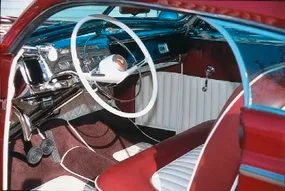
The interior matched the exterior’s high standards. Glen Houser’s Carson Top Shop handled the upholstery. They used white and deep red naugahyde with black carpeting. The contrast was sharp. It was bold.
The dashboard was fully chromed. Nick Matranga and his friend Jesse Lopez fabricated dash inserts from red plexiglass. The steering wheel was a swap from a 1950 Mercury. Every detail was chosen with precision.
“The custom side-window trim complemented the graceful arc of the chopped top and completely changed the character of the car.”
This car didn’t just sit in a showroom. It moved culture. It proved that you could take an old Ford product and make it look like the future. The Matranga Mercury was ahead of its time. It only existed in that perfect state for twelve months. After that, it faded into legend.
What happens to a design that defines an era? It gets copied. It
The car didn’t just sit in a garage. It racked up show trophies. It became a rolling billboard for Barris Kustom’s craftsmanship. Nick loved cruising in it. He noticed how the car pulled attention, particularly from women. It worked every time.
Then the military called. Nick shipped off to Korea.
With Nick gone, Matranga wasn’t sure what to do with the asset. He contacted Barris. The instruction was simple: sell the car.
The new owner was street racing on a rainy night in early 1952. Conditions were bad. Control was lost on some railroad tracks. The car hit a telephone pole. The owner survived. The Matranga Mercury was totaled.
Short life. Great design. Copies followed.
Many beautiful Matranga-inspired Mercurys exist today. Most builders agree on one thing. The most accurate clone came from the late Duncan Emmons.
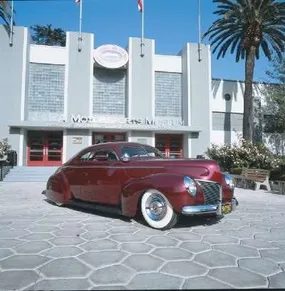
The car sits parked in front of the NHRA Motorsports Museum, a static testament to a dynamic past. But getting it back to that state took more than just wrenches. It took a village.
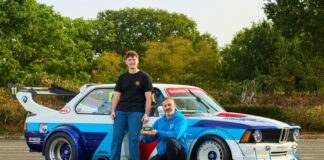
Duncan didn’t go it alone. He leaned on a roster of experts who knew the bones of these machines inside out. Bill Hines. Joe Reath. Eddie Martinez. Red Twist. Richard Graves. And his own son, Duncan Jr.
These weren’t just helpers. They were the architects of a re-creation. Each name carries weight in the hot rod world. Their input turned a project into a piece of custom history. Without them, the car would just be metal. With them, it’s a story.
Keeping the Legacy Alive
Restoring a custom isn’t about buying parts off a shelf. It’s about knowing where to look. It’s about trusting the people who’ve done it before.
- Bill Hines brought engineering precision.
- Joe Reath added stylistic flair.
- Eddie Martinez handled the mechanical grit.
- Red Twist contributed custom fabrication skills.
- Richard Graves offered historical context.
- Duncan Jr. ensured the family legacy stayed intact.
This wasn’t a solo job. It was a collaborative effort. A blend of skill and passion.
Why It Matters
You can buy a replica. But you can’t buy the history. The people involved in this project didn’t just build a car. They preserved a moment. A specific time when custom cars were more than transportation. They were art. They were rebellion. They were identity.
The NHRA Motorsports Museum displays more than just race cars. It displays culture. And this custom car? It fits right in.
Where to Dig Deeper
If you’re curious about how these projects come together, or just love the aesthetic, there’s more to explore.
- History of Hot Rods : Understand the roots.
- Custom Car Profiles : See other builds.
- Hot Rod Profiles : Focus on the performance side.
It’s not just about the car. It’s about the people. The hands. The minds. The history.
The museum walls hold stories. But the real story? It’s in the details. The welds. The paint. The choices.
And the crew that made it happen.
Still wondering who actually turned the wrenches? You’re looking at them. In the photo. In the names. In the legacy.
Where does a custom car end and a work of art begin? Maybe it doesn’t. Maybe that’s the point.