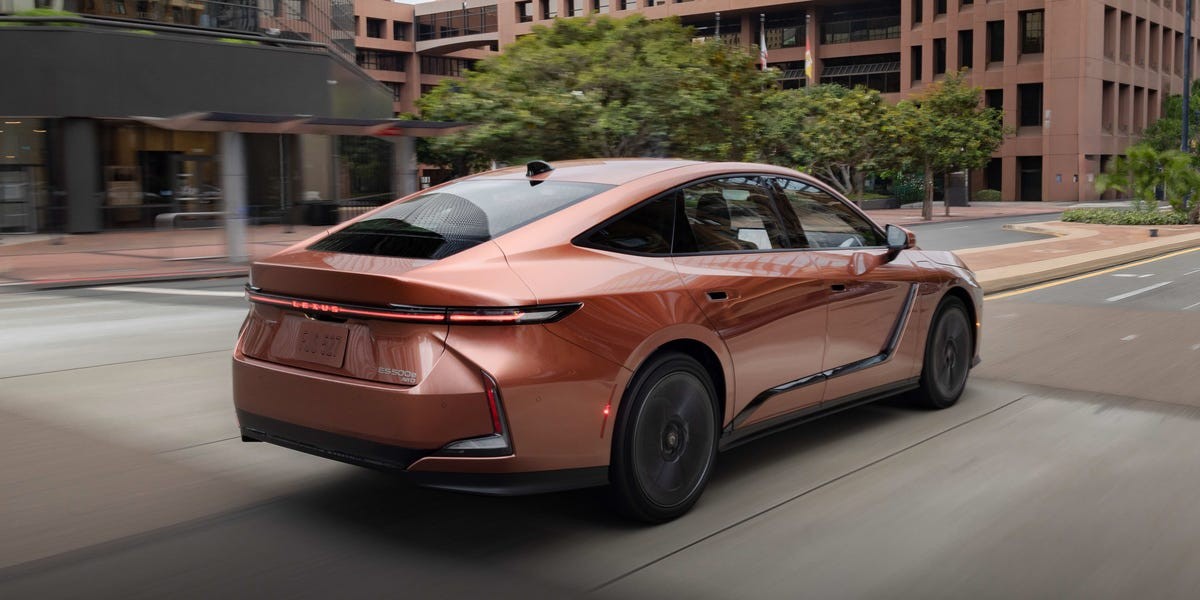
- Lexus drops two sedans on the market. The ES. The LS.
Forty years later only one remains standing.
The LS is dead. Literally. They’re bowing out with a 250-unit Heritage Edition run for 2026 and nothing more. The compact IS? Still around, but it’s a tired ghost of the third generation wearing its third face-lift. The brand is shrinking. Two sedans became one. And now that one nameplate has to carry the weight of the entire corporate ethos.
That pressure is why the eighth-generation ES matters so much.
It’s bigger. It’s bolder. And for the first time since this model existed three decades ago it is going electric.
You might not spot it from across the street.
Not What You Expect
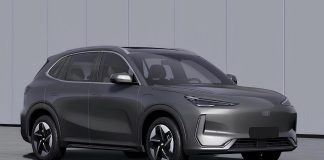
The front end is blunt. That signature spindle grille is there only in vague outline, a ghost of gas-guzzling pasts. The roof tapers gracefully back but the whole car sits higher. Much higher.
Sixteen point one four inches tall.
It is four and a half inches taller than the last model. It is actually taller than the UX which is sold as an SUV. That should tell you something about where Lexus thinks people want to sit.
Inside the dimensions stretch too. The wheelbase gained 3.1 inches.
Rear seat space? Suddenly ample.
They even offer an Executive rear-seat package for the front-wheel-drive Luxury trim. Get this: a passenger-side ottoman. Power adjustments. Heating and ventilation for both outer seats. It sounds absurd on a sedan.
Lexus anticipates you will hate the regen braking jerkiness that ruins so many Uber rides.
They added a special drive mode just for these luxury setups. It smoothes things out.
Does it feel right? Yes.
Numbers and Nuances
Performance isn’t the headline here. Why? It is a Lexus.
The front-wheel-drive ES350E pushes out 224 hp.
The all-wheel-drive ES500E gives you 338 hp.
Neither feels particularly quick by 2024 standards.
The twin-motor 500E might hit 60 in 4.8 seconds? Maybe faster?
We estimate that.
The power delivery doesn’t shove you back into your headrest. Good.
There are five levels of regen braking but no one-pedal driving.
Lexus says drivers should control the stop.
We agree. Mostly.
But mass is physics.
The ES500E feels hefty in the corners. A loaded curb weight sits near 5,000 pounds. That is a ton. The hybrid model weighed a thousand pounds less. You feel that extra weight as bounce over bumps. Yet the cabin remains impressively quiet. It swallows noise like a vacuum.
Technology is a ladder Toyota is still climbing.
The Battery Problem
There is only one battery size. 67 kWh.
For a car this size? That is small. Tiny even.
The ES350E with smaller wheels gets up to 307 miles of range.
The ES500E drops to 272.
Charging speed caps at 150 kW DC fast charging.
Those numbers are not competitive against the leaders right now. Toyota still has work to do on the electrical side of things. It shows.
Is that enough?
Worth It?
Here is the thing they will not tell you until you ask: the price is surprisingly good.
The ES350E starts at $48,896.
That is a Tesla Model 3 price tag. But you get a bigger cabin.
Luxurious interior materials. Plenty of standard features that others charge for.
It feels upscale. Polished.
Add the Executive package and you climb past $60k.
The beefy ES500E sits between $51,996 and $60,226 depending on trim.
Does it beat the competition in tech specs? No.
Range? Marginal.
Acceleration? Meh.
But it feels like a luxury sedan should. Quiet. Compliant. Slightly detached from the chaos outside.
Will people forget this isn’t the flagship?