
Most stock cars aren’t built for the track. They’re built for the commute. But if you’re the type who hears a flat four-cylinder and feels a pang of sadness, you aren’t alone. You want more noise. You want more thrust. The problem is that factory engines are tuned for reliability and emissions, not raw excitement.
To get there, you have to understand the basic physics. An engine breathes. Piston drops. Vacuum forms. Air rushes in at atmospheric pressure. Fuel mixes with that air. Spark plug fires. Boom. Kinetic energy. That’s horsepower.
The limit isn’t the fuel. It’s the air. You can dump more fuel into a stock intake, but if there’s no oxygen to burn it, you just get a flooded engine and a lot of wasted money. The only way to make more power is to force more air into the cylinder. More air means you can pack in more fuel. More fuel means a bigger explosion. Bigger explosion means faster car.
Here are five ways to hack that intake system and wake up your ride.
5: Superchargers
If you want instant torque that hits you in the chest, look at a supercharger. Unlike a turbo, which uses exhaust gases to spin a turbine, a supercharger is mechanically driven. It’s belt-driven off the crankshaft.
This setup spins the supercharger impeller at insane speeds—often exceeding 50,000 RPM. That’s faster than the engine itself. It pressurizes the intake air well above atmospheric levels. Compressed air is denser. Denser air means more oxygen molecules per cubic inch.
More oxygen lets you inject more fuel into the combustion chamber without running lean. The result is a significantly larger explosion. A properly installed supercharger can boost horsepower by nearly 50 percent. It’s the difference between a grocery getter and a street-legal missile.
Installation is surprisingly accessible. You can bolt it to the top or side of your engine block. Follow the manufacturer’s diagram. It’s a true DIY project if you have the tools and the patience. Just remember: adding forced induction changes the stress profile on your drivetrain. And yes, this will likely void your factory warranty.
“Attaching a supercharger to a normal-sized car will immediately make it behave like a much larger, more powerful vehicle.”
4: Air Filters
Before you spend hundreds on forced induction, check the intake tract. Stock air boxes are designed to be quiet and efficient for the factory tune, not for airflow. They often feature restrictive pleated filters and long, twisting intake tubes.
Upgrading to a high-flow air filter is the cheapest horsepower you’ll ever buy. You’re swapping out a paper element for one made of oiled cotton gauze or synthetic mesh. These materials allow more air to pass through with less restriction.
More air entering the engine helps the combustion process. It doesn’t add power on its own in a complex way, but it supports other mods. If you’re already upgrading your exhaust or tuning your ECU, a restrictive air filter becomes the bottleneck. Clear it out.
The sound change is immediate. You’ll hear the engine breathing deeper. That’s the sound of less restriction. It’s subtle compared to a supercharger, but it’s real. And it costs a fraction of the price.
Be careful with “high-flow” filters from unknown brands. Some sacrifice filtration quality for airflow. That means
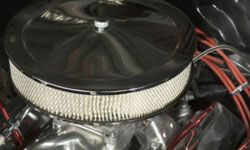
Why Stock Filters Hold You Back
Factory paper filters are designed to last, not to perform. They clog. They restrict flow. Aftermarket alternatives fix that by using a cotton gauze or foam media sandwiched between protective wire mesh. This setup doesn’t just block grit and debris; it opens up the intake path.
The result is cleaner combustion. You get better air/fuel ratio efficiency because the engine isn’t starved for oxygen. Installation is trivial. Most drop right into the existing air box without modifications. And because they’re fabric-based, they aren’t single-use trash. You can wash them, apply fresh oil, and reuse them for thousands of miles. It’s the cheapest performance upgrade you’ll ever buy.
The Logic Behind Cold Air Intakes
Density matters. Cold air is denser than hot air. Denser air packs more oxygen molecules into each cubic inch. More oxygen means a more aggressive, complete burn inside the combustion chamber. That translates to power.
Stock intakes often pull air from the engine bay. That air is already heated by the radiator and exhaust components. A cold air intake kit reroutes the inlet to a cooler zone, usually near the fender or bumper. The theory is sound: cooler charge = denser charge = more horsepower.
But there’s a catch. Unless you know how to route piping correctly and seal every joint to prevent unmetered air leaks, this job is a trap for amateurs. One gap in the intake path and the ECU leans out the mixture to protect the engine. You lose power instead of gaining it.
When to Call a Pro
Replacing the entire intake assembly involves removing resonators, heat shields, and sometimes modifying brackets. If you strip a bolt or crack a plastic hose during DIY, you’re looking at a tow truck and a steep bill. For a cold air intake kit, professional installation is rarely an upsell. It’s often a requirement for the warranty to remain valid.
2: Performance Chips

The Silicon Shortcut
Modern cars are essentially computers on wheels. An onboard brain regulates everything from ignition timing to the air-fuel ratio, keeping your anti-lock brakes happy and your exhaust clean. But what if you don’t like the factory settings? That’s where performance chips, or superchips, come in. Think of them as hardware hacks. They override the default programming to prioritize power over efficiency.
Installation is surprisingly straightforward for DIYers. You locate the factory module, pop it out, and plug in the new chip. It’s the automotive equivalent of swapping a hard drive in a desktop PC. But if you want real speed, you might need to look at physical changes.
1: Weight Reduction
Lighter cars move faster. It’s basic physics. The heavier the mass, the more energy it takes to get it rolling. This method is low-tech but labor-intensive. You’re swapping heavy components for lighter alternatives across the entire vehicle, not just the engine bay.
Start with the easy wins. If you never carry more than one passenger, remove the rear seats. Replace glass windows with polycarbonate or acrylic. It sounds radical, but it saves pounds. You can even strip parts of the dashboard. Disc brakes also offer a significant weight advantage over traditional drum systems.
Lightweight wheels help too. Strung-out tires and rims made from lighter alloys reduce unsprung weight, allowing the suspension to react faster and the car to cut through the air with less resistance.
Engine Modifications FAQ
What is the cheapest way to increase horsepower?
A cold air intake is the most affordable entry point. You’re looking at costs starting around $40, though prices vary by manufacturer and features.
What modifications increase horsepower?
Superchargers, air filters, cold air intakes, performance chips, and weight reduction are the main levers you can pull.
What causes poor engine performance?
Clogs, old spark plugs, wrong octane fuel, or a weak battery can all throttle your engine’s output.
How do you increase horsepower?
You need more efficient combustion. That means modifying the engine to ingest more air and fuel simultaneously.
How much horsepower can a cold air intake add?
Expect a gain of five to twenty horsepower, depending on the setup.