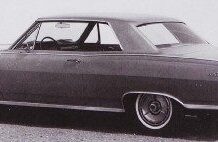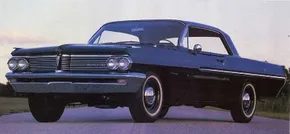
The 421 cubic-inch V-8 is the engine that defines Pontiac’s Super Duty legacy. It was brutal. It was fast. It was the definitive proof that a factory-built muscle car could dominate the street and the track alike.
This wasn’t a standard assembly line job. These engines were hand-built in a special tool room. They debuted in late 1961 as race-only powerplants. Pontiac wouldn’t release official horsepower numbers. The estimates, however, ranged from 373 to 405 bhp. That made them the largest displacement engines available at the time. They didn’t just compete. They sparked the cubic-inch war in Detroit.
The Rules Changed Everything
NHRA regulations for the 1962 season forced a pivot. Stock class rules now required engines and body parts to be production pieces. Pontiac couldn’t keep the 421 hidden in the race shop. It had to appear on the official equipment sheet.
It became an expensive, limited-run option. Fewer than 180 units were produced in 1962. This was the peak year for the Super Duty 421. Most found their way into Pontiac Catalinas. A small batch, roughly 16 engines, went into the new Grand Prix.
“These were the largest-displacement mills offered at the time, and they helped spark Detroit’s cubic-inch war.”
Why the 421 Matters Today
Enthusiasts still hunt for these cars. The rarity adds value. But the performance is what draws the eye. This isn’t just history. It’s a lesson in how rules can shape engineering.
Pontiac took a race engine and made it street-legal. The result was a monster. The Grand Prix got a slice of that power. The Catalina got the lion’s share. Both benefited from the engineering marvel.
The 421 wasn’t just big. It was efficient. It was raw. It was Pontiac at its most aggressive.
The Legacy of Hand-Built Power
Fewer than 180 units. That’s all there is. Each one a unique piece of Detroit history. The Grand Prix owners got something special too. Those cars are rare. Even rarer than the Catalinas.
The race roots show in the build quality. Hand-built meant attention to detail. Every bolt. Every port. Every piston. It mattered.
Today, these engines are sought after. Not just for the numbers. For the story. The war they started. The rules they forced. The power they delivered.
It’s more than a car. It’s a statement.
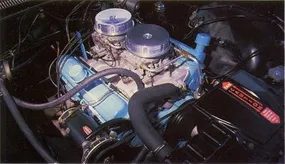
The Real Power Behind the ’62 Super Duty 421
Ford didn’t just bluff with the Super Duty label. The factory brochure claimed 405 bhp. That was the polite number. The reality was closer to 460. It sat there, waiting to be unleashed.
These weren’t just street-legal engines. They were race-ready machines disguised for daily driving. Under the hood, you found four-bolt main bearings. Forged connecting rods held everything together. A forged crankshaft spun the show. Solid lifters kept the valvetrain tight. NASCAR-style cylinder heads breathed like a champion.
The difference between the track and the street showed in the carburetors. Stock-car versions ran a single four-barrel. But the street/strip Super Duty 421s? They had twin Carter 500-cfm four-barrels. An aluminum intake manifold fed them.
Exhaust flow mattered. Free-flow cast-iron headers were standard. They featured easily removable exhaust dumps. Pull the pins. Let the noise out.
Transmission choice was strict. Only three- and four-speed manuals were offered. Pontiac’s automatic transmission couldn’t handle the torque. It would have shattered under the pressure. If you wanted power, you shifted with your hands.
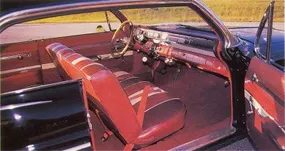
The GTO wasn’t just fast. It was stripped down to survive a drag race.
Pontiac leaned into this aggressive posture by bolting on heavy-duty Super Duty options. The goal was simple. Shed weight. Keep the car rigid. The body clips up front went aluminum. The frame underneath got modified. It wasn’t the famous drilled “Swiss Cheese” frame that would appear in 1963, but it was a start. These tweaks alone saved about 110 pounds.
That’s significant in a muscle car.
The factory didn’t stop there. They fitted aluminum exhaust manifolds. Another 40 pounds off the scales. But there was a catch. A big one.
These headers were intended only for quarter-mile competition.
Pontiac warned that if you subjected them to more heat, they would melt. You couldn’t just drive them. You couldn’t even tow a boat with them. They were for the strip and nothing else. Push past the quarter-mile mark and the heat buildup became a fatal flaw. It was a calculated risk. Trade longevity for a faster time.
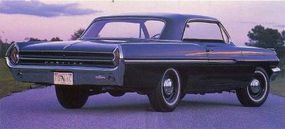
The Raw Reality of the 1962 Pontiac Catalina Super Duty 421
The street was a different place in 1962. Pontiac didn’t just build cars; they built weapons disguised as family sedans. The Super Duty 421 Catalina wasn’t for commuters. It was for people who wanted to humiliate their neighbors and break records on empty drag strips.
This wasn’t a special-order gimmick. It was a regular-production muscle car that could dip into the 13-second range at speeds over 100 mph. Those numbers were superior to almost anything else coming off the assembly lines of Detroit at the time. If you wanted to know why Pontiac ignited the classic muscle car era with a stroke of marketing genius, this car is the answer.
How the Super Duty 421 Was Built
Pontiac took their big-block V-8 and stripped it for speed. They didn’t care about comfort. They cared about downforce and horsepower. The result was a machine that weighed less than you’d expect for an engine that size.
Here is exactly what you got when you ordered this specific configuration.
1962 Pontiac Catalina Super Duty 421 Specifications
Wheelbase: 120.0 inches
Weight: 3,575 lbs
Production Numbers: 172 units built
Base Price: $5,100
The rarity factor is why these cars are so sought after. Only 172 were made. That scarcity adds to the legend.
Under the Hood: Standard Engine Specs
The heart of the beast was an overhead valve V-8. It displaced 421 cubic inches. That’s huge for 1962.
Displacement: 421 cid
Fuel System: Dual 4-barrel carburetors
Compression Ratio: 11.0:1
Horsepower: 405 hp @ 5,600 rpm
Torque: 425 lb-ft @ 4,400 rpm
Dual carburetors meant better airflow. Better airflow meant more power. The compression ratio of 11.0:1 was aggressive. It required high-octane fuel. If you skimped on gas, the engine would knock itself apart.
Real-World Performance Numbers
Specs on paper are one thing. Hitting a quarter-mile strip is another. The Super Duty 421 didn’t just run; it dominated.
0-60 mph: 5.4 seconds
1/4 Mile Time: 13.9 seconds
1/4 Mile Trap Speed: 107.0 mph
Five-point-four seconds to sixty. That’s sports car territory for a car that looked like a sedan. The 13.9-second quarter-mile at 107 mph was serious business. It proved that mass-produced American cars could compete with purpose-built racers.
Why This Car Matters Today
The 1962 Pontiac Catalina Super Duty 421 defined a generation of enthusiasts. It showed that muscle wasn’t just about looks. It was about engineering. It was about taking a standard platform and adding enough power to make it dangerous.
If you are looking into buying a 2007 muscle car, or any other vintage ride, understanding these origins helps. You aren’t just buying metal. You’re buying history.
The culture these cars created still exists. Read How Muscle Cars Work to get the full picture. The engine is what gives a muscle car its flamboy