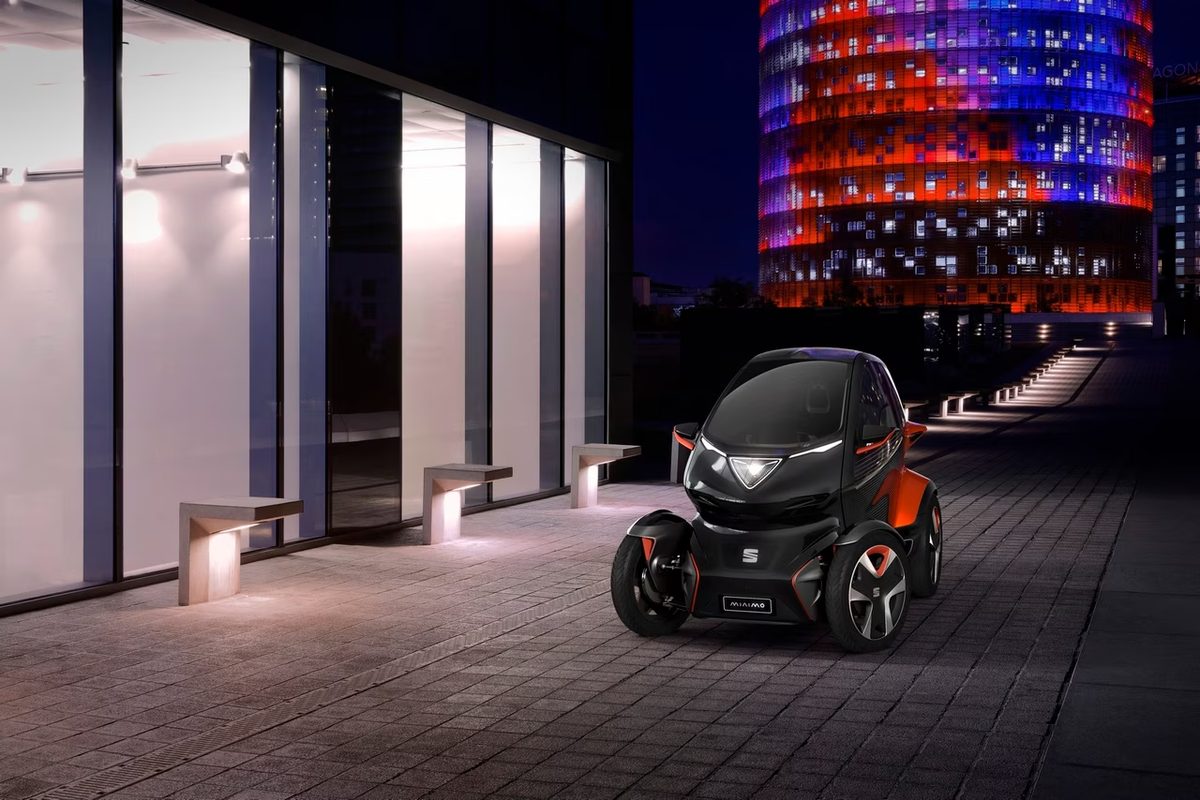
If you liked the quirky utility of the Renault Twizy, the Spanish automaker Seat has a new contender in the ring. Unveiled at the Mobile World Congress, the Seat Minimó is a concept car designed specifically for micromobility. It aims to bridge a gap that has always felt uncomfortable in city centers. You get the perceived safety and comfort of a car without the parking nightmare of a traditional vehicle.
Like its French predecessor, it seats two passengers in a tandem configuration. But the similarities end there. The Seat Minimó features a more sophisticated design language. It boasts two real gull-wing doors and a higher ride height intended to mimic the driving position of an SUV. This isn’t just a toy. It is a serious proposal for urban car-sharing services.
Why the Seat Minimó matters for city drivers
The dimensions tell the real story. The vehicle is only 2.5 meters long and 1.24 meters wide. It occupies a footprint of just 3.1 square meters. Compare that to the roughly 7.2 square meters a standard car requires. The goal is simple. Enable parking in spaces currently designated for motorcycles.
Seat has designed this for high-density urban environments. The concept anticipates a future where traffic is restricted and mobility is handled by a few key operators rather than private ownership. To support this, the Seat Minimó utilizes a removable battery system.
The goal is to allow for quick battery swaps rather than long charging waits. This is essential for fleet efficiency in shared mobility models.
How the Seat Minimó adapts to its driver
The vehicle’s intelligence goes beyond simple navigation. It can actually recognize the age of the driver based on their license. If the driver is 16, the top speed is capped at 45 km/h. If they are 18 or older, it unlocks a maximum of 90 km/h. This adds a layer of regulatory compliance that is crucial for insurance and urban traffic laws.
Under the hood of the tech stack, the car is equipped with 5G connectivity. It is configured for level 4 autonomous driving. That means the vehicle can handle an entire journey without human input under certain conditions. Inside, integration with Android Auto allows drivers to use the Google Assistant for voice-controlled media and system management.
Currently, Seat is testing the Seat Minimó on the streets of Barcelona. They are collecting real-world data to refine safety protocols and user experience. As for when you might be able to buy one? No release date has been announced. The city streets are still the testing ground.