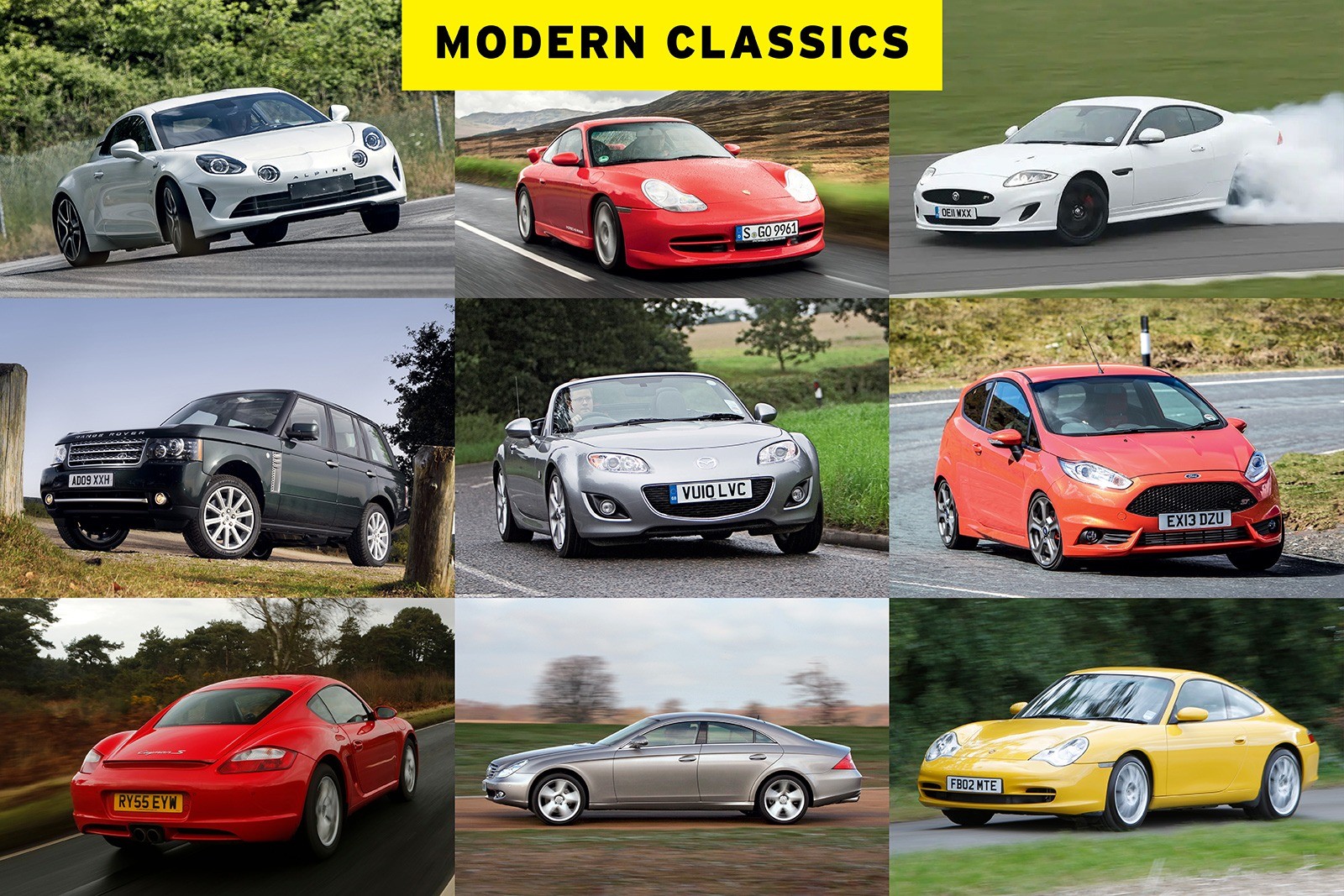
The phrase ‘modern classic’ feels like a trick. A linguistic cop-out. To the outsider, a car from twenty years ago is just… traffic. Another beige box waiting at the lights.
But if Penguin Books can slap that label on a novel without losing credibility, why not cars?
Back in the day, the word ‘classic’ belonged to blokes in cardigans driving MGBs to jumbles. The shiny new mag writers? They stayed away. They didn’t want to be accused of lacking edge. Meanwhile, the vintage car press kept things strictly pre-1970s, terrified their readership might sneer at something fresh enough for a McDonald’s parking lot.
Times change. Speed cameras don’t. Electric cars are encroaching. Clean Air Zones are biting.
Everyone ends up in the middle anyway. The modern classic. It’s the only place left to stand.
So, what is one?
Age is messy. Intentions matter more.
Ed Callow over at Collecting Cars puts it plainly. Modern classics are the democratised side of collecting. Not a billionaire’s museum piece. He says we’re mostly looking at the 80s, the 90s, early 00s. The period when car design got real but wasn’t yet ruined by computers.
For this list? We’re ignoring the past century. Post-2000 only.
Mercedes-Benz CLS (2003-2011)
Price: £2,500 – £10,000
A four-door coupe. Is it an oxymoron? Absolutely. And yet, here it sits.
When the CLS first launched, it looked alien. Sleek. Mean. Built on the E-Class bones but wearing a face that said “do not approach.” It kept the Mercedes quality—the leather, the hush—but stripped the bloat.
“I think at their core, modern Classics are the ‘democratised’ part of the collector Car market.” — Ed Callow
It drove like a proper car too. Rear-wheel drive. A seven-speed auto that actually tried to keep up. You got adaptive cruise, climate control, and air suspension if you paid extra. Inside, it felt expensive. Outside, it looked dangerous.
Now? It’s cheap. Dangerously so.
Which is good. Which is also risky. You’re looking for bargains, yes, but you’re also buying mechanical headaches. The early petrol engines? Balancer shaft issues. Some owners won’t even touch them. Diesel owners have to worry about inlet port shut-off motors failing. The gearbox speed sensors are twitchy.
Do you see it yet? Or are you already checking the MOT history?
Porsche Cayman (2005-2009)
Price: £7,500 – £30,000
The 987 Cayman is a cult object. A flat-six engine in a box with four wheels and no doors to ruin the balance.
It makes sense. Literally. The engine is right in the middle of you. Low center of gravity. When you turn, the car turns. In a 911, the engine hangs behind the driver like a pendulum waiting to kill you. The Cayman lets you push.
There is a manual gearbox. A six-speed box that clicks. It is pure, analog joy. The pedals are heavy enough to matter. The steering has weight. It feels like machinery. Not a laptop on springs.
Then there is the PDK auto.
It’s fast. Faster than you, probably. Shifts in milliseconds. But you have to fight with tiny buttons on the wheel just to use it properly. Why struggle when you could just row through gears?
Most people do. That’s the point of the auto, sure. But it changes the relationship. You’re a passenger in performance mode.
Is it better? Depends if you want to feel the car or just get there quickly.