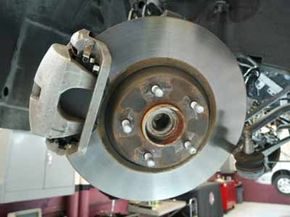
Brake shims are thin layers of rubber or metal that sit between the brake pads and rotors. They correct small imperfections that cause noise. Think of them like shims in cabinetry. If the kitchen floor of an old house is a little crooked, the installer adds thin wooden pieces to level out the cabinets. Brake shims do the same thing for your braking system. They adjust otherwise normal brakes.
At their most basic level, shims act as anti-rattle pads in many new vehicles. They keep pads and rotors from banging against each other or squealing. Some brake part kits come with shims already attached to the brake pads. Others include separate shims with adhesive backings that you stick to the back of the pads. Some shims have to be bought separately and attached with double-sided tape.
In any case, brake shims are easy to use and install. They can make a big difference in how the brake parts work together. Most are made from rubber. But you can upgrade to something like titanium brake shims. Let’s look at these as an option for a brake shim upgrade.
How Titanium Compares to Standard Rubber
Why would anyone switch from the standard rubber shims that come in the box? Rubber is soft. It absorbs vibration. But it can compress, tear, or fail over time, especially under high heat. Titanium is different. It is rigid. It does not compress. It handles heat far better.
When you install titanium brake shims, you are changing the mechanical interface between the pad and the rotor. The material itself can alter the way the pads vibrate. For some drivers, that means less high-pitched squeal. For others, it might change the noise profile entirely. The goal is to reduce unwanted sound while maintaining consistent braking performance.

Motorcycle Brake Shims: Why Heat Management Matters More on Two Wheels
On a motorcycle, the margin for error shrinks fast. When you slam the brakes into a curve, the temperature spike isn’t just an inconvenience. It’s a safety hazard. If the friction material boils the hydraulic fluid, you don’t get a spongy pedal; you get a sudden loss of stopping distance.
This is why titanium brake shims matter for two-wheelers. They act as thermal barriers. The goal is simple: stop the heat from the friction material from bleeding into the rest of the caliper assembly.
“Titanium brake shims work like heat shields to prevent the heat of the braking effort from affecting the other brake parts.”
How Titanium Shims Differ from Rubber
You might be used to seeing rubber shims on street cars. Those often just stick on with adhesive tape. Their main job is dampening noise and vibration. Titanium shims are different animals.
They are typically made from a titanium alloy, a compromise that keeps costs manageable while retaining the material’s high heat resistance. Pure titanium gets pricey, but the alloy holds up under the thermal load.
Installation is mechanical, not sticky. Most motorcycle titanium shims feature holes at the top. They thread directly onto the caliper pins. This rigid connection ensures the shim stays put under heavy braking forces, unlike a glued-on rubber piece which might shift or degrade.
Why Keep the Caliper Cool?
It comes down to longevity and consistency.
- Extended component life: Cooler calipers mean less thermal stress on pistons and seals.
- Reduced fluid maintenance: If the fluid doesn’t reach its boiling point, you aren’t fighting vapor lock or fluid degradation.
- Consistent bite: When the caliper stays cool, the friction coefficient remains stable.
For a motorcycle, this is critical. The weight-to-power ratio is aggressive. A rider needs predictable braking behavior every single time they pull in, not just on the first three stops.
Do Motorcycle Brake Shims Improve Safety?
The short answer is yes. But it’s not about “upgrading power.” It’s about protecting the system that limits your speed.
When the caliper body gets too hot, the entire assembly expands slightly. This can alter pad clearance and affect how evenly the pads bite. Titanium shims interrupt that heat transfer path. They keep the caliper structure cool, preserving the geometric integrity of the brake assembly.
Think of it this way: you can have the most aggressive brake pads in the world, but if the caliper is acting like a heat sink, you’re just managing temperature, not generating stopping force. Titanium shims let the system do what it’s designed to do.
It’s a small part. But in high-performance or track-focused riding, that small part keeps the big stuff from falling apart.

How motorcycle brake shims fix wheel alignment and braking inconsistencies
Think of a brake shim as a thin, strategic wedge. It sits between the caliper bracket and the rotor. Yes, it manages heat transfer and kills that high-pitched squeal. But there is a mechanical function that gets overlooked. Alignment.
If your wheel is off-center, the caliper won’t sit square to the rotor. A shim inserted into the gap physically nudges the assembly into position. It brings the wheel to true without machining or guessing.
Why rubber shims dominate motorcycle applications
You will rarely see titanium shims on a street bike. Motorcycle engines and braking systems simply do not generate the sustained thermal loads of a racecar. That heat delta dictates the material choice.
Most motorcycle brake shims are stick-on rubber compounds. They are soft, dampening materials.
- Vibration damping: The rubber absorbs micro-vibrations from the contact patch.
- Noise reduction: It muffles the high-frequency resonance that causes brake squeal.
- Piston protection: It acts as a thermal barrier, keeping heat away from the caliper pistons.
This material choice improves ride comfort. Your hands stop feeling the road through the brake lever. The pistons stay cooler, which preserves seal integrity and hydraulic performance.
Maximizing friction surface contact for stopping power
The shim also acts as a tensioning agent. It snugs the caliper assembly, forcing the pad’s friction surface flat against the rotor.
Flat contact equals more contact area. More contact area equals higher friction coefficient utilization. If the pad is canted or uneven, you are only using a fraction of the material’s potential stopping force. The shim ensures the entire pad face engages the rotor evenly.
The often-overlooked role in wear and safety
A shim is a small part. It is often underestimated. But its impact on longevity is tangible.
Without proper alignment, brake pads wear unevenly. The leading edge wears faster than the trailing edge. Rotors develop heat spots. The shim corrects the geometry. It distributes the wear load.
“The humble brake shim serves a simple purpose, but its assistance in wheel alignment and bettering maximum braking power is important.”
This consistency protects the rotor. It protects the pads. It keeps the braking system predictable. For the rider, that predictability is the difference between a confident stop and a panic input. The ride feels smoother because the mechanical inputs are cleaner.
Which brake components interact with the shim?
Understanding the shim requires looking at the whole assembly.
- Backing Plates: These sit on the back of the pads. They manage heat differently than front shims.
- Brake Pads: The friction element. Their material composition interacts with the shim’s thermal properties.
- Calipers: The housing that holds everything. The shim adjusts how this housing sits on the mounting points.
If you are upgrading your brakes, the shim is the tuning component. It is not just a spacer. It is a performance adjustment tool.
Check your current setup. Are your pads wearing evenly? Is your wheel centered? If the answer is no, the shim might be the missing variable. It is cheap, it is easy to install, and it solves a mechanical problem that usually costs more to fix.