Why The New Renault Master Feels Like A Different Species Of Van
It has been 15 years since Renault last updated the Master.
A long time.
In auto terms, an eternity.
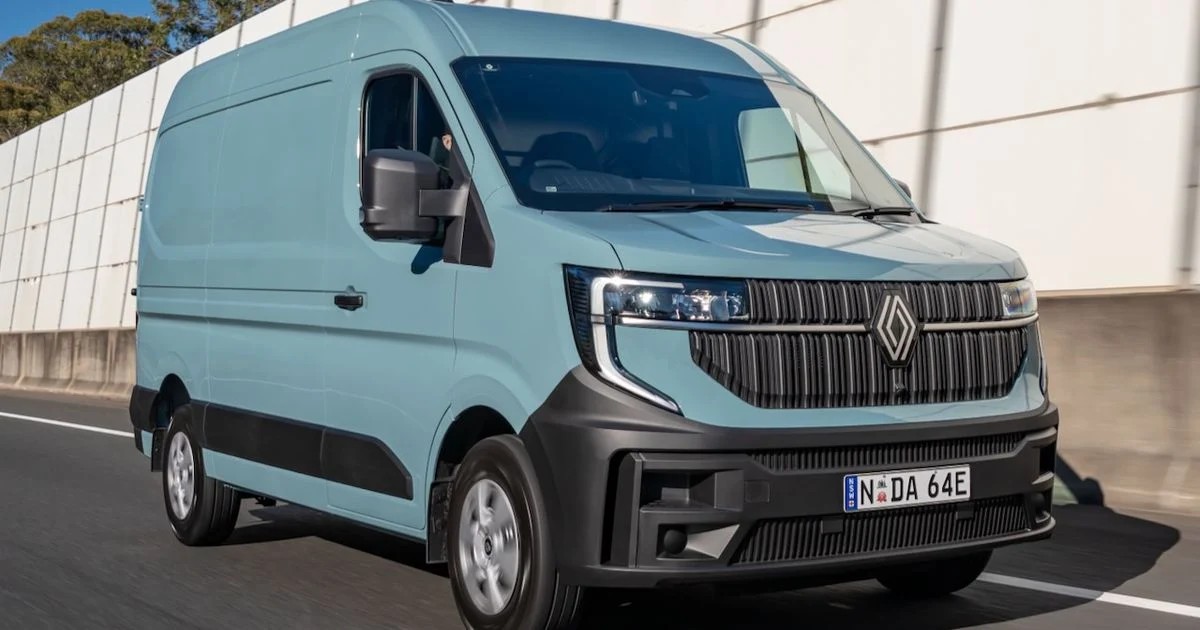
But when the 2024 model finally touched Australian shores in 2025 (ready for the 2026 market year), the silence broke. The fourth-generation Master is here, and it does not look like a utility vehicle trying hard to be a car. It looks like a truck that gave up on being aggressive and decided to be smart instead.
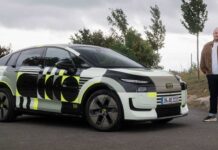
The front end echoes the brand’s European prime movers. Sleek C-shaped daytime running lights cut through the fog.
Clean lines. No fluff.
And for the first time Down Under, Renault is offering electric powertrains.
Note: The diesel versions are what we drove. The electric E-Tech won’t hit Aussie shores until Q1 2027. But the diesel variants are already on the street, and they are changing the game.
How Much Does The Renault Master Actually Cost?
Price sensitivity is real in the trade world.
Everyone wants value without the compromise.
The new Master starts at $55,990 before on-roads for a mid-wheelbase (MWB) with a manual gearbox.
Automated? That’s $59,990.
If you want the full diesel spec, top it out at $65,990 plus ORCs. The electric variant, when it arrives, sits between $77,990 and $79,990.
Let that sink in.
This makes the Renault arguably the best value in its segment. The only cheaper option is the LDV Deliver 9 (starting $51,569), and even the Volkswagen Crafter starts higher at $59,999 drive-away. The Mercedes-Benz Sprinter? That’s a completely different bank balance.
So why buy the Renault Master over cheaper options?
Better refinement. Better tech. Better driving dynamics.
You aren’t paying for badness anymore.
What Is Inside The 2026 Renault Cab?
Step inside.
It feels like a spaceship that forgot the gimmicks.
Renault listened to traders. Really listened.
They didn’t try to turn the interior into a MacBook interface. There are physical knobs. Lots of them.
The 10-inch infot touchscreen runs the OpenR Link OS. Fast. Snappy. Wireless Apple CarPlay works flawlessly. You get physical volume buttons above the screen—a rare mercy in modern automotive design.
But digital radio (DAB+)? Missing. Connected services? Also missing for the diesel models.
Is this a problem?
Probably not.
Tradies want to listen to Triple M while eating a sausage roll, not fiddle with satellite telemetry. The lack of DAB+ is an oversight, sure. But the rest of the interior holds its own against the “bare bones” reputation of light commercial vehicles.
The plastics are hard. Hardy.
Not cheap. Not hollow. They don’t scream “disposable.”
Seating And Ergonomics
The driver’s seat is the tricky part.
The upright posture feels… vertical.
A bit too straight.
The center console is massive, housing only the inner cupholder, which crowds your left knee.
Did you find a better spot for the coffee?
The outboard cupholders double as grab handles. Clever idea.
Useless execution.
If you have coffee in there, you can’t use it as a handle. If you are climbing in, you need the handle. You cannot have both. Plus, it is low.
You find yourself reaching for the A-pillar handle that simply doesn’t exist.
The storage, however, is stellar.
The Business Pack includes a laptop desk on the back of the passenger seat. Endless cubbies. Hidden holes. It’s designed for people who work.
Rear View Tech
There is a traditional mirror.
Or, if you load the van full, you can spec a digital rear-view camera system that deletes the window and shows you a live feed on the screen. A reversing camera comes standard either way.
The steel cargo barrier helps reduce that annoying hollow boom when the doors are open at highway speeds.
How The Powertrain And Performance Compare To Competitors
Three flavors of power.
Diesel with manual.
Diesel with auto.
Electric (waiting in wings).
Diesel Specs
The heart of the current Australian range is the 2.0-liter turbo-diesel.
Four cylinders.
125kW. 380Nm.
Euro 6 compliant.
We loaded the back with 750kg and drove around.
Fuel consumption?
7.8L/1010km.
Compare that to a Mazda CX-3, a compact crossover.
Same thirst. Different mission.
For a van weighing 4 tons? That is decent. Not class-leading, but acceptable.
The big winner here is the gearbox.
Gone is the robotic AMT of the previous gen—the “single-clutch slug.”
In comes a nine-speed torque-converter automatic.
It is not as silky as a ZF 8HP, but it is a massive upgrade.
It finds the right cog. It stays in the right cog.
At low speeds? A revelation. No second-guessing a robotic clutch during a three-point turn in a tight car park.
Electric Potential
The Master E-Tech waits for 2027.
One front-axle motor. 105kW. 300Nm.
Battery size: 87kWh.
WLTP range: 409km.
Payload drops significantly.
Diesel payload: 1811kg to 1923kg.
Electric payload: 1084kg to 1164kg.
It is a trade-off.
Range vs. Lift.
You know the dance.
Why The Driving Dynamics Change The Conversation
Large vans can feel like driving a tin can on skinny wheels.
The new Renault does not.
It leans into the SUV character. Planted. Confident.
The Ride Quality
Add 750kg to the cargo floor.
The van does not flinch.
Bumps soak in better than most one-tonne Utes.
It does not become nervous on pockmarked roads. It does not slam back. It rolls through.
Handling is surprisingly good.
Top-heavy? Yes.
Unstable? No.
The Continental tires grip. The steering has feel.
We tested it on industrial roads. Suburban traffic. Freeways. Wet country bends.
The Master places itself in the lane with confidence.
Kerb-to-kerb turning circles: 12.8m (MWB) / 14.9m (LWB).
Not as tight as the Mercedes Sprinter (12.3m MWB), but better than its predecessor. Good enough for the posties.
The Brakes
Jump on the brake.
Expect spongy panic.
Don’t.
The braking system is passenger-car quality.
Firm. Progressive. Immediate.
My first stop in the van almost made me hit my head on the windscreen. The bite was that sharp.
It adds immense confidence when carrying heavy loads at speed.
Dimensions And Practical Loading Details
You need the space to work.
- MWB Dimensions: 5685mm L x 2080mm W x 2498mm H.
- LWB Dimensions: 6315mm L.
- Wheelbase: 3585mm (MWB) to 4215mm (LWB).
Opt for a high roof?
Height goes up to 2778mm.
Loading is easier.
The side door is larger.
The rear barn doors open 270 degrees.
You can drive a Euro-pallet forkie right into the center without the door getting in the way. A new door stop ensures the side slide doesn’t clash when the rears are fully open.
Inside the bumper? Footsteps for maintenance.
Magnetized stops on the barn doors to stop wind-slamming.
Small things.
Important things.
This van is built to stay.