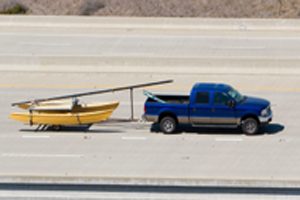
Towing capacity isn’t a suggestion. It’s a hard limit set by engineers who spent months proving what their steel and aluminum structures can survive. Exceed it and you risk destroying your drivetrain, ruining your handling, or simply breaking down on the interstate. Most people check their owner’s manual. That’s smart. But if you’re digging through old manuals or trying to match up a hitch that claims higher limits than your actual truck, you need to know where the real numbers come from.
The hitch might hold 10,000 pounds. Your car might not. Always follow the manufacturer’s rating for the specific vehicle.
Here is the data for Acura, Audi, BMW, Buick, and Cadillac models from 2006 to 2009.
Never exceed your vehicle’s towing capacity. Doing so affects stopping ability and can damage the drivetrain.
Acura Towing Capacity
Acura didn’t build many tow-able cars in this era. Most sedans are capped at 1,000 lbs. If you are hauling something heavier, you are looking at the MDX.
2006
- MDX: 3,500 lbs
- RL: 1,000 lbs
- RSX: 1,500 lbs
- TL: 1,000 lbs
- TSX: Not rated
2007
- MDX: 5,000 lbs (Improved significantly from ’06)
- RL: 1,000 lbs
- RDX: 1,500 lbs
- TL: 1,000 lbs
- TSX: 1,000 lbs
2008
- MDX: 5,000 lbs
- RL: 1,000 lbs
- RSX: 1,500 lbs
- TL: 1,000 lbs
- TSX: 1,000 lbs
2009
- MDX: 5,000 lbs
- RL: 1,000 lbs
- RSX: 1,500 lbs
- TSX: 1,000 lbs
More Acura Specs:
* Acura GVWR
* Acura GAWR
* Acura GCWR
* Acura Cargo Carrying Capacity
* Acura Curb Weight
* Acura Payload
Audi Towing Capacity
Audi was cautious here. For years, their lineup carried zero towing ratings. The Q7 was the exception, built on a platform that could actually handle the weight.
2006
- A3: Not rated
- A4: Not rated
- A6: Not rated
- A8: Not rated
- S4: Not rated
- TT: Not rated
2007
- A3: Not rated
- A4: Not rated
- A6: Not rated
- A8: Not rated
- Q7: 5,500 lbs
- RS4: Not rated
- S4: Not rated
- S6: Not rated
- S8: Not rated
2008
- A3: Not rated
- A4: Not rated
- A5: Not rated
- A6: Not rated
- A8: Not rated
- Q7: 5,500 lbs
- R8: Not rated
- RS4: Not rated
- S4: Not rated
- S5: Not rated
- S6: Not rated
- S8: Not rated
- TT: Not rated
2009
- A3: Not rated
- A4: Not rated
- A5: Not rated
- A8: Not rated
- Q7: 5,500 lbs
- R8: Not rated
- S4: Not rated
- S5: Not rated
- S8: Not rated
- TT: Not rated
More Audi Specs:
* Audi GVWR
* Audi GAWR
* Audi GCWR
* Audi Cargo Carrying Capacity
* Audi Curb Weight
* Audi Payload
BMW Towing Capacity
BMW made a pivot in 2008. Before that, only the X-series SUVs could tow. The 1-Series, 3-Series, and 5-Series were strictly passenger vehicles with no towing ratings. The X5 and X6 changed the game.
2006
- 325: Not rated
- 330: Not rated
- 525: Not rated
- 530: Not rated
- 550: Not rated
- 650: Not rated
- 750: Not rated
- 760: Not rated
- M3: Not rated
- M5: Not rated
- M6: Not rated
- X3: 3,500 lbs
- X5: 6,000 lbs
- Z4: Not rated
- Z4M: Not rated
2007
- 328: Not rated
- 335: Not rated
- 525: Not rated
- 530: Not rated
- 550: Not rated
- 650: Not rated
- 750: Not rated
- 760: Not rated
- Alpina B7: Not rated
- M5: Not rated
- M6: Not rated
- X3: 3,500 lbs
- X5: 6,000 lbs
- Z4: Not rated
- Z4M: Not rated
2008
- 128: Not rated
- 135: Not rated
- 328: Not rated
- **33
The mid-2000s were a messy era for towing specs. Manufacturers were transitioning platforms, introducing hybrids, and constantly tweaking powertrains. If you are looking at a used truck or SUV from this window, the numbers on the window sticker might not match what your VIN allows. The data below is the raw max capacity. It does not account for payload, which is the silent killer of towing plans.
Chevrolet Towing Capacity
Chevrolet had a weird hierarchy here. The 1500 series trucks often out-towed the older 2500s in specific years due to hybrid drivetrains. The Silverado line was the workhorse, but don’t ignore the Tahoe for light towing if you need passenger space.
2006 Models
This was a strong year for the heavy trucks. The Silverado 2500 HD hit just over 10k.
- Avalanche 1500 : 7,300 lbs
- Avalanche 2500 : 10,200 lbs
- Aveo : Not rated
- Cobalt : 1,000 lbs
- Colorado : 1,600 lbs
- Corvette : Not rated
- Equinox : 3,500 lbs
- Express : 4,300 lbs
- HHR : 1,000 lbs
- Impala : 1,000 lbs
- Malibu : Not rated
- Malibu Maxx : 1,000 lbs
- Monte Carlo : 1,000 lbs
- SSR : 2,500 lbs
- Silverado 1500 : 5,700 lbs
- Silverado 1500 Hybrid : 6,700 lbs
- Silverado 1500 SS : 7,500 lbs
- Silverado 1500 HD : 8,300 lbs
- Silverado 2500 HD : 10,100 lbs
- Silverado 3500 HD : 9,500 lbs
- Suburban 1500 : 7,500 lbs
- Suburban 2500 : 7,900 lbs
- Tahoe : 5,700 lbs
- TrailBlazer : 5,400 lbs
- TrailBlazer EXT : 5,000 lbs
- Uplander : 3,500 lbs
2007 Models
The Silverado 1500 took a massive hit in capacity, dropping to 4,600 lbs for the regular body style. The Classic edition kept the older, higher ratings. The Tahoe dropped significantly too.
- Avalanche 1500 : 7,200 lbs
- Aveo / Aveo 5 : Not rated
- Cobalt : 1,000 lbs
- Colorado : 1,900 lbs
- Corvette : Not rated
- Equinox : 3,500 lbs
- Express : 4,300 lbs
- HHR / HHR Panel : 1,000 lbs
- Impala : 1,000 lbs
- Malibu / Monte Carlo : 1,000 lbs
- Silverado 1500 : 4,600 lbs
- Silverado 1500 Classic : 5,700 lbs
- Silverado 1500 Hybrid Classic : 6,700 lbs
- Silverado 1500 SS Classic : 7,500 lbs
- Silverado 1500 HD Classic : 8,300 lbs
- Silverado 2500 HD : 10,000 lbs
- Silverado 2500 HD Classic : 10,100 lbs
- Silverado 3500 : 9,600 lbs
- Silverado 3500 Classic : 9,500 lbs
- Suburban 1500 : 7,100 lbs
- Suburban 2500 : 7,700 lbs
- Tahoe : 4,500 lbs
- TrailBlazer : 5,400 lbs
- Uplander : 3,500 lbs
2008 Models
The Colorado finally got a usable towing rating here, hitting 3,000 lbs. The Tahoe Hybrid entered the chat with a respectable 6,200 lbs, beating the gas Tahoe.
- Avalanche 1500 : 7,200 lbs
- Aveo / Aveo 5 : Not rated
- Cobalt : 1,000 lbs
- Colorado : 3,000 lbs
- Corvette : Not rated
- Equinox : 3,500 lbs
- Express : 4,300 lbs
- HHR / HHR Panel : 1,000 lbs
- Impala : 1,000 lbs
- Malibu / Malibu Classic / Malibu Hybrid : 1,000 lbs or Not Rated
- Silverado 1500 : 4,600 lbs
- Silverado 2500 HD : 10,000 lbs
- Silverado 3500 HD : 9,600 lbs
- Suburban 1500 : 7,100 lbs
- Suburban 2500 : 9,600 lbs
- Tahoe : 4,500 lbs
- Tahoe Hybrid : 6,200 lbs
- TrailBlazer : 5,400 lbs
- Uplander : 3,500 lbs
2009 Models
The Avalanche dropped hard. Why? Probably weight distribution issues or a powertrain refresh. The Traverse appeared with a modest 2,000 lbs rating.
- Avalanche 1500 : 5,000 lbs
- Aveo : Not rated
- Cobalt : 1,000 lbs
- Colorado : 3,000 lbs
- Corvette : Not rated
- Equinox : 3,500 lbs
- Express 1500 : 4,300 lbs
- Express 2500 : 6,300 lbs
- Express 3500 : 6,200 lbs
- HHR / HHR Panel : 1,000 lbs
- Impala : 1,000 lbs
- Malibu / Malibu Hybrid : Not Rated
- Silverado 1500 : 4,700 lbs
- Silverado 2500 HD : 10,000 lbs
- Silverado 3500 HD : 9,700 lbs
- Suburban 1500 : 5,100 lbs
- Suburban 2500 : 9,600 lbs
- Tahoe : 4,500 lbs
- Tahoe Hybrid : 6,200 lbs
- TrailBlazer : 5,400 lbs
- Traverse : 2,000 lbs
For deeper data points like GVWR or payload limits, check the specific Chevrolet spec sheets linked above.
Chrysler Towing Capacity
Chrysler was playing catch-up. The PT Cruiser was the only one capable of real towing in the compact segment. The Aspen was a late entry to the full-size SUV market, and it showed in the numbers.
2006 Models
- 300 : 1,000 lbs
- **
GMC Sierra 2500 HD Towing Power
The big boys in the GMC lineup don’t mess around. If you are looking at 2006 GMC Sierra 2500 towing capacity, you are staring at a solid 10,500 lbs. That number drops just a hair to 10,400 lbs in 2007 and 2008, then ticks back up to 10,500 in 2009. The Sierra 3500 is a beast too, hovering around the 10,000 to 10,100 lb mark across those same years.
For the light-duty crowd, the Sierra 1500 starts conservative at 4,000 lbs in 2006. It jumps to 4,800 lbs for the rest of the decade. You want hybrid efficiency with heavy lifting? The Yukon Hybrid can pull 6,200 lbs. That’s serious torque for a vehicle trying to save gas. The Yukon XL stays consistent at 7,100 lbs until 2009, when it drops to 5,100 lbs. Why? Maybe they were worried about stability.
The Envoy and Envoy XL are older bones in the body. They max out around 5,000 to 5,300 lbs. Not much, but enough for a small trailer. The Savana vans are workhorses. The 2500 model hits 6,300 lbs every year listed. The 3500 is slightly lower at 6,200 lbs. Don’t let the van status fool you; these are built to haul.
Honda Pilot and Ridgeline Utility
Honda is known for reliability, not necessarily brute towing force. The 2006 Honda Ridgeline leads the pack with 5,000 lbs. It holds that line in 2008. The 2009 model drops off the chart here, but that’s a story for another time.
The Pilot is the family hauler. In 2006 and 2008, it pulls 3,500 lbs. The 2007 and 2009 models show dashes, meaning they weren’t rated or available for towing in those specific configurations. Confusing? Yes. The Odyssey minivan sticks to a steady 3,500 lbs across 2006, 2008, and 2009. The 2007 model is also listed at 3,500 lbs.
Cars? Don’t bother. The Accord and Civic max out at 1,000 to 1,500 lbs. The Element is a rugged small SUV with 1,500 lbs capacity. The CR-V? No tow rating. Period. The S2000 is a sports car. You are not towing a jet ski with that.
Hummer H2 and H3 Capability
Hummer. The name alone suggests excess. The 2006 H2 does 6,500 lbs. By 2008, that number climbs to 8,200 lbs and stays there through 2009. The H2 Alpha in 2006 can pull 7,887 lbs. Weirdly specific. I like it.
The H3 is smaller. It caps at 3,000 lbs for all years. The H3T pickup truck in 2009 picks up an extra 1,400 lbs, hitting 4,400 lbs. Still not a truck killer, but respectable for a compact off-roader. The H3 never changes its limit. It just sits there, looking tough.
Hyundai Santa Fe and Tucson Limits
Hyundai’s towing numbers are modest. The Santa Fe starts strong at 2,700 lbs in 2006. Then it drops to 1,650 lbs in 2007 and holds that line through 2008. The 2009 Genesis doesn’t have a listed rating. Maybe it wasn’t ready.
The Tucson is consistent at 1,000 lbs. The Elantra starts at 1,500 lbs in 2006 but drops to 750 lbs in 2007 and 2008. The Azera and Sonata are stuck at 1,000 lbs. The Tiburon? Zero. It’s a coupe. You don’t tow with a coupe. The Veracruz, a larger SUV, shows no rating. Disappointing for a vehicle that size.
Infiniti QX56 Luxury Towing
Luxury doesn’t mean you can’t haul. The Infiniti QX56 is a tank. It pulls 9,000 lbs in 2006 and 2007. The 2008 and 2009 models show dashes for some trims, but the 2009 QX56 still hits 9,000 lbs. That’s near-truck territory for a luxury SUV.
The FX series is the performance crossover. The FX35 and FX45 pull 3,500 lbs. The FX50 in 2009 also does 3,500 lbs. The G35, M35, and M45 sedans are limited to 1,000 lbs. The Q45 and EX35 have no ratings. Stick to the SUV if you need to tow. The sedan suspension isn’t built for it.
Isuzu Ascender and i-Series
Isuzu is niche now, but it mattered in 2006. The Ascender is the big one. It pulls 5,300 lbs every year from 2006 to 2008. The i-Series trucks are smaller. The i-280 in 2006 does 1,700 lbs. The i-290 improves to 2,100 lbs in 2007 and 2,200 lbs in 2008.
The i-370 starts at 4,000 lbs in 2007. Then it jumps to 5,500 lbs in 2008. That’s a big step up. The i-350 in 2006 does 4,000 lbs. If you need a mid-size truck that can actually work, the 2008 Isuzu i-370 is the one to watch.
Jaguar and Jeep Wrangler Restraints
Jaguar is all about style. Tow ratings? None. The S-Type, X-Type, XJ8, XJR, XK, XKR, XF, and Coupe all show dashes. You are not towing a boat with a Jaguar. It’s not built for it. The suspension is too soft. The weight distribution would be a nightmare. Just don’t try it.
Jeep is different. The Wrangler is capable but limited. It pulls 1,000 lbs. Every year. 2006 to 2009. The Wrangler Unlimited is the same. 1,000 lbs. The Liberty starts at 3,500 lbs in 2006 and 2007. Then it drops to 2,000 lbs in 2008 and 2009. Why the drop? Brake cooling? Frame strength? Who knows. The Grand Cherokee and Commander hold steady at 3,500 lbs. The Compass and Patriot are small, so they max out at 1,000 lbs.
Kia Sorento and Borrego Strength
Kia stepped up its game. The Sorento starts with no rating in 2006. Then in 2007 and 2008, it hits 5,000 lbs. The 2009 Borrego also does 5,000 lbs. The Sportage is consistent at 1,500 lbs. The Optima sedan pulls 2,000 lbs. The Sedona minivan does 3,500 lbs in 2007.
The Rondo has no rating. The Rio has no rating. Stick to the SUVs if you need to tow. The Sorento and Borrego are the heavy hitters in the Kia lineup for 2006-2009.
Land Rover Range Rover Power
Land Rover knows how to pull. The LR3 and Range Rover both do 7,700 lbs in 2006. The Range Rover Sport is also 7,700 lbs. In 2007, the Sport bumps to 7,716 lbs. Precision.
The 2008 LR3 and Range Rover show dashes. The Sport stays at 7,716 lbs. Then
You don’t buy a Lexus to tow. You buy it to arrive silently. But if you are staring at a table full of dashes for the 2006 ES 330, GS 300, or IS 350, the answer is clear: they weren’t built for the job. The only exceptions in that lineup were the heavy hitters. The GX 470 and the behemoth LX 470 could pull 6500 lbs. That is serious muscle for a luxury off-roader. If you needed to haul a boat or a large trailer, the LS 430 was there as a backup plan, capping out at a modest 2000 lbs. The RX 330 and the hybrid RX 400h offered a middle ground at 3500 lbs.
By 2007, the ES 350 arrived with the same restriction. No towing. The GS 350 and GS 450h followed suit. The RX 350 and RX 400h held steady at 3500 lbs. It wasn’t until 2008 that things shifted for the crossover segment. The RX 350 dropped to 2000 lbs. The RX 400h did the same. Meanwhile, the LX 570 made its debut with an 8500 lb capacity. That is a massive jump from its predecessor.
The GX 470 maintained its 6500 lb rating through 2009. But look at the LX 570. It stayed at 8500 lbs. That is the number to remember if you are looking for Lexus towing capacity for heavy loads. Everything else in the Lexus lineup from 2006 to 2009 is either a luxury sedan with zero rating or a mid-size SUV struggling with 2000 to 3500 lbs limits.
The Lincoln and Mercury Matrix
Lincoln didn’t mess around with their trucks. The Mark LT was a workhorse. From 2006 through 2009, it held a steady 8900 lb towing capacity. That is nearly nine tons. If you need to pull a heavy load, this is the number you want. The Navigator was the consistent choice for families, holding 6000 lbs across all four years.
The smaller sedans and coupes were strictly light-duty. The Town Car capped at 2000 lbs. The MKX started in 2007 with a 2000 lb limit. The MKZ had no rating. The 2009 MKS brought a surprising 1000 lb capacity, likely due to its platform sharing with the Ford Taurus.
Mercury followed a similar path, largely because they shared platforms with Ford. The Mountaineer and the Monterey both offered 3500 lbs. The Grand Marquis was restricted to 1500 lbs. The Mariner, both standard and hybrid, hit 1500 lbs and 1000 lbs respectively. The Sable and Montego were light-duty options at 1000 lbs. If you are looking for Mercury towing capacity for anything substantial, the Mountaineer is your only real option in this era.
Mazda’s Utilitarian Core
Mazda’s B-series trucks were the unsung heroes of this dataset. The B4000 was the king, pulling 3140 lbs in 2006, 2008, and 2009. The B3000 sat just under at 2500 lbs. The B2300 hovered around 1600 lbs.
The SUVs told a different story. The Tribute was limited to 1500 lbs. The hybrid Tribute bumped that to 2000 lbs. The CX-9 and CX-7 were both rated at 2000 lbs. The MPV, a minivan you might not expect to tow, could handle 2000 lbs.
The Mazda3, Mazda5, Mazda6, and RX-8? Zero. They are lightweight platforms. They are not for trailers. The Eclipse and Endeavor had fluctuating ratings, but the Endeavor sat at 3500 lbs in 2006 and 2008. The Outlander was a modest 1500 to 2000 lbs. The Raider, essentially a rebadged Dodge Dakota, pulled 4000 to 4050 lbs.
Mercedes-Benz: The Off-Road Spike
Mercedes made a distinct split in 2007. Before that, the ML350 and ML500 were stuck at 2000 lbs. Then came the GL and G-Class. The G500 pulled 7000 lbs. The GL320 hit 7500 lbs. The GL450 and GL550 also hit 7500 lbs. The ML models jumped to 7200 lbs. This was a significant upgrade in capability for their SUV lineup.
The G55 AMG joined the fray in 2008 with a 7000 lb rating. The ML63 AMG matched the standard ML at 7200 lbs. By 2009, the R-Class entered the conversation with a 3500 lb capacity. This is a key data point for anyone asking how much can a 2009 Mercedes R-Class tow. It is 3500 lbs. The GL and ML models remained at 7500 and 7200 lbs respectively. The sedans and coupes remained at zero.
Mitsubishi’s Niche Picks
Mitsubishi’s towing numbers were inconsistent, likely due to platform changes. The Endeavor dropped from 3500 lbs in 2006 to 2000 lbs in 2007, then back to 3500 lbs in 2008. The Outlander was a steady 1500 lbs, rising slightly to 2000 lbs in 2007.
The Raider was the outlier. It pulled 4050 lbs in 2006 and 4000 lbs in 2007 and 2008. The Lancer had a 1000 lb rating in 2006 but lost it in later years. The Eclipse and Galant never offered towing ratings.
Nissan’s Heavy Duty Presence
Nissan had some serious muscle in this era. The Frontier and Titan were the stars. Both held a 6300 lb and 6500 lb capacity respectively throughout 2006 to 2009. The Armada also held 6500 lbs.
The Pathfinder was a solid 6000 lbs. The Xterra sat at 5000 lbs. The Murano and Quest were capped at 3500 lbs. The Rogue, when it arrived in 2008, was a light-duty option at 1000 lbs.
The sedans were all over the map. The Altima, Maxima, Sentra, and Versa were mostly 1000 lbs or zero. The GT-R and 350Z had no towing capacity. They are built for speed, not hauling.
Why These Numbers Matter
You might wonder why some cars have zero towing capacity while others have thousands. It comes down to frame construction and cooling systems. Sedans like the Lexus IS or the Nissan Altima lack the reinforced rear subframes and heavy-duty transmissions required to handle the stress. SUVs and trucks have bodies-on-frame or rigid unibody designs with specific tow packages.
The drop in the RX 350 from 3500 lbs to 2000 lbs between 2006 and 2008 is also telling. It suggests a shift in engineering priorities or a change in how Lexus calculated their limits. Always check the door jamb sticker. The data we have here is general. Your specific vehicle might have a factory tow package that changes things.
If you are buying a used car for towing, don’t guess. Look at the year. Look at the model. The 2008 Lexus RX 350 is a different beast than the 2006 model. The 2009 R-Class is a unique entry in the Mercedes lineup. The Nissan Titan and Frontier are consistent workhorses. The Lincoln Mark LT is a luxury truck with serious capability.
There is a nuance here. A 2000 lb limit isn’t just a number. It means you cannot tow a loaded travel trailer. It means you are limited to a small utility trailer or a motorcycle cart. The 8500 lb limit of the LX 570 or Mark
Pontiac and the Limits of Towing
Pontiac spent its final years trying to stay relevant, but towing wasn’t really their strong suit. If you are looking at a 2006-2009 Pontiac, you need to check the model carefully. Most sedans like the G6, Grand Prix, and G5 were rated for a modest 1,000 pounds. That’s barely enough for a small trailer or a jet ski, provided you keep it light.
The exceptions tell a different story. The Montana SV6 and Torrent SUVs could pull 3,500 pounds. That puts them in the same league as mid-size trucks of the era. The G8 sedan, arriving in 2008, bumped that to 2,000 pounds. Solid. But don’t even think about towing with a Solstice. It’s a roadster, not a workhorse. The Vibe crossed over slightly better, sitting at 1,500 pounds in 2006 and 2007 before dropping to 1,000 in 2009. Why? Probably weight distribution or cooling system limits. Check the door jamb sticker.
Porsche Cayenne Capability
Porsche has a reputation for performance over utility. The Cayenne disproves that myth, at least in terms of raw numbers. From 2006 through 2009, the Cayenne held a consistent 7,716-pound towing capacity. That is massive. It beats most full-size American trucks of the time.
Meanwhile, the 911, Boxster, and Cayman? Zero. Do not attach a trailer to a mid-engine sports car. The engineering focus is entirely on handling and acceleration. Adding tow hitch stress would compromise the chassis. Stick to the SUV if you need to haul gear.
Saab’s Heavy Lifting
Saab is often associated with turbocharged sedans, but their truck platform, the 9-7X, told a different story. From 2006 to 2009, the 9-7X could tow up to 5,500 pounds. It shared its bones with the GMC Yukon, so it had the frame to back it up.
The 9-5 sedan managed a respectable 3,500 pounds. The 9-3 was capped at 2,000 pounds. If you had the 9-2X, you were looking at 2,000 pounds as well. Saab tuned these cars for safety and efficiency, not brute force, but they didn’t shy away from practical limits.
Saturn’s Versatility
Saturn tried to offer options. The Relay minivan could tow 3,500 pounds. That is useful for hauling family and luggage. The VUE, especially the hybrid version, was rated for 1,500 pounds. The Aura and Ion were limited to 1,000 pounds. The Outlook bumped that to 2,000 pounds.
If you tried to tow with a Sky roadster or an Astra hatchback, you came up empty. Saturn understood who their customers were. Minivan drivers needed utility. Sedan drivers did not.
Scion and Smart: No Towing
Scion and smart cars were designed for urban environments. The tC, xB, and xD were not built for towing. Zero capacity across all years from 2006 to 2009. The smart fortwo, introduced in 2008, also had no towing rating. These are city cars. Keep them on the pavement.
Subaru’s AWD Advantage
Subaru leveraged its symmetrical all-wheel drive system for towing. The B9 Tribeca could handle 3,500 pounds. The Baja, which was basically a pickup sedan, managed 2,400 pounds. The Forester sat at 2,400 pounds for 2006 and 2007, then dropped out of the rating for 2008 and 2009. Maybe they realized the cooling systems couldn’t handle the heat of heavy loads?
The Legacy and Outback were the bread and butter here. Both sedans and wagons could tow 2,700 pounds from 2006 to 2009. The Impreza wagon and Outback Sport were rated for 2,000 pounds. WRX and STI models had no rating. You don’t tow with a rally car.
Suzuki’s XL7 Strength
Suzuki focused on compact SUVs. The XL7 was the king of their lineup for towing. It started at 3,000 pounds in 2006, then jumped to 3,500 pounds in 2007 and 2008. By 2009, the rating disappeared. Did they discontinue the towing package? Or just the model? The Grand Vitara stayed consistent at 3,000 pounds for the first few years, then dropped off.
The smaller cars like the Forenza, Reno, and Verona were limited to 1,000 pounds. The Equator and SX4 had no rating. Suzuki knew its place in the market.
Toyota’s Robust Range
Toyota built these cars to last, and their towing capacities reflect that. The Tundra was a beast. In 2006, it could pull 6,800 pounds. It dropped to 4,800 pounds in 2007 and 2008, likely due to emissions regulations or new chassis designs. The Sequoia grew over time. From 6,500 pounds in 2006, it climbed to 7,800 in 2008, and hit 9,935 pounds in 2009. That is serious capability.
The 4Runner and FJ Cruiser both managed 5,000 pounds. The Land Cruiser started at 6,500, moved to 8,500, and ended at 9,935 pounds. The Sienna and Tacoma stuck around 3,500 pounds.
Smaller cars like the Camry, Corolla, and RAV4 were limited to 1,000 to 1,500 pounds. The Highlander Hybrid improved over time, starting at 2,000 pounds and reaching 3,500 pounds by 2009. Toyota optimized their hybrid systems for torque delivery, which helped.
Volkswagen’s Touareg Power
Volkswagen generally avoided towing. The Golf, Jetta, Passat, and Beetle had no rating. The Routan minivan could tow 2,000 pounds. The Tiguan managed 2,200 pounds.
But the Touareg. The Touareg could tow 7,716 pounds. It matched the Porsche Cayenne because they shared the same platform. If you need to tow heavy and want European engineering, the Touareg is the answer. Just avoid the smaller sedans and coupes.
Why These Numbers Matter
You might think these ratings are just paper exercises. They are not. Exceeding the max towing capacity strains the transmission, brakes, and frame. It voids warranties. It creates liability if you get into an accident.
Check the specific year and model. A 2008 Land Cruiser can tow more than a 2006 model. A 2009 Toyota Tundra can tow less than a 2006 model. The numbers shift. Always verify.
The “More Specs” links for GVWR, payload, and curb weight are there for a reason. Towing capacity is just one piece of the puzzle. Payload affects how much cargo you can carry in the vehicle itself. If your payload is full, you can’t tow much. It’s a balance.
Final Thoughts on Utility
Not every car is built for the same job. Sports cars like the 911 and Solstice are for driving. Sedans like the G6 and Jetta are for commuting. SUVs and trucks like the Cayenne, Tundra, and XL7 are for hauling.
If you need to tow a boat, a trailer, or heavy equipment, look at the SUVs and trucks. Avoid the roadsters and small hatches. The numbers don’t lie. They tell you what the engineers intended. Respect the limits.
Most of the early 2000s Volvo lineup wasn’t built to pull heavy loads. If you’re looking at a 2006 Volvo S60, you are in a small minority. That sedan could handle up to 3,300 pounds. That’s a decent amount of weight for a compact executive car. But everything else in that same model year year? Nothing.
The C70. The S40. The S80. The V50. The V70. The XC70. The XC90.
All of them listed zero pounds for towing capacity.
It seems like a gap in the market. A gap that didn’t fill up for years.
The Zero-Towing Era
Look at the 2007 data. The pattern repeats. Every single model from C30 to XC90 shows a dash. A null value. Manufacturers often omit towing specs when a vehicle is not rated for a trailer. For Volvos of this era, that meant the chassis, cooling systems, or transmission fluids were simply not engineered for the extra stress.
The 2008 Volvo XC90 might look like it should tow. It’s a mid-size SUV. But the table says no. The 2009 Volvo S60 is still there, but again, no figure. Just empty space.
Why does this matter? Because modern towing is about more than just engine power. It’s about heat management. It’s about suspension geometry under load. It’s about the transmission’s ability to stay in gear without overheating. Early 2000s Volvos lacked the specific engineering packages required to certify that capability.
Missing Data Points
If you are trying to tow with one of these cars, you aren’t going to find help in this table. The data is strictly negative.
- 2006: Only the S60 had a rating (3,300 lbs).
- 2007–2009: Zero models across the C-series, S-series, V-series, and XC-series had any listed towing capacity.
This leaves owners of these vehicles with a hard limit. You can’t just add a hitch and go. The manufacturer didn’t sanction it.
Related Specs to Consider
If you can’t tow, what can these cars do? They still have weight limits. You need to understand the difference between what the car weighs and what it can carry.
- Volvo GVWR: Gross Vehicle Weight Rating. The total max weight of the car itself plus passengers, cargo, and fuel.
- Volvo GAWR: Gross Axle Weight Rating. How much weight each axle can support.
- Volvo GCWR: Gross Combined Weight Rating. The total weight of the car plus any trailer. (Likely not applicable if towing capacity is zero).
- Volvo Cargo Carrying Capacity: How much stuff you can put in the trunk or cabin.
- Volvo Curb Weight: The weight of the empty car.
- Volvo Payload: The total weight of passengers and cargo the car can carry.
Knowing your payload is more useful than knowing your towing capacity when your capacity is non-existent. Don’t overload the rear suspension