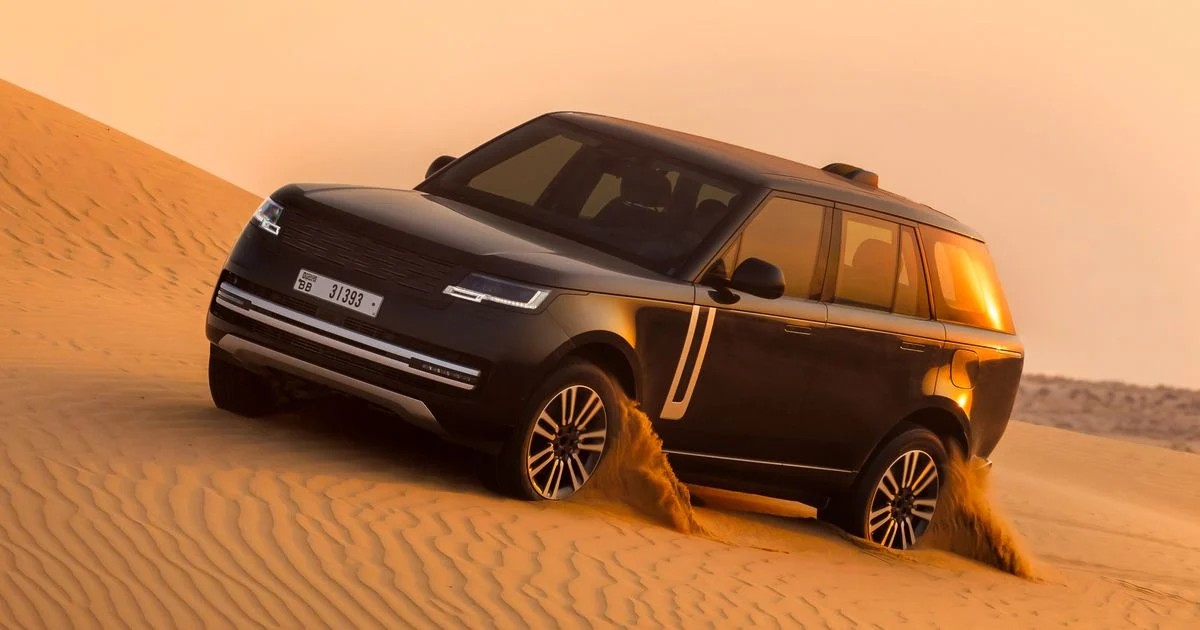
They’re finally coming. JLR Australia confirmed it loud and clear: the Range Rover Electric and the Range Rover Sport Electric will land Down Under in 2027.
This isn’t just a tweak. It’s the British marque’s first real step into full electrification of its flagship lineup. You’ve been waiting for this.
2027 Range Rover EV Release Date Confirmed
Expect the new EVs in the first half of next year. A Range Rover spokesperson told CarExpert the timing is set. They didn’t give a month, but “first half of 2027” is the window.
Full details—pricing, specs, exact variants—are still under wraps. Those drop later this year. Until then, we have to work with what leaks out of the UK and the lab.
Performance and Battery Specs Explained
Here’s what we know about the hardware. Both the standard and Sport EVs share their electric guts. That means the powertrain is identical for both body styles.
The numbers? Reports point to a dual-motor setup. We’re looking at 404kW of power and 850Nm of torque. It’s competitive. The current petrol V8 P615 puts out 452kW, but torque matters for torque. The EV’s 850Nm beats the V8’s 750Nm easily.
The energy comes from an 118.5kWh Nickel Manganese Cobalt (NMC) battery pack. Range projections sit around 600km on theWLTP cycle. That’s respectable. It puts it in the running with the best luxury SUVs on the market.
The architecture is the MLA Flex platform. It’s flexible by design. Interestingly, the new Range Rover Sport shares its wheelbase with the standard-length full-size Range Rover. There’s still a long-wheelbase version of the flagship SUV, too.
Range Rover EV vs. ICE: Design and Capability
You won’t see the electric models from fifty yards away. Range Rover has purposefully kept the design language tight. No massive grille changes. No flashing blue accents. The electric powertrain is hidden under the same sheet metal that houses the V8s.
There was a tiny clue at the Goodwood Festival of Speed. The Sport Electric prototype had “EV” stenciled on its wheel caps instead of the usual “RANGE ROVER.” But otherwise? It’s business as usual.
JLR is stressing one thing: capability. The EV will wade through 850mm of water. Just like the diesel and petrol versions. They aren’t treating these as city-runners. These are land-yachts that go to the same places.
Ownership will supposedly feel seamless. Over-the-air updates. Intelligent tech to stretch range. Energy partnerships. The whole package.
Range Rover EV Pricing: How Much More Will It Cost?
This is the million-dollar question. Literally.
Will the electric versions command a heavy premium? We don’t know yet. But look at the current spread in the ICE lineup. The entry-level PHEV (P460e in HSE spec) is only $3,300 more expensive than the D350 diesel after recent cuts. Before that? The gap was closer to $9,000.
Compare that to the big boys. The six-cylinder PHEV is more than $30,00 cheaper than the twin-turbo 4.4L V8.
Australia’s New Vehicle Efficiency Standard (NVES) isn’t slowing down. Regulators are pushing manufacturers toward low- and zero-emission sales. Pressure is mounting.
Given the price gap between current hybrids and V8s, we might see price parity for the Range Rover EV against the twin-turbo V8s. Or at least a much narrower gap. It has to make financial sense to upgrade.
Orders for the standard Range Rover Electric have been open since 3 years ago. That’s a long development cycle. The flagship luxury SUV has been tested across the globe. It’s ready.
We’re waiting on the final numbers. Stay tuned for the pricing reveal later this year. The landscape is shifting. You just need to watch when it happens.