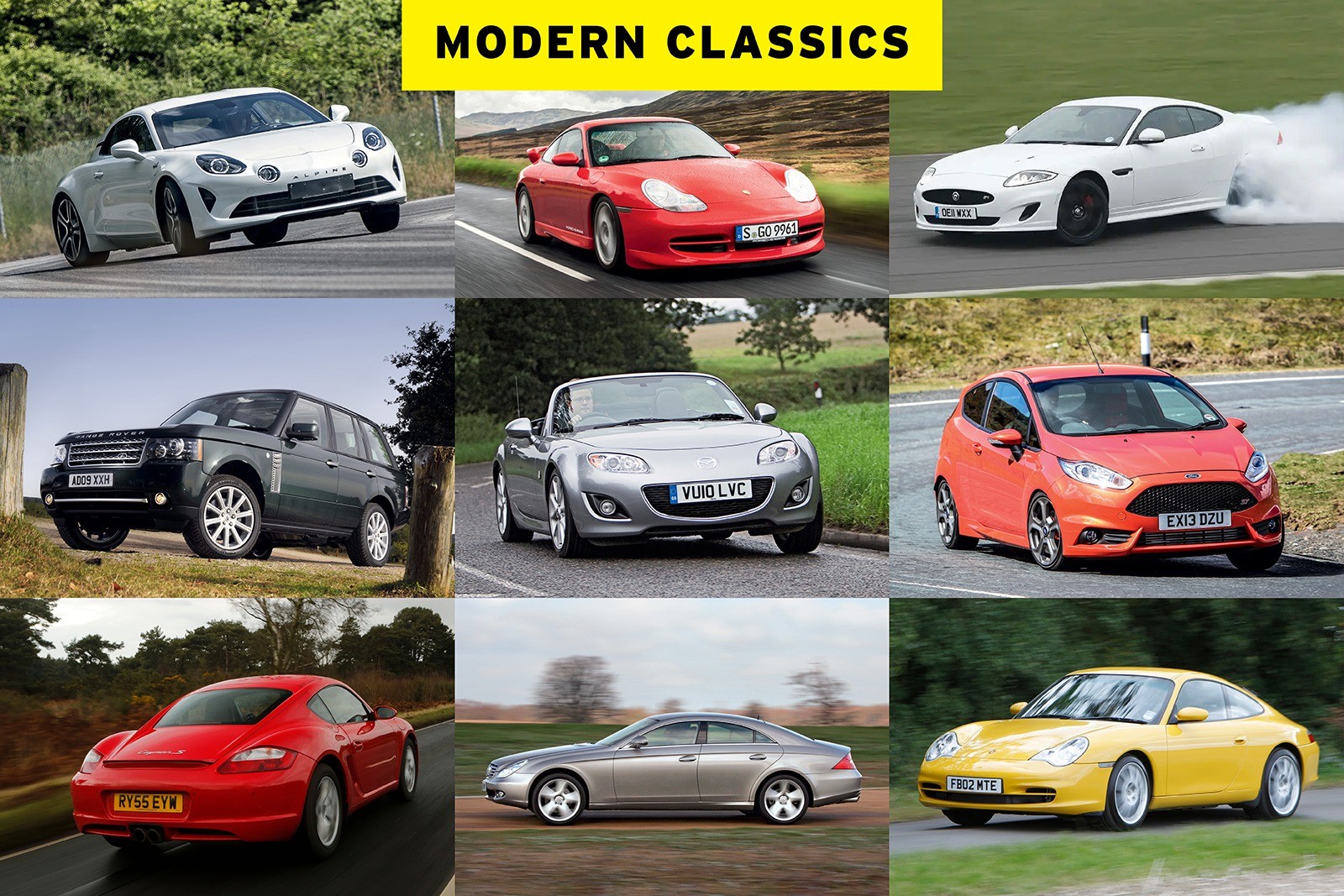
Calling a car a ‘classic’ feels like an insult sometimes. Unless it has been dead for fifty years, people assume it belongs in a scrapyard, or worse, a McDonald’s drive-thru.
Back in the day, enthusiasts and commuters lived on opposite ends of a Venn diagram that never quite touched. Enthusiasts hated modern tech; modern drivers hated rattling vintage tin. Now, however, we are all forced into the middle.
Electric bans, congestion charges, speed cameras. The intersection is no longer a theoretical concept, it is our only exit. We are all becoming modern classic collectors whether we planned to or not.
What actually counts?
There are no hard rules, which is frustrating but also freeing.
Ed Callow, from the auction site Collecting Cars, calls modern classics the ‘democratised’ end of the collector market. He argues the term applies to vehicles from the late eighties, nineties, and very early two-thousands. That vague period when engineering improved but soul hadn’t been entirely digitized yet.
For this list, though, we are looking post-2000 only. Why draw an arbitrary line? Because precision is a myth, and so is a reliable used car from 2015.
“At their core, modern classics are ‘democratised.’”
— Ed Callow, Collecting Cars
Mercedes-Benz CLS (2003-20 mechanical)
Price range: £2,500 – £10,000
An oxymoron built out of steel. It was marketed as a four-door coupe. Critics laughed, but buyers paid anyway.
Based on the E-Class chassis, this thing looked nothing else on the road in 2004. It kept the Mercedes prestige, the part-leather trim, and the climate control that actually works, but wrapped it in a body shape that confused parking sensors for a decade. All models had rear-wheel drive. Seven-speed autos were standard, or an option, depending on how you count air suspension.
Today, the Mk1 is dirt cheap. But cheap cars break in expensive ways.
You have to watch the balancer shafts in the early petrol engines. One owner told us to avoid the early years entirely, no jokes. Gearbox speed sensors fail, quietly. In the diesels, the inlet port shut-off motors seize up. You buy this for the shape, not because it is a mechanic’s dream.
Porsche Cayman (2005-21 mechanical)
Price range: £7,500 – £30,000
Put the engine behind you but in front of the wheels, and suddenly you feel lighter. That is the magic of the 987 generation.
This is a modern flat-six Porsche that behaves itself. In a 911 from this era, the rear-engine layout tempts you into snapping your neck through every corner. The Cayman places the motor where physics say it should be. You can take liberties. Hard ones.
The six-speed manual is the way to do it. Pedals are well weighted, gear shifts are crisp, the feedback is analogue in a sea of touchscreens.
There is the PDK automated gearbox. It is faster. Blazingly fast, really. But do you really want to hunt for those tiny shift buttons on the wheel? Sometimes speed costs connection. Is that a trade-off worth making when you just wanted to hear the flat-six scream?
Prices for the Cayman are already climbing, too. Not because it is flawless, but because it drives better than almost anything else made after the millennium.