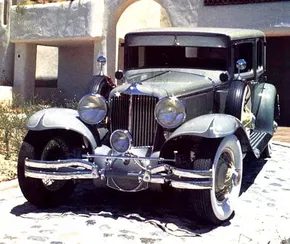
Most people know Ellet Lobban Corde because she owned Auburn, Duesenberg and Cadillac in the early 1930s. You may remember the Model J. I’m sure you also remember the Auburn Speedsters. But the third pillar of his empire received little attention. It was the Cold L-29 in 1929.
This car is more than just a novelty. This was a well-considered move to bridge the gap between Auburn’s high-end eight-cylinder models and the very expensive Duesenberg J models. Cord wanted a vehicle that was right in the middle. The design behind it is pure genius, and its new look is unlike anything else on the road.
The significance of the L-29 code in terms of car history
Although the story begins with a salesman in Los Angeles, Cord is more than just a used car salesman. He built an empire. The L-29 was his solution to the technical limitations of the time. He hired Cornelius Van Ranst to lead the project. Van Ranst did not start from scratch. He used a principle patented by the famous racing car designer Harry Miller.
Front-wheel drive was still in its infancy. Most cars pushed their power from the rear. Cord saw an opportunity. He wanted a low, rakish profile. The only way to achieve that stance with the technology of the late 1920s was to move the transmission to the front.
The L-29 was designed by Cornelius Van Ranst based on principles patented by the famous racing car designer Harry Miller.
Engine position and long bonnet
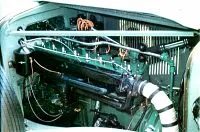
Look under the hood of the Code L-29 and you’ll find a 298.6 cubic inch Lycoming inline eight. The engine is sourced directly from the largest Auburn models. Cord did not plan a new power plant. He reused what was already there. He just turned it around.
This decision determines the shape of the car. The clutch, three-speed sliding-pinion gearbox and differential are located in front of the engine. This layout creates a mile-long hood. It’s not just for show. This length is a physical necessity for a front-wheel-drive architecture.
Stylist Al Leamy added a radiator in front. It resembles a Duesenberg grill. The designers expected the L-29 to share the J’s reputation. they succeeded. This car looks expensive. Looks fast. It feels like the future.
Which cars compete with the L-29 series?
The car market in 1929 was tough. Cord had to sell cars to keep up with his mounting debt. The L-29 was aimed at buyers who wanted luxury but couldn’t afford a Duesenberg. It also appealed to technology enthusiasts. These were early adopters. They wanted to see how far engineering could push the boundaries.
The front-wheel drive solution offers excellent grip. It kept the rear axle light. This improved handling was simply unmatched by rear-wheel drive cars of the time. However, there are also disadvantages. A long hood obscured visibility. The mechanical complexity is very high. Maintenance is difficult.
Does it matter? For many buyers, this is not the case. They share this view. They bought the code name. car
Cadillac L-29: Early front-wheel drive failure
The Cadillac Series L-29 wasn’t just a car. This is a statement. 137.5-inch wheelbase. long. Low. Only pre-depression luxury cars could make such an impression. You also have a choice. 4-door sedan. Brougham. convertible. There’s also a rumble-seat cabriolet for those who want to be exposed to the wind and visible to passers-by.
Seems appropriate. But under that beautiful sheet of metal, the mechanics are messed up.
Weight is your number one enemy. The L-29 weighed about 2.5 tons. It’s heavy. Especially when paired with an engine that only makes 125 horsepower. The math doesn’t work. The performance is marginal to say the least.
Next is the ranking. Front wheel drive means the engine is in the front. This creates a backward pressure error that defies physics in the worst possible way. Try to pull yourself up the slippery slope. The front wheels already struggle with traction and can only keep a grip occasionally. It’s pointless. The car seemed to jerk. Erratic.
Mechanical reliability is pointless. The constant velocity joint of the first half-axle is a weak point. they are exhausted. Often. Mercilessly. Buy a car, drive it for a season and then change the transmission. Also. here we go again.
“The real problem is the price. At $3,095 or $3,295, depending on the model, the L-29 is more expensive than its faster, more sophisticated competitors.”
However, the mechanical defects are minor. The real killer is the price.
In 1931, $3,095 was a lot of money. For the sedan. The price is $3,295 for a convertible or wagon. This is more important than competition. More than a Packard. More than Studebakers. Buyers were conservative at the time. They prefer straight stems. They like reliable authenticity. They hate front wheel drive. It feels very innovative. gimmick.
Their caution is correct.
Cadillac is trying to reverse declining sales. They dropped the price by $800. It decreased significantly. It should work. This is not true. The market ignored this discount. This idea may have been too ahead of its time or perhaps too flawed to accept.
Sales dropped significantly. Production was stopped at the beginning of 1932.
Total production was small by today’s standards and even smaller for Cadillac. 4,429 units. Built from mid-1929 to early 1932. This is a groundbreaking initiative. It’s a bold experiment.
Failed.
Now you may be wondering why this is important. Why dig up a car that don’t sell? It was the first front-wheel drive car produced by a major American manufacturer. Try to solve traction problem before other companies in the industry realize traction problem. It’s just a got the execution wrong.
heavy. Lack of motivation. expensive. Unreliable.
This is a warning about chrome plating.
Relative costs
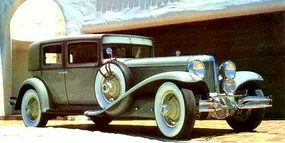
Cord L-29 vehicles are not found every day. If you’re lucky, you might come across one. This example, currently in the collection of Ken and Jan Findiesen, is a masterclass in close-coupled design. A space-saving engineering, the wheels fit tightly into the corners, making the doors look to be floating in the air. It’s A specific aesthetic. A specific era. For collectors who really know what they’re looking at, the price tag is practically limitless.
These aren’t just old cars. These are the fruits of a short but brilliant experiment in automotive geometry. The close-coupled layout is more than just style. The purpose of this is to maximize the interior space and keep the overall footprint small. Think of it as origami for cars.
Most of these pre-war sedans are in the realm of “nearly irreplaceable.” It’s not because of marketing hype. But when the supply ran out. What you have to call a “survivor” is minimal. You cannot buy it from the seller alone. You cannot browse the list using the “Excellent” filter. You wait for the ghost to appear. Then the conversation turns from price to legacy.
“Like most such classic works, it is practically priceless.”
This is not an exaggeration. This is the reality of the market. Findiesens does more than just store metals. They are designing a piece of industrial history that cannot be recreated. Modern manufacturing cannot touch scale. The craft is too intensive.
So where do you go from here?
- Classic Cars : Take a peek into the pre-war era.
- Muscle Cars : Compare the heavy, horsepower-focused 60s with the sleek, aerodynamic 30s.
- Sports Cars : Learn how handling evolved from luxury sedans to pure performance machines.
- Consumer guide New Car Search : For those who are still stuck in the current situation.
- Consumer guide Used Car Search : For the hopeful.