Ford Motor Company didn’t just survive its first twelve years; it conquered them. From its 1903 founding, the Detroit giant turned obscurity into dominance through one simple trick: mass production. The Model T was the engine of that rise. It was cheap. It was simple. It was everywhere.
Henry Ford loved the “Tin Lizzie.” He loved it enough to keep building the same car for nineteen years.
Then came the pivot. It was late. The company hemorrhaged money and goodwill during the transition to the Model A. Customers were tired of seeing the same black sedan rolling off the line. They wanted something new. Ford gave it to them, but the cost of innovation was steep.
“Henry’s decision to abandon his treasured ‘Tin Lizzie’ after 19 years and a staggering 15-million cars… came almost too late.”
The Model A debuted in 1928. It faced aggressive competition from Chevrolet and a newcomer named Plymouth. Yet, it succeeded. Timing was everything. The Great Depression hit shortly after launch, but Ford was positioned to weather it. In 1930, the company built over 1.1 million cars. That was nearly double what Chevrolet sold. It was fourteen times the volume of Plymouth.
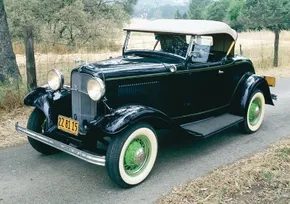
The 1930 Model A wasn’t just a badge change. It was a visual evolution. Edsel Ford, Henry’s artistic son and president of the company since 1919, handled the styling. Critics back then called it “little Lincoln.” Today, we just call it classic. The hoodline sat higher. The fenders dropped and widened. Stainless steel replaced nickel plate on the radiator and headlight shells.
Tech updates mattered too. The switch to balloon tires on smaller 19-inch wheels lowered the stance. That numerically higher steering ratio reduced effort at the wheel. Vacuum-operated windshield wipers moved from an extra-cost option to a standard feature.
Body styles were abundant. Coupes. Sport coupes. Roadsters. Cabriolets with rumble seats. Tudor and Fordor sedans. Even a dignified Town Sedan. And a wood-body station wagon. Standard trim started at $435 for a basic two-seat roadster. DeLuxe trim offered brighter colors and spiffier interiors. The Town Sedan topped that list at $660.
For the wealthy, there was a Town Car with a canvas-covered formal roof. Only 96 sold at $1,200. In June, a DeLuxe two-door phaeton arrived for $625. It held five passengers. It had a left-sidemount spare, chrome trunk rack, leather upholstery, and a lower steering wheel. By autumn, the Victoria coupe bowed out with a slanted windshield. Detroit copied that slant almost immediately.
1931 brought little visible change. Just a painted section atop the radiator shell to help with identification.
But the market shifted. Chevrolet pushed hard. In 1931, Ford lost the volume crown. It was close, though. Ford finished behind Chevy by only about 4,100 cars. Ford wouldn’t reclaim the top spot until 1934.
That loss masked a massive win. Ford introduced the low-priced V-8. It was the first of its kind in America.
1931, 1932, 1933, 1934 Fords and Ford V-8
The V-8 That Shook Detroit
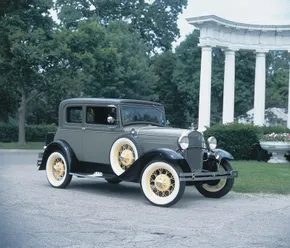
Henry Ford had toyed with the idea of a radical X-8 engine for what was supposed to be the Model T’s successor. He abandoned that concept, opting for a conventional V-8 instead. Work on that block began discreetly in 1930. But Henry didn’t let go easily. He imposed peculiar conditions on his engineers. The result? Delays. The Model A launched as an interim measure with only four-cylinder power. Production of the A wound down in autumn 1931, though dealers kept selling them until April 1932.
Then came the Model B. It was a revised four-cylinder car. It shared evolutionary styling with the new 1932 V-8 Model 18. Both rode on a 106.5-inch wheelbase. That was three inches longer than the Model A. The body styles remained broadly similar. The difference lay under the hood.
The V-8 was a bargain. Standard roadsters, coupes, and phaetons listed for under $500. Buyers were skeptical. Ford knew this. They kept four-cylinder production running through 1934 to ease the transition.
Power, Speed, and Early Hiccups
Ford’s first V-8 was the famous cast-iron flathead. It displaced 221 cubic inches. Initial output was 65 horsepower. Compare that to the 40/50 horsepower from the 200.5-cid Model A/B four. The V-8 hit a sensational top speed of 78 mph. It caused a storm of public interest.
Ford took in over 50,000 advance orders. Millions showed up for the March 1932 unveiling.
Henry watched every move. He badgered his engineers. He told them exactly what to do. His urgency to get the engine to market left little room for durability testing. Trouble surfaced almost immediately. Cylinder-head cracks were common. Excessive oil burning plagued early models. Some engine mounts worked loose. Ignition problems cropped up.
Ford replaced pistons by the thousands to calm worried owners. The difficulties hurt sales. But the issues didn’t last long. The V-8 soon earned a reputation for reliability. It could handle considerable “heating up.” Hot rodders loved it.
Style and Streamlining
Fords looked more flowing in 1933. Detroit was swinging toward streamlining. Edsel Ford had been an important force in Dearborn design for some time. His tasteful new ’33 Ford was universally applauded.
The hood extended back to the windshield. Fenders were skirted and dipped low in front. Sharp corners were rounded off. Rear-hinged doors appeared on closed models. A longer wheelbase helped. It stretched to 112 inches. This dimension would remain through 1940. Wheel diameter shrank to 17 inches.
V-8 durability kept improving. The frame was completely redesigned. V-8 production hit full strength. Ford’s model-year volume rose by 100,000 cars. That was impressive for difficult 1933. It wasn’t enough to beat Chevrolet. Still, the speedy Ford V-8 attracted a legion of fans.
One fan was John Dillinger. Public Enemy Number One wrote to Henry Ford. He praised the product. An unsolicited testimonial from an outlaw.
Refinement and the End of an Era
Appearance became smoother still on the 1934 40A line. The V-8 itself got updates. A new carburetor and manifold increased advertised horsepower to 85. Some claim actual power was 90. Most early problems were just bad memories by now.
The four-cylinder engine was breathing its last. The Standard two-passenger coupe still sold for little more than $500. The DeLuxe Fordor cost only $615. Safety glass was newly featured on closed models.
1935, 1936, 1937, 1938, 1939 Fords
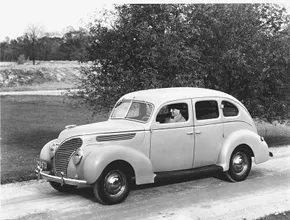
The Iron Mountain Iron
Ford didn’t just build cars in the mid-30s. They built them out of trees.
The station wagons started as Model As in 1929, with bodies carved from birch or maple by the Mingel Company in Kentucky. Murray and Briggs did the heavy lifting in Detroit. But by 1935, Henry Ford decided to go vertical. Literally. He moved body production to Iron Mountain, Michigan. Right in the Upper Peninsula. Why? Hardwood forests. No transport costs. Just logs in, wagons out.
The 1935 Model 48: Bulky but Lively
The 1935 Model 48 changed the look. Windows shrank. The grille went deeper into a V-shape. Sedans finally got an integral trunk. It looked like a bulky “bustle” at the back, sure. But it killed the external trunk rack. Killed the spare tire carrier too. Cleaner lines.
Under the hood, the V-8 got a new camshaft. Crankcase ventilation improved. The frame and rear axle got beefed up. It was lively. Really lively.
But look at the suspension. Archaic. Solid axles front and rear. Transverse leaf springs. No innovation here. Ford wouldn’t fix this for thirteen years. And mechanical brakes lasted until 1939. Old Henry was stubborn. Simplicity was his religion. He did let go of wire wheels after 1935, switching to steel. A small concession.
1936 and 1937: Hiding the Horns and the “V-8/60”
1936 brought minor tweaks. A longer, sharper hood. The grille V deepened. Horns moved behind little covers in the grille. Hiding components became the trend. You could still buy seven body styles in Standard trim. DeLuxe jumped to fourteen.
Then came 1937. The “V-8/60.”
A smaller 136-cid V-8. Designed for Europe where tax laws favored smaller engines. In America, it made 60 horsepower. It was supposed to be the economy choice. It failed. Buyers wanted power, not a lower price tag. The main 221 cid engine became the “V-8/85.”
The 221 got better cooling. Relocated water pumps. Larger bearings. Cast-alloy pistons.
The big story of ’37 was styling. Ford copied GM’s “Turret-Top” concept. All-steel bodies. No more fabric roofs. The result was crisp. Headlamps settled into the fenders. The grille was a prow of horizontal bars stretching back at the top. Lighter. Cleaner. One of the prettiest cars of the decade.
Even FDR bought a convertible sedan for his Warm Springs retreat.
1938 and 1939: Two-Tier Styling and the End of the Roadster
1938 split the line. “Two-tier styling.” Standards used modified ’37 bodies. DeLuxes got a fresh, new look. The roadster died. The phaeton faded out. Ford was late to the party. Plymouth killed theirs in 1932. Chevy in 1935.
The V-8/60 line shrank. Just a coupe, Fordor, and Tudor. Sales were slow. The 1938 styling was bulbous. A variation on the previous year.
1939 changed the DeLuxe again. Lower V-grille. Vertical bars. Clean fenders. Integral headlamps. E.T. “Bob” Gregorie designed it. Edsel Ford guided him.
The Standard? It looked like a warmed-over 1938 DeLuxe. The convertible sedan left the DeLuxe line for good. Prices ticked up to $599-$921.
Mechanically, Ford finally switched to hydraulic brakes. Internal engine updates borrowed from the new Mercury. But it took three years after Chevy and eleven after Plymouth to catch up.
They still couldn’t match independent front suspension. Not until 1949.
1940, 1941, 1942 Fords
The war approached. The cars got simpler. Heavier. The luxury of style gave way to utility. The V-8 remained the heart, but the soul was changing. The open road was closing.
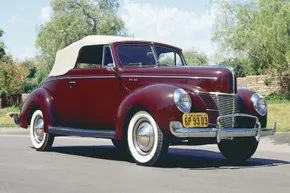
Gregorie’s work on the 1940 Ford line didn’t just polish the aesthetic; it carved out a legacy. The DeLuxes, in particular, became instant classics, their sealed-beam headlamps tucked neatly into upright nacelles that felt more purposeful than the previous year’s designs.
The fenders were sculpted with a curvature that hugged the body lines perfectly. For those who liked it even sleeker, rear fender skirts were the go-to accessory. Standards kept it simple with a vertical-bar grille borrowed from the ’39 DeLuxe. DeLuxes, however, got the treatment. A chromed horizontal bar ran through the center, flanked by painted “catwalk” subgrilles. It was a busy look. A flashy look.
But styling doesn’t always equal sales.
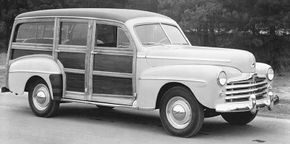
1940 marked the end of the road for the V-8/60 engine. That little-loved powerplant was dropped for good. In its place came the first Standard-trim wood-bodied wagon. The lineup was broad. The prices were attractive, sitting between $620 and $950. And yet, Ford still trailed Chevrolet by a staggering 222,720 units.
Think about that gap.
Ford had been the undisputed “USA-1” from 1934 through 1937. Then came the recession year of 1938. Chevy took the lead, beating Ford by about 55,000 cars. The math didn’t lie. 410,200 to 465,000-plus. The crown had slipped.
The Mercury Miscalculation
Inside the company, tensions were brewing. Some dealers were unhappy with Edsel Ford’s new Mercury. They argued for a six-cylinder Ford instead. That was, after all, the original concept.
Edsel had promised a six. He had to reckon with his father, Henry. But Henry Ford was known for strange turnabouts. He approved the Mercury V-8 project. Edsel went back to the drawing board.
The result was the 1941 L-head six.
It displaced 226 cubic inches. It made 90 horsepower. That was five more cubic inches and five more horsepower than the V-8. It was a bit embarrassing for the V-8 team. The little six was punching above its weight.
Bigger, Flashier, Heavier
The 1941 Fords were the biggest and heaviest yet. The wheelbase stretched two inches to 114. The bodysides ballooned outward. A stouter frame added an average of 100 pounds to the curb weight.
Styling was evolutionary, not revolutionary. Front fenders were wider and more integrated. The grille became a busy vertical-bar design with a tall center section. Low subgrilles sat on either side. The rear fenders grew. Coupe rooflines went rakish.
The lineup expanded to include the Special, the DeLuxe, and the new Super DeLuxe. All offered with either the six or the V-8. Prices started at $684 for a six-cylinder Special coupe. The top of the line? A V-8 DeLuxe woody wagon for $1,013.
That was the first factory-built Ford to break the $1,000 barrier.
Did it move units? Not really.
Ford’s total volume ticked up to near 691,500. But Chevy? They went even higher. Slightly over a million. Ford remained at about two-thirds of Chevy’s volume. The gap wasn’t closing. It was widening.
The End of an Era
1942 brought minor tweaks and major reality checks. The grille dropped and widened. Vertical bars were surmounted by rectangular parking lamps in the vestigial catwalks.
The V-8 got a boost. It was pushed up to 90 horsepower, matching the six. Likely done by the stroke of an engineer’s pen. If the V-8 cost more, Ford reasoned, it should have at least as much power on paper. Even if it was just a number.
Specials were now six-cylinder only. The rest of the lineup stayed the same. Prices hiked by about $100 across the board.
Then the government stepped in.
Civilian production ended on February 2, 1942. Ford had built just 43,000 cars from January 1 to that date. The model-year total sat just shy of 160,500.
Chevy? They pulled away. Quarter-million-plus.
The war was here. The numbers stopped making sense in the same way. The styling, the horsepower wars, the wheelbase stretches—all of it paused. The factory gears shifted. The sportsmen went quiet.
Henry Ford II was waiting in the wings. The old guard was stepping aside. But for now, the assembly
Henry Ford wasn’t a man who aged gracefully. He was in his late 70s when Pearl Harbor happened. A lifelong pacifist, he still understood that WWII was different than the Great War. His company was already geared up for war production.
The Willow Run plant in Michigan was a mile long. It churned out bombers until 1945. Ford also built Jeeps alongside American Bantam and Willys-Overland. But inside the family, things were rotting.
Edsel Ford died in 1943. He was 49. A broken man.
Henry Sr. refused to let go. He clung to the wheel even as the company stumbled. It took family pressure to finally push him out in 1945. The reins went to his grandson. Henry Ford II. “HFII.” He held the position for 33 years. Mostly successful ones.
Henry Sr. died in 1947. HFII was different. He hired talented managers. He also fired or forced them out once they got too powerful. The family still owns a chunk of the stock, but it’s an operation now. Not a kingdom.
Back to Civilians
HFII moved fast. V-J Day passed. Ford Division led the industry in volume for model-year 1946. It was a temporary crown. Chevrolet came roaring back in 1947 and stayed “USA-1” through 1948.
The 1946 cars were mostly restyled 1942 designs. But there were tweaks. The V-8 was bored out to 239.4 cubic inches. That netted an extra 10 horsepower. The low-priced Special Six line was dead. You could still get a six in DeLuxe and Super DeLuxe models. Or you could get an eight.
There was also the Sportsman.
This was the only other V-8 convertible. Bob Gregorie designed it from wartime sketches. It looked like a Chrysler Town & Country. White ash and mahogany trim on the doors, rear panels, and deck. Wood over steel. It was a cheap trick to make old lines look fresh.
Did it sell? No.
It cost $500 more than the steel top. Just 1,209 units moved in 1946. 2,250 in 1947. 28 in 1948. Those last 28 were actually reserialized ’47s. Dead inventory.
The Wait for Something New
1947 brought shuffled nameplates and lower-mounted round parking lights. That was it. Inflation hit hard. Prices averaged $100 higher. But nobody cared. The car-starved market just wanted rolling metal.
Ford pushed out 429,000 units in 1947.
Production crashed to 248,000 in 1948. Not because demand died. Because they stopped building the old cars early. To clear the floor.
They were waiting for June 1948.
The first all-new postwar Ford was coming. Anticipation was at a fever pitch. The old warhorses were tired. The public was tired. They didn’t want a restyle. They wanted a revolution.
The 1949 Ford
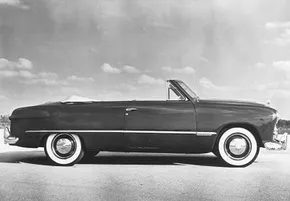
Styling the 1949 Ford wasn’t just an internal memo. Ford actively solicited ideas from freelancers and in-house teams, creating a chaotic, competitive environment. One outside contender was led by George Walker. He brought in Richard Caleal, a former GM and Raymond Loewy employee, to work alongside designers Joe Oros and Elwood Engel.
Caleal didn’t get along with the direction Walker’s team was taking. He got kicked off the project. But he didn’t quit. He was given permission to pursue his own ideas at his Indiana home.
He worked in his kitchen. Clay modelers Joe Thompson and John Lutz helped him shape the concept. It wasn’t a studio. It was a kitchen.
Later, Henry Ford II and other executives gathered at Walker’s studio. They viewed proposals from Caleal, Ford styling head E.T. “Bob” Gregorie, and the Oros/Engel duo. The executives selected Caleal’s design. It went into production basically unchanged. The only tweak? Vertical taillights were made horizontal and bled into the rear quarter panels.
The result? Sales figures Ford hadn’t seen since 1930. Over 1.1 million units moved during the extra-long model year. It was nowhere near as radical as the 1950-51 Studebaker, but it sold. Walker was named design chief for all of Ford Motor Company in 1955. He deserved it.
Why the ’49 Ford Mattered
The 1949 Ford was crucial to Dearborn’s survival. Young Henry II was still scrambling. He had inherited organizational and fiscal chaos from his grandfather. The company was losing money by the bucketful.
The ’49 was the most-changed Ford since the Model A. It was a hit.
Wheelbase and engines remained unchanged from the 1946-48 models. But the car was three inches lower. Fractionally shorter. Usefully lighter.
More importantly, the chassis was modern. Dearborn got its first fully independent front suspension. Coil springs. Upper and lower A-arms. The rear end was equally modern. Open Hotchkiss drive replaced the torque-tube. Parallel longitudinal leaf springs supported the live axle.
It all added up to a sprightly performer. It could run circles around rivals from Chevrolet and Plymouth. A ’49 Ford couldn’t quite reach 100 mph. But hopping up the flathead V-8 was simple. Cheap. Easy.
Multiple carburetors. Headers. Dual exhausts. These “speed parts” were as close as local auto stores. Enthusiasts knew this. They leaned into it.
Trim Lines and Tech Stumbles
Ford briefly considered retaining the low-selling Sportsman. They dropped it for ’49. Offerings regrouped into Standard and Custom series.
The Standard line offered six-cylinder and V-8 Tudor and Fordor models. Business and club coupes were included. The better-trimmed V-8-only Custom deleted the business coupe. It added a convertible. And a new two-door structural-wood wagon. This replaced the previous four-door style.
Prices rose again for 1949. The range hit $1333 to $2119. Overdrive was optional across the board at $97.
Ford didn’t have its own automatic transmission until 1951. They tried to get one earlier. Studebaker developed an excellent automatic for 1950 in association with Warner Gear. Ford wanted to buy it. Studebaker refused.
Much to Ford’s later regret.
The Human Cost of Speed
The ’49 Fords suffered handling and noise problems. These stemmed from the rushed design program. Workmanship suffered for the same reason.
A 24-day auto workers’ strike in May 1948 didn’t help.
Even with those flaws, these were very worthy automobiles. They were the first tangible evidence that Henry II was firmly in charge. He was ably assisted by the youthful “Whiz Kids” team of executives and engineers.
Robert S. McNamara was one of them.
The groundwork was laid. The foundation was set. But the real revolution was just beginning, lurking in the shadows of the next five years.
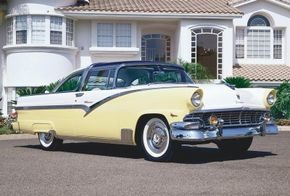
The Ford Comeback: From Flatheads to Y-Blocks
Ford didn’t just survive the post-war slump; it clawed its way back. By 1952, the blue oval had officially overtaken a stumbling Chrysler to claim the number-two spot in sales volume. The secret wasn’t rocket science. It was simply interesting cars that people actually wanted to drive.
The groundwork was laid in 1950. Ford spent the year fixing the bugs that plagued the 1949 models. Their advertising screamed “50 Ways New, 50 Ways Better.” And for the most part, they were right. The ride was tighter. The cabin was quieter. Handling in corners and over rough pavement improved significantly.
But the real story of 1950 was the 1950 Ford V-8 Crestliner.
This wasn’t just a trim level. It was a special-edition Custom Tudor, priced $100 to $200 above standard models. It looked the part with a padded canvas top and sweeping contrast-color panels. It was snazzy. It was expensive. It failed.
Sales hit a modest 17,601 units in 1950. Then dropped to 8,703 in 1951. The Crestliner’s true purpose wasn’t volume. It was a shield. It existed to counter Chevrolet’s new hardtop-convertible hybrid, the Bel Air. Ford needed a weapon. They built one. It just didn’t sell like hotcakes.
Otherwise, the 1950 lineup was predictable. The main visual change? A crest badge replaced the Ford lettering above the “bullet” grille. Instant identification. Prices stayed steady, ranging from $1,333 for a DeLuxe business coupe up to $2,028 for a Squire.
There was a catch, though. Ford still lacked a hardtop body style. And no fully automatic transmission. Chevrolet had both. And Chevrolet sold nearly 1.5 million cars, taking the “USA-1” title. Ford managed 1.2 million. It was good. It beat 1930 records. But it wasn’t enough to dethrone Detroit’s primary rival.
The 1951 Facelift and the Korean War Blitz
Ford decided to get aggressive in 1951. They dropped prices slightly. They gave the front end a facelift, swapping single bullets for twin bullets on a thick horizontal bar. The interior got a redesigned dash for a more upscale vibe.
Transmission technology finally arrived in the form of Ford-O-Matic Drive. It was a three-speed automatic designed to kill Chevy’s Powerglide. Here’s the dirty secret: it wasn’t fully automatic. Second and third gears shifted on their own. But dropping into Low? You had to do that manually. It was a compromise. A clever one, but a compromise nonetheless.
The Custom wagon got a new script name: Country Squire. This would be the last true wood-bodied Ford. After that, wood became veneer. Then decals.
The headline act was the Custom V-8 Victoria. Ford’s first hardtop coupe. Again, it was late to the party. Chevy had the Bel Air. But the Vicky sold. It moved 110,000 units in its debut season. It was every bit as popular as the Chevy alternative.
Total model-year volume dipped by 200,000 cars. But Chevy dipped by the same amount. Why? The Korean War. Government restrictions on civilian production hit both giants equally.
The 1952 Redesign and the End of Wood
1952 brought a clean, square-rigged new Ford. One-piece windshield. Simple grille. Small round tail-lamps. An “air scoop” motif on the lower rear flanks. This basic design would remain untouched through 1954.
Wheelbase stretched to 115 inches. The lineup started cheap. Mainline Tudor/Fordor. Business coupe. Two-door Ranch Wagon. Then Customline sedans. Club coupes. Four-door Country Sedan wagons.
Topping the heap was the V-8 Crestline group. Victoria hardtop. Sunliner convertible. And the Country Squire wagon.
Important shift: these were Ford’s first all-steel wagons. The Squire switched from real wood to wood-look decals. Gordon Buehrig, the genius behind Auburns, Cords, and Duesenbergs, helped design them. He also worked on the ’51 Victoria. Doing more with less was the mandate.
Under the hood, a new 215.3-cid overhead-valve six became standard for Mainline and Customline. 101 horsepower. The flathead V-8 got a tweak, pushing to 110 horsepower.
1953 was the Golden Anniversary of the Ford Motor Company. Special steering-wheel-hub medallions proved it. Aside from that and minor cosmetics, the ’53s were basically ’52s with higher prices. $1,400 to $2,203.
Then came the blitz.
With the Korean War over, Ford Division built 1.2 million cars. They edged out Chevrolet for the model year. Chevy consoleled itself with calendar-year supremacy, but Ford won the annual tally.
How? They dumped cars on dealers. They forced dealers to buy inventory so they could sell below cost. It was a production blitz.
Chevy wasn’t hurt. They had the scale. But Studebaker? American Motors? Kaiser-Willys? They got crushed. They couldn’t afford to discount like Ford. This blitz is widely considered a key factor in the mid-50s decline of the independent manufacturers.
The Y-Block and the Skyliner’s Glass Ceiling
The venerable flathead V-8 was retired in 1954. It was replaced by the overhead-valve “Y-block” V-8. Named for its cross-section shape. 130 horsepower. It was easily the hottest engine in the low-price field.
Ball-joint front suspension arrived simultaneously. The engineering gap between expensive and inexpensive cars shrank dramatically. The initial displacement stayed at 239 cid. But the “oversquare” cylinder dimensions were different. Compression started at 7.2:1. Could go as high as 12:1 if needed. (It wasn’t, usually.)
The rest of ’54 was familiar. Except for a larger 223-cid overhead-valve six. 115 bhp.
The star was the Skyliner. A novel new hardtop. The Crestline Victoria with a transparent, green-tint Plexiglas roof insert over the front seat.
Gordon Buehrig suggested it. L. David Ash, interior styling director, realized it. It was a forerunner of the modern moonroof.
It cast a strange light inside. Heat buildup was a major problem. The price matched the Sunliner convertible: $2,164.
Sales stalled at 13,344 units. Only the Country Squire and Mainline business coupe sold worse.
1955: Reskinned and Reinforced
They kept the 1952-54 shell for 1955. But they completely reskinned it.
Franklin Q. Hershey handled the styling. The same man who gave us the two-seat Thunderbird. The result was colorful. Chromey. Rakish. The windshield was modestly wrapped. It looked like it was in motion even when parked.
Club coupes were abandoned. Wagons got their own series. Crestline was renamed Fairlane. Named after the Ford family estate in Dearborn.
The horsepower race went full gallop.
The 239-cid V-8 was ousted. Replaced by a 272-cid enlargement. It packed 162 horsepower as a base option. 182 horsepower if you spec’d it right. Available on all models.
The standard six gained five bhp. 120 total.
The stage was set. The competition was bleeding. And Ford was finally ready to stop playing catch-up.
The Crown Victoria Bubble and Chevy’s Dominance
The Skyliner vanished after the ’55 model year, but Ford didn’t just let the roof idea die quietly. They pivoted to the Fairlane Crown Victoria.
It was a hardtop-style two-door sedan that looked like it had been caught in a wind tunnel designed by a sculptor. The defining feature? A bright metal band wrapped up and over the steeply angled B-posts. It looked like a roll bar. It wasn’t. No structural strength there. Just style.
Ahead of that faux roll bar sat a Plexiglas insert. You saw this same trick on the Skyliner, but here it served a different purpose. It was about light. About making the cabin feel bigger than it was.
The Price of Glass
Ford offered a full steel-roof version of the Crown Victoria too.
It cost $70 less than the “bubble-topper.”
Predictably, people bought the steel roof.
The numbers don’t lie.
- 1955 Steel Roof Sales: 33,000+ units
- 1955 Bubble Top Sales: 1,999 units
The market spoke clearly. Nobody wanted the complexity of the bubble.
The trend continued into 1956.
- 1956 Steel Roof Sales: 9,209 units
- 1956 Bubble Top Sales: 603 units
By then, Ford had had enough. The Crown Vic was dumped. No more bubbles. No more fuss.
1955 Was a Banner Year
Ford as a whole did splendidly in 1955.
They shattered their postwar record set in 1953. The tally? Nearly 1.5 million cars built.
It felt like victory.
It wasn’t.
The Chevy Factor
The division was done in by an all-new Chevy.
Chevy tallied better than 1.7 million units.
One point seven million.
That’s a massive gap.
Ford was winning its own battle, but losing the war to Detroit’s other giant.
The Retreat of ’56
The industry retreated in 1956.
Volume declined for both makes.
But Ford held on better.
Ford dropped by fewer than 50,000 units.
Chevy lost nearly 200,000.
The Chevy stumble gave Ford breathing room.
Just enough to survive the year.
Not enough to change the hierarchy.
The bubble was gone. The rivalry remained.
The 1956 lineup wasn’t just a refresh. It introduced the Customline Victoria and the Fairlane Town Victoria, Ford’s first four-door hardtop. Safety took center stage with “Lifeguard Design” features. Every car got a dished steering wheel, breakaway rearview mirror, and crashproof door locks. Padded dashboards and sunvisors cost an extra $16. Factory seatbelts were $9.
Buyers went crazy for the belts early on. The supplier couldn’t keep up. Only 20% of 1956 models actually got them. Ford kept pushing safety for a while. But performance quickly became the real headline. The 272 cubic-inch V-8 hit 173 hp in the Mainline and Customline. A new 312-cid “Thunderbird” V-8 offered 215 or 225 hp. Midrange buyers got a 292-cid V-8 with 200 hp.
The 1957 Overhaul
1957 was all-new. Five series replaced the old Mainline and Customline. The 116-inch wheelbase covered Station Wagons and Custom/Custom 300 sedans. The 118-inch chassis powered the Fairlane and the new Fairlane 500. The 223-cid six was standard everywhere except one model. V-8s ranged from 190 hp in the 272 up to 245 hp in the 312.
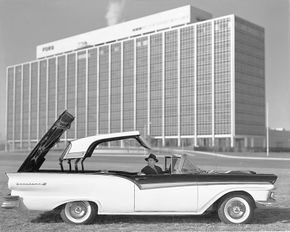
Fairlanes came in two- and four-door Victorias. Thin-pillar versions looked like hardtops with the windows up. The Skyliner name returned in mid-1957. It sat atop the Fairlane 500 series. It was the world’s first mass-produced retractable hardtop. The engineering came from Continental Division’s earlier work on the 1956 Mark II “retrac” concept.
Styling was simple. Blunt face. Full-width rectangular grille. Tiny tailfins. It was clean compared to Chevy’s second facelift in two years. Structural weaknesses hit the roof panels hard. Rust was a killer. You don’t see many 1957 Fords today because of that.
Yet 1957 was a massive year for sales. Ford moved nearly 1.7 million cars. Chevy sold 1.5 million. Calendar-year stats showed Ford ahead for the first time since 1935. Chevy won by just 130 cars in the end.
The Skyliner Sales Crash
Demand for the Skyliner dropped fast.
- 1957: 20,766 units
- 1958: 14,713 units
- 1959: 12,915 units
New division chief Bob McNamara wasn’t interested in keeping it. Profits were down. The model was axed after 1959. These “retracs” are prime collectibles now. The concept didn’t die, though. It came back in the new millennium.
1958: Recession and Big Blocks
Chevy went all-new. Plymouth restyled modestly. Ford responded with a glittery facelift. Quad headlamps. Quad taillamps. Massive bumper and grille, borrowing from the ’58 Thunderbird. More anodized aluminum trim.
Engine options expanded. Two new “FE-series” big-blocks arrived. The 332 made 240 or 265 hp. The 352 hit 300 hp. A deep national recession hit hard. Ford volume tanked to just under 988,000 cars. Chevy sold over 1.1 million. They spent more money to do it.
1959: Square Lines and Galaxie
Chevy unveiled “bat-fin” cars for 1959. Ford went conservative. That strategy closed the gap to less than 12,000 units. The body was a major reskin of the 1957-58 shells. Square lines. Simple side moldings. Heavily sculptured “flying-V” back panel. Low, rectangular grille with floating starlike ornaments.
All previous models continued. They were now on the 118-inch wheelbase. Midseason brought the Galaxie series. Two- and four-door pillared and pillarless sedans. Buyers loved the square but stylish Thunderbird-inspired wide-quarter rooflines. Sales were strong. The Sunliner convertible and Skyliner retractable gained Galaxie rear-fender script. They kept Fairlane 500 ID at the rear.
Engine lineup shrank slightly.
- 292 V-8: 200 hp
- 332 V-8: 225 hp
- 352 V-8: 300 hp
Ford carried over the Cruise-O-Matic three-speed automatic. It was smooth. It proved a sales plus against Chevrolet’s Powerglide. It wasn’t as responsive as Plymouth’s TorqueFlite, but it held its own.
Henry Ford II’s Victory
For Ford Motor Company, 1959 justified the efforts of Henry Ford II and chairman Ernest R. Breech. They took control of a third-rate company in 1945. In less than 15 years, they built something approaching General Motors.
The 1960s would mirror Chevy’s path. By the decade’s end, Ford sold only about 400,000 more cars per year than in 1960. They expanded into economy compacts and intermediates. Sportier standard-size models arrived. Like Chevy, they built diverse types on few wheelbases.
The personal-luxury Thunderbird got its own story. The new-for-’65 Mustang “ponycar” was another specialized beast. But the foundation was set. The Skyliner was gone. The Big Block was here. And the Galaxie was ready to take over the showroom floor.
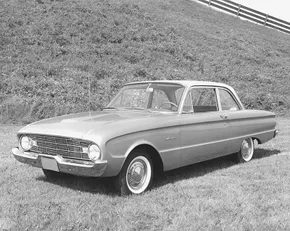
The Ford Falcon: America’s First Compact
Lee Iacocca didn’t just manage the Ford Division in 1960. He reshaped it. His arrival signaled the end of Bob McNamara’s era of boring people-movers. By 1970, Ford was offering actual excitement.
The shift in strategy was clear. Ford stopped following Chevrolet. It started leading.
The Falcon outsold the Corvair. The Fairlane launched two years before the Chevelle. And the Mustang? That forced Chevy to scramble for a Camaro.
Compacts and Compromises
Summarizing ’60s Fords comes down to size. The smallest was the Falcon. It arrived in 1960 as one of the Big Three compacts. You had the Corvair. You had the Valiant. Then you had the Falcon.
Wheelbase was tight. 109.5 inches through 1965. Then it stretched to 110.9. Wagons got 113.
Body styles were practical. Two- and four-door sedans. Four-door wagons. Hardtop coupes and convertibles showed up for 1963-65. All were unit construction.
Some saw the pre-’66 Falcon as a disposable car. Designed to sell under $2,000. Meant to be junked in five years. Maybe even one.
Others saw the Model A reborn. Cheap. Cheerful. Simple, not spartan.
Under the Hood
Suspension was conventional. The engine was cast-iron. Mostly a 170-cid six. 101 horsepower.
It looked dull next to Corvair engineering. But it rode well. It was roomy. It hit 20-25 mpg.
Shadetree mechanics loved it. They wouldn’t touch the complex Chevy compact. Service was easy. Sales dipped due to internal and external competition. The Falcon remained profitable.
The Sprint Factor
The Falcon answered the Corvair Monza in spring 1961. The Futura two-door featured bucket seats.
1964-65 brought a reskin. Pointy front fenders. Square, less distinctive lines.
The prime collector model is the Futura Sprint. A pretty convertible and hardtop coupe. Sold from mid-1963 through ’65.
It had power. The “Challenger” small-block V-8 from the Fairlane. First a 260 with 164 horsepower. Then a 289 with about 200 horsepower in ’65.
This engine lived on. The 302 evolution lasted into the 1990s. It transformed Falcon performance. Mileage stayed stable.
Sprints had special exterior ID. Vinyl bucket seats. A console. A 6000-rpm tachometer. Add a four-speed manual. Great fun to drive.
The Final Curves
1966 Falcons were shorter Fairlanes. Curvy GM-like contours. Long hood, short deck. Mustang proportions. This form lasted through early 1970.
1967 was the last year before emissions controls. The 289 packed 225 horsepower in Stage 2 tune. Four-barrel carburetor. Very fast. The pillared Futura Sport Coupe was the sportiest.
1968 detuned the 289 to 195 horsepower. The 302 arrived as an option.
Regular gas. Two-barrel carb. 210 bhp. Four-barrel on premium? 230 horsepower. Emissions killed that soon.
End of an Era
Mid-1970 brought the final Falcons. A stark wagon. Two sedans. Derived from the Torino. Which evolved from the Fairlane.
Engines ranged from a 155-bhp 250-cid six to a big-block 429-cid V-8. 360-370 horsepower.
The name had outlived its usefulness. Ford had the Maverick. The Falcon went to history.
1962, 1963, 1964, 1965, 1966, 1967, 1968 Fords and the Ford Fairlane
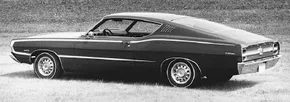
The Fairlane’s Foundation
Let’s rewind to 1962. Ford didn’t just tweak the Falcon. They stretched it. The new midsize Fairlane sat on a 115.5-inch wheelbase, essentially a bigger Falcon with more room. It mirrored what Virgil Exner was doing at Chrysler with the downsized Plymouths and Dodges. But Ford kept the full-size Custom and Galaxie lines alive. Smart move. Even though the Fairlane moved over 297,000 units in its debut year and topped 300,000 in ’63, the big Fords still held their ground.
Price helped. $2,100 to $2,800 rang true for buyers. But the real story under the hood changed everything.
The Small-Block Revolution
This is where the Ford small-block V8 enters the chat. Introduced with the Fairlane, this engine became the backbone of Ford’s hot rod credibility for the decade. Bored out to 289 cubic inches for 1963, it made up to 271 horsepower. Nearly one hp per cubic inch. It was smooth. Powerful. Surprisingly frugal.
The definitive small V-8 was born here, not in a race shop, but in a sedan.
Racers knew what to do with it. The Ford GT40, powered by a tuned version of this block, nearly stole the World GT Manufacturers Championship from Ferrari in 1964. Its first full season. Then the big-block GTs took the LeMans 24-Hours in ’66 and ’67. No substitute for cubic inches? The engineers proved that wrong.
Evolution of Trim and Style
Early Fairlanes were straightforward. Two- and four-door sedans. Base trim or the sportier 500. Bucket seats in the 500 Sport Coupe. By 1963, wagons arrived—the Ranch and Squire models. Plus two-door hardtops.
1964 brought handling tweaks. Stiffer suspensions. Four-speed gearboxes. The hardware started catching up to the engine.
Then came 1966. Complete rebodge. Wheelbase stretched to 116 inches, though wagons stayed at 113. The look tightened up. Curved side glass. Flared flanks. Stacked quad headlamps. Vertical taillights kept things tidy.
At the top of the heap sat the 500XL. Hardtop coupe. Convertible. Base or GT trim. Standard XLs ran on a 120-hp 200-cid six. Most buyers didn’t want that. They opted for the optional 289 V-8.
The GTs carried the big-block 390. 335 horsepower. Potent. You could order that engine on any Fairlane. Racers stripped down two-door sedans, bolted in the 390, and earned serious respect on the track. Competitive prowess didn’t care about back seats.
Enter the Torino
1968 brought another body change. Same wheelbase. New name at the top: Torino. Ford’s lushest intermediate yet.
Base and 500 lines continued. But the Torino GT brought new toys. Convertible. Hardtop coupe. New fastback hardtop. These models ditched the six-cylinder. Standard fitment was the 210-hp 302-cid V-8. Interior? Buckets and console. Pinstriping. Performance options a salesman couldn’t memorize.
The 1969 Cobra Jet Era
1969 models were essentially 1968 repeats. Except for the new fastback and notchback Torino hardtops. They got the name Cobra. Nod to Carroll Shelby’s muscular sports cars.
Under the hood sat the 428 V-8. 335 horsepower. This engine debuted in the “1968½” Mercury Cyclone as the Cobra Jet.
Options mattered. The $133 Ram-Air package featured a fiberglass hood scoop. It connected to a special air-cleaner assembly with a valve. Incoming air ducted straight into the carb. No restrictions.
Standard equipment included a four-speed manual gearbox. Stiff suspension. Racing-style hood locks.
One magazine test was surprisingly underwhelmed. Zero to sixty in 7.2 seconds. Quarter-mile in 15.0 seconds at 98.3 mph.
Most critics admitted one thing: it was the best-built.
Compare that to the other “supercars” of 1969. Plymouth GTX. Dodge Charger R/T. Pontiac GTO. Chevelle 396. Buick GS 400.
The Torino Cobra was tighter. Quieter. Better assembled.
Stock Car Reality
Could it race? Absolutely. Ford noticed the Cyclone’s body was slightly more aerodynamic. In stock car contests over 250 miles, Mercuries usually beat Fords.
But a race-prepped Torino? It hit 190 mph. Lee Roy Yarborough drove one to win the ’69 Daytona 500.
The Big Fords
While intermediates dominated the headlines, Ford’s full-sizers were heavy. Custom. Custom 500. Fairlane. Fairlane 500. Galaxie. Galaxie 500. And station wagons.
Wheelbase swelled to 119 inches in 1960. Then 121 inches after ’68.
These cars weighed 3,000 to 4,000 pounds. Not fun in a parking lot. Rewarding only on the Interstate. But certain variations handled winding roads surprisingly well for their size.
Full-Size Fords
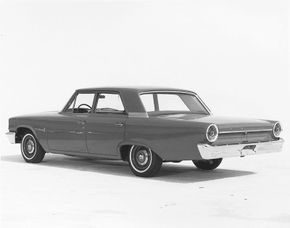
The full-size Fords that defined the early 1960s started fresh with new bodyshells that stayed in production through 1964. This generation was significantly longer, lower, wider, and sleeker than the boxy 1959 predecessors. They even borrowed a hint of Chevrolet’s batfin styling, though they maintained their own identity with chrome-edged beltlines and expansive glass areas.
The Skyliner convertible vanished, replaced by the fixed-roof Starliner hardtop coupe. Its semifastback profile wasn’t as popular as the square-roof Galaxies, but the aerodynamic shape made it a weapon in NASCAR racing. The Starliner lasted only until 1961, when the lineup received a facelift. A full-width concave grille with inserts reminiscent of the ’59 model arrived, along with round taillights capped by discreet blades.
Power options expanded with the new 390-cid FE-series big-block. It produced 300 horsepower as a standard, but a limited-run “Interceptor” version pushed out 375 or 401 horsepower.
1962-1964: The XL Craze and NASCAR Dominance
1962 brought chunkier, more “important” styling. The lineup regrouped into Galaxie, Galaxie 500, and Station Wagon series. Detroit was obsessed with bucket seats and center consoles, so Ford introduced the midyear 500 XL Victoria hardtop coupe and Sunliner convertible.
The “500” badge referenced NASCAR’s 500-mile races, which Ford dominated. In fact, Ford won every 500-mile event in 1963. The “XL” supposedly stood for “Xtra Lively,” a misnomer since the base engine was just a modest 170-hp 292 V-8 paired with a Cruise-O-Matic transmission.
However, options transformed this sporty cruiser into a beast. You could spec a Borg-Warner four-speed manual or step up to 390 engines with 300, 340, 375, or 401 horsepower. A larger-bore 406 big-block offered 385 or 405 horsepower. By 1963, a bigger bore yielded a 427-cid powerhouse rated at 410 or 425 horsepower. These performance upgrades cost around $400 extra, keeping them relatively rare.
The 1963 “Super-Torque” Galaxies got cleaner lower-body sheetmetal and a simple concave grille. Ford added two “300” sedans, renamed Custom and Custom 500 for 1964. Midyear excitement included 500 and 500XL sports hardtops with thin-pillar “slantback” rooflines. These were starchier than the old Starliners but again aimed directly at stock-car ovals.
The final major restyle for the 1960 body style arrived in 1964. Heavily sculptured lower-body panels, a complex grille, and slantback rooflines on all closed models finalized this era.
Performance Metrics and Handling Flaws
The entire Ford line took Motor Trend’s “Car of the Year” award. This was partly due to the “Total Performance” campaign, but mostly because these big Fords actually delivered. Available small-block and big-block V-8s ranged from 195 to a roaring 425 horsepower.
Even a mild 390 XL could hit 0-60 mph in 9.3 seconds. Drop a 427 in there, and that time dropped to just over 7 seconds. There was one major flaw, however. These cars had a marked tendency to nosedive during panic stops, a problem worsened by overboosted power brakes.
1965-1969: The LTD Era and Production Wars
Ford’s best NASCAR year was 1965. They won 48 of 55 events, including a streak of 32 straight. Luxury, however, became the main showroom focus. The 1965 models were all-new except for the engines. Styling was simpler and more linear, highlighted by stacked quad headlamps. Underneath lay a stronger chassis and a completely new front suspension derived directly from NASCAR experience.
Midway through 1965, Ford launched the poshest big Fords ever seen. The Galaxie 500 LTD hardtop coupe and sedan arrived with a $3,300 price tag, marketed as being “quiet as a Rolls-Royce.” Times were changing. Intermediates were taking over the performance niche, so big Fords no longer needed a “performance” image to move units.
The 1965 platform got a minor touch-up for 1966. LTDs gained “7-Litre” companions powered by the Thunderbird’s 345-hp 428 engine. 1967 brought new outer sheetmetal with flowing lines and “faster” rooflines on hardtops. LTD became a separate three-model series, adding a four-door sedan but dropping the slow-selling 7-Litre models. Hidden headlamps marked the 1968 LTDs and Galaxie XLs as part of a lower-body restyle.
A new bodyshell debuted for 1969. Wheelbase grew by two inches. The newly named “SportsRoof” fastbacks featured a “tunneled backlight,” and hardtops/convertibles got ventless door glass. LTD sales surged. Ford built nearly 139,000 LTDs in 1968. In 1969, they built more than double that number.
Ford kept pace with Chevrolet in the production race, beating them in model years 1961 and 1966. Ford would reclaim the top spot for 1970 and 1971, selling slightly over two million cars to Chevy’s 1.5 and 1.8 million respectively. 1965 was Ford’s first two-million-car year, though it was a strong year for all domestic automakers.
The Stall in the ’70s: A Strategic Failure
Ford wouldn’t lead Chevy again until the late 1980s. In the 1970s, they generally fared well but made critical errors. Dearborn was the last of the Big Three to abandon traditional full-size cars. And the first to suffer for it.
After the OPEC oil embargo and the first energy crisis, Chrysler pushed compacts. GM downsized its entire fleet. Ford stubbornly resisted change. They promoted aging big cars by touting greater passenger space and the “road-hugging weight” safety argument. The public didn’t buy the cynical line. Or the cars.
This denial reflected chairman Henry Ford II’s personal view. He decreed there would be no wholesale rush to smaller cars and no vast capital investment in new technology. As a result, Ford greeted 1980 two to three years behind GM in the fuel efficiency and “space” races. They faced a critical sales disadvantage against domestic foes and a horde of rising Japanese makes.
The firm recovered eventually. But not before drastic product changes were forced upon them.
1970, 1971 Fords, Ford Pinto and Ford Torino
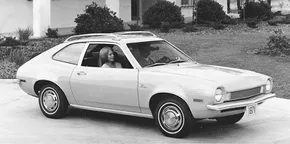
The Fall of the Big Iron and the Rise of the Small
The 1970 Ford lineup started with a sigh of relief for traditionalists. The full-size models got a subtle refresh. If you looked closely at the LTD and XL series, you’d spot the “poke-through” center grille sections. Rear ends were revamped across the board. Four series ran the show: Custom, Galaxie 500, XL, and LTD. The sporty XLs were riding their final lap. Luxury took center stage with the new LTD Brougham. You could get it as a hardtop coupe, hardtop sedan, or four-door.
The Torino line borrowed some “shaped by the wind” exterior panels from the Fairlane 500 series. Wheelbase stretched by an inch. Profiles dropped. The cars sat five inches longer. Low and wide. The Torino Cobra made a return as Ford’s budget muscle car. It pushed 375 horsepower from the standard 429 V-8. Blistering speed. Distinctive concave backlight on the hardtop. But the hot-car party was ending. Demand plummeted. Only 7,675 Cobras moved off the lot that year.
While big cars cooled off, the compact Maverick set sales records. Introduced in early ’69, this import-fighter arrived just under $2,000. Aggressive ads. Simple engineering. It shared its chassis and powertrain with the original Falcon. 103-inch wheelbase. Semifastback two-door design. Maverick moved 579,000 units. That victory helped Ford out-sell Chevy in production.
For 1971, Maverick got a notchback four-door. Wheelbase grew to 109.9 inches. Almost back to original Falcon length. A sportier two-door called Grabber showed up. A 302 V-8 became optional, replacing the weak 100-bhp 170 six. The Grabber looked sharp. It wasn’t fast. Even with the V-8, it was tame. Front-disc brakes? Not coming until 1976. Instruments? Barely adequate. Enthusiasts ignored it.
The Stallion trim package arrived in 1976. A final gesture to the youth market. Black paint accents. Twin door mirrors. Styled steel wheels. Raised-white-letter tires. It was strictly for two-doors. The Luxury Decor Option (LDO) in 1973 was more popular. Upgraded interior. Color-keyed paint. Matching vinyl top. Maverick would soldier through 1977. Old-fashioned engineering became increasingly obvious as competitors improved.
Pinto: The Barbecue That Seats Four
Ford’s big move for 1971 was the Pinto. A 2000-pound subcompact. 94.2-inch wheelbase. Fastback styling. Two-door coupe. Runabout hatchback. It was Chevrolet’s Vega’s direct answer. Smaller. Less technical. Less room. Performance? Mediocre. Fuel economy? Unremarkable compared to imports.
Pinto usually outsold the trouble-prone Vega. It beat many overseas contenders too. Engines started small: 98- and 122-cid fours through 1973. Then 122- and 140-cid. Trim got nicer. Options piled up. Three-door wagons came in 1972. Including the Squire. Woody-look. Nicknamed “Country Squirt.” By 1976, Ford added a “Cruising Wagon.” Blank side windows. Cute rear portholes. It remained basic transportation for its ten-year run.
Then came the fires. 1971 to 1976 sedan models had a dangerously vulnerable fuel tank. The filler neck design was flawed. Rear-end collisions sparked rashes of highly publicized, fatal fires. Ford stonewalled. Lawsuits dragged to federal court. Public image suffered. Sales, oddly enough, didn’t collapse.
What really killed the Pinto after 1980 wasn’t the bad press. It was stagnation. No real changes. And the arrival of a much better small Ford.
Torino: Too Big, Too Heavy, Too Late
The midsize Torino was huge in the early ’70s. Then fuel economy hit. The 1971 lineup was basically a carryover. The Cobra fastback remained the star. But the standard engine took a hit. Downgraded to a 285-bhp version of the 351 small-block. Big-inch engines were vanishing. By 1980, only a mildly tuned 351 remained for full-size Fords.
The 1972 Torino was all-new. And a disappointment. Like GM’s post-1967 intermediates, wheelbases split. 114-inch for two-door hardtops and fastbacks. Semisporty GT variants lived there. 118-inch for sedans and wagons. Body-on-frame construction returned. Dimensions ballooned. They matched late-’60s Galaxies and LTDs.
Symbolic of Detroit’s mistakes. Needlessly large. Overweight. Thirsty. Limited interior room. Soggy chassis. Ford tried to make them economical. Gave up. Just installed a larger fuel tank. The auto editors of Consumer Guide® tested a ’76 model. Got 13.5 mpg. Their verdict? “The more buyers learn about the Torino, the more reasons they will find to opt for a Granada.”
The Granada won. The Torino lost relevance. The muscle era was over. The compact era had taken over. But the big cars? They lingered. Heavier. Slower. More expensive to run. The end of an era didn’t come with a bang. It came with a yawn and a fuel gauge dipping into the red.
The Grand Torino Elite: A Tired Answer to Personal Luxury
The 1974 Grand Torino Elite arrived with a sigh, not a roar. It was Ford’s desperate bid to compete with the Chevrolet Monte Carlo in the booming personal luxury segment. Instead of innovation, the Elite leaned hard on tired “Thunderbird tradition.” The result was a car drowning in cliches.
Under the skin, it shared a coupe body and running gear with the new, larger 1974 Mercury Cougar. That coupling of bodies wasn’t unique, but the styling choices were distinctly dated. The front end sported a square “formal” grille. A chrome hood ornament stood tall. The rear half-roof was wrapped in vinyl. Dual “opera” windows sat in the C-pillars. It was the aesthetic peak of early-70s excess.
Pricing and Sales Reality
Initial pricing landed at $4437. That figure sounded reasonable until you compared it to the competition. The Monte Carlo moved faster. The Torino Elite lagged.
Yet, sales were not a total collapse. Ford built over 366,000 units between 1974 and 1976. That volume kept the生产线 running. It did not, however, save the model.
Why the Elite Died
The end came quickly after the 1976 model year. Ford downsized its Thunderbird. They also dropped the price. Suddenly, the Grand Torino Elite looked redundant. It had no clear identity. It was too expensive for a base model and too plain for a luxury flagship.
The Monte Carlo stayed relevant. The Torino Elite faded into the vinyl-wrapped past.
What Made It Different
| Feature | Grand Torino Elite | Chevy Monte Carlo |
|---|---|---|
| Base Platform | Mercury Cougar (Coupe) | Chevrolet X-Body |
| Interior | Overstuffed velour | Cloth or vinyl options |
| Exterior | Vinyl roof, opera windows | Clean lines, less chrome |
| Price Point | $4437 (1974) | Comparable |
The Elite tried to be a Thunderbird without the prestige. It failed. The market wanted clean. It got cluttered. That mismatch killed sales long before the actual discontinuation.
The Legacy
Today, the 366,000 built are just numbers. They represent a missed opportunity. Ford could have carved a niche. Instead, it duplicated a competitor’s success with inferior styling.
The Cougar connection is the only bright spot. Enthusiasts still hunt for the running gear. But the Elite body? It’s just another relic of an era that confused opulence with luxury.
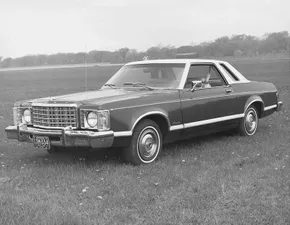
The Ford Granada
The Granada wasn’t the Maverick’s direct replacement. It was the rational choice. Introduced in 1975, it shared the Maverick’s chassis and drivetrain. Ford just stretched it.
But the fuel crisis changed the plan. Small car sales spiked. Ford kept the Maverick. They elevated the Granada to a luxury compact. It sat on the same 109.9-inch wheelbase, but felt bigger. More expensive.
Buyers ate it up. The Granada blended American comfort with a mock-Mercedes aesthetic. That style was everywhere then. Sales exploded. It became Ford’s top seller. It outsold the big Torinos and full-sized models by miles. You saw them everywhere.
Handling was poor. Cornering was untidy. The ride was roly-poly on rough roads. But it filled a gap. It appealed to upscale compact buyers. And energy-conscious big car owners.
Through 1980, you could get a six or V-8 in sedan or coupe forms. Ghia trim added plushness. Ford bought the Italian coachbuilder in 1970. The name stuck.
The 1978-80 ESS (European Sports Sedan) offered a sporty look. It was mostly cosmetic. Maverick’s true heir arrived in 1978. The Fairmont.
Named after an Australian subsidiary, the Fairmont was Ford’s biggest product launch of the decade. Few knew that outside Dearborn. Why? Its engineering underpinned most Ford cars into the mid-80s. Including the new Mustang and T-Bird.
It was the first FoMoCo car designed with computer analysis. Conventional. Common-sense. Front-engine/rear-drive. But cleaner lines than the Maverick. Boxier for interior space. Lighter.
Engines were familiar. 140-cid Pinto four. 200-cid six. 302-cid V-8. Suspension was new. All-coil. Modified MacPherson-strut front end. Coils mounted on lower A-arms.
Better handling. More underhood space for service. Front stabilizer bar standard. Rack-and-pinion steering optional. Variable-ratio power assist was new. Shared with other Fords that year.
Ford LTD
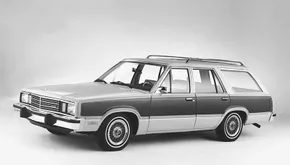
The “Fox” platform gave us the Fairmont, but it wasn’t the only downsizing effort Ford had in the pipeline. Before the Panther body, there was the Torino. For 1977, Ford didn’t just shrink it. They slapped on new sheet metal and called it the LTD II.
It was a badge-engineered attempt to look like a new-wave full-size car. The problem? It was only slightly lighter than its predecessor. Sales didn’t move. Why? Because the Thunderbird arrived on the same platform at the same time. The T-Bird had the name. It had a lower price. It swamped the LTD II.
Then came 1979.
The Panther design project finally birthed a new LTD. This was a genuine downsizing. The wheelbase sat at 114.3 inches. Yet, it offered more passenger and trunk space than the bloated 1973-1978 models. The styling was boxier. Less pretentious. Visibility improved. Fuel economy followed. Ride and handling got better too, thanks to an all-coil suspension. The live rear axle used a four-bar-link setup for more precise location.
Coupes, sedans, and wagons were available in two trim levels. It was a solid car. A “New American Road Car,” if you believe the marketing. It should have outsold everything. Instead, it moved only 357,000 units in ’79.
That number is low. The Oldsmobile 98 took second place. Chevrolet’s Caprice and Impala ran far ahead. What went wrong?
Two factors. First, GM had a two-year head start. They had already downsized. Second, the economy tanked. A fuel crisis hit in the spring of 1979. New-car sales cratered across the board.
The new LTD would rebound. But not before the industry hit rock bottom. 1980 through 1982 were some of the darkest years for Detroit. Ford Division output plunged. It dropped from 1.16 million cars in 1980 to just under 749,000 by 1982.
Then the economy recovered. Ford kept improving the lineup. Production crept back above 1.1 million. It stayed there through the decade. Ford overhauled Chevrolet. They became “USA-1” by 1988.
Ford in the 1980s: Ford Escort Replaces Ford Pinto
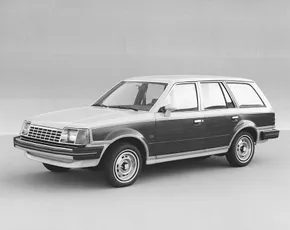
The Escort wasn’t just a car. It was the backbone of Ford’s small-car strategy during the volatile 1980s. Replacing the Pinto in 1981, it arrived as the first of those promised “world cars”—a joint venture between Ford’s U.S., British, and German engineering teams under Project Erika. The European version came out sleeker, faster. The American one? Just practical. And it sold like hotcakes.
Initial numbers were staggering. At least 320,000 units moved in each of the first two years. Sales dipped below 250,000 in ’85, then climbed back up, hitting a peak of over 430,000 in 1986. By the decade’s end, the Escort was moving at least 363,000 units annually. It wasn’t just popular. It was essential.
Under the Hood and Around the Chassis
The platform didn’t change much, which was both its strength and its weakness. Every Escort rode a 94.2-inch wheelbase. The suspension was all-coil, four-wheel independent. MacPherson struts and lower control arms up front. Modified struts on trailing arms and lower control arms in the back. Rack-and-pinion steering. Front discs, rear drums. Standard specs for the time, but reliable.
Engines evolved. The original 1.6-liter (98-cid) CVH (Cam Valves Hemispherical) started with a meager 69 horsepower. By 1983, a two-barrel carb bumped output to 72 or 80 bhp. Add optional throttle-body fuel injection and you hit 88 hp. That was good enough for the base models, and the optional five-speed manual gearbox that arrived in ’83 kept RPMs low on the highway.
But the real story was the GT.
Launched in 1983, the three-door GT came standard with that 88-hp fuel-injected engine, a five-speed manual, firm suspension, and black exterior trim. It was quick. Not sports-car quick, but quick enough to make commuting feel like an event.
The Diesel Mistake and Turbo Chaos
Ford tried to be clever with a 2.0-liter Mazda-sourced diesel in 1984. 52 hp. Just enough to make you wonder why you bought it. Timing was terrible. The gas glut started almost immediately, killing diesel demand in the U.S. The engine vanished after ’87.
Better timing came with the turbocharged 1.6-liter GT in 1984. 120 horsepower. The chassis was uprated, but the experience was crude. Loud. Unrefined. Fun, sure, but not for everyone.
Mid-1985 brought a larger 1.9-liter CVH. Carbureted versions made 86 hp. Electronic port fuel injection jumped that to 108 hp. Suddenly, the GT had a proper home. Standard equipment included an asymmetric body-color grille, aluminum wheels, bigger tires, a rear spoiler, and rocker panel skirts.
The whole line got a mild facelift too. Smoother noses. Flush headlamps. The “aero” look pioneered by the 1983 Thunderbird finally trickled down to the economy segment.
Shrinking the Lineup
By 1987, the alphabet soup of trim levels was gone. Ford simplified. You got the three-door Pony (base), the GL (available in all body styles, the volume seller), and the GT. The base engine got throttle-body injection and bumped to 90 hp.
Styling updates in mid-1988 smoothed out the rear quarters for sedans. The GT got a new grille and spoiler. The GL became the LX. The dash got restyled again. These changes stuck through 1989 and 1990. The Escort was a hit.
But there was one exception. A failed experiment.
The EXP: A Two-Seater That Couldn’t Catch a Break
The EXP arrived in 1982. Ford’s first two-seater since the original Thunderbird. It had “frog-eye” styling that didn’t age well. It cost more than an Escort. It was slower than an Escort.
First-year sales: over 98,000. Respectable, initially. Then it plummeted. Under 20,000 in 1983.
Ford tried to fix it. The ’84 model picked up the “bubbleback” hatch from the discontinued Mercury LN7. New dash. The 120-hp turbo option. Sales recovered slightly to over 23,000.
The ’85s were nearly identical. Production stopped early that year. When it came back in mid-1986, it was the Escort EXP. Flush headlamps. Revamped dash. Two engine choices: an 86-hp Luxury Coupe and a 108-hp Sport Coupe.
Nearly 31,000 sold. Still not enough.
It was competing against Japanese precision. Honda CRX. Toyota MR2. The EXP was heavy. It was complex. It was a bad bet.
Sales dropped below 26,000 in ’87. Ford pulled the plug in 1988. The assembly line space was better used for regular Escorts anyway.
The EXP proved that bad styling and high pricing could kill a good platform. The Escort survived. The EXP died. Just another footnote in the war for small-car dominance.
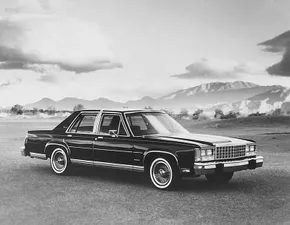
The full-size Ford LTD was the definition of endurance. Based on the 1979 platform, it lingered well past the decade’s end with only minor tweaks to equipment, styling, and engines. The evolution was predictable. You got a standard four-speed overdrive automatic paired with a 255-cid V-8. Then came the 1980 uplevel series that revived the Crown Victoria name. By 1982, the 351 cubic-inch V-8 option vanished.
The big shift hit in 1983. All models became LTD Crown Victoria and got a standard 302 V-8 with throttle-body fuel injection. Power jumped slightly. In 1986, they moved to sequential multiport injection. The LX series joined the family, delivering 150 horsepower instead of the previous 140. The two-door coupe died in 1988. The remaining four-door sedan and Country Squire wagon got “aero” styling. 1990 brought the driver-side airbag and a new dash layout.
Despite the year-to-year sameness, buyers still craved big, Detroit-style luxury.
Gas prices dropped. Fewer competitors offered massive American sedans. The Crown Vic benefited. Sales averaged over 118,000 annually. It wasn’t always smooth, but 1990 saw a healthy 74,000 sold. By then, most were sourced from Canada.
The Midsize Wars: Granada and the New LTD
Ford’s Fairmont kept the compact flag flying. But the midsize slot belonged to two derivatives. First was the 1981 Granada. It was basically a Fairmont sedan with bulkier sheetmetal, a square eggcrate grille, and plusher interiors. Fairmont wagons moved to this line in 1982. Sales were respectable. About 120,000 a year. Engines matched the Fairmont: standard 2.3-liter four, optional 200-cid six, and the “fuel crisis” 255 V-8. That last one died after 1981.
1983 transformed the Granada into a “small” LTD. Think of it as an uptown Fairmont with a sloped nose, an airy “six-light” greenhouse, and a modestly lipped trunklid. It arrived alongside the new Thunderbird, signaling Ford’s commitment to “aero” styling.
By 1984, engines carried over plus a new 232-cid V-6. The 1985 lineup offered only the four, V-6, and an optional 165-bhp 302 V-8. That big V-8 was reserved for a semi-sporting LX sedan. It sold just 3,260 copies. The little LTD outperformed the Granada. It sold nearly 156,000 in 1983. Then over 200,000 in both 1984 and 1985. It was Ford’s second-best seller after the Escort.
The End of the Fairmont
Fairmont finished its run in 1983. Interim changes from 1978 were few. Through 1981, you had two sedans, plain and fancy wagons, and a smart coupe with a “basket-handle-roof” that revived the Futura name. Wagons became Granadas after 1981. Engines were the usual Fox assortment. 2.3-liter four. 200-cid straight six. Small-block V-8s. 302 cid for 1978-79. 255 cid for 1980-81.
Sales tapered with the economy. The first-year high was nearly 461,000. By 1983, it dropped to less than 81,000. That was fine in a turbulent period. The Fairmont had done its job.
Ford Tempo and Ford Taurus
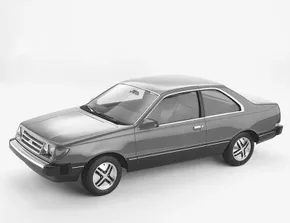
The Tempo: Filling the Void
Ford needed a successor to the Fairmont, and 1984 delivered the Tempo. It was a front-drive compact with a notchback four-door body and a coupe-like two-door version. The styling was distinctly “jellybean” — smooth, rounded edges on a 99.9-inch wheelbase chassis. The suspension borrowed heavily from the Escort.
Power came from a 2.3-liter four-cylinder. But it wasn’t the Pinto/Fairmont’s OHC “Lima” unit. Ford took a cut-down version of the old overhead-valve Falcon six instead. It made a meager 84 horsepower.
It didn’t work well. Ford noticed. For 1985, they fitted throttle-body injection. They also added a 100-horsepower “H.O.” (High Output) option. This high-output engine somehow lost six horsepower by 1987, then returned to its original rating later. Trim levels included Sport versions with the more powerful engine and firmer suspension. Escort’s 2.0-liter diesel was listed through 1986 but generated few sales. The standard manual transaxle switched from four- to five-speed after the first year. A three-speed automatic was optional every year.
The Tempo didn’t start with impressive power, but Ford iterated quickly, adding injection and high-output options within two years.
Facelifts and All-Wheel Drive
A mild facelift with flush headlamps arrived for 1986. The Tempo also became one of the first low-priced cars to offer an optional driver-side airbag. The following year brought another novelty: all-wheel drive. It was a part-time “shift-on-the-fly” setup designed for maximum traction on slippery roads. This wasn’t for dry-pavement driving or off-roading.
For 1988, four-door Tempos were reskinned. They looked like junior versions of the new midsize Taurus. It was an effective “nip-and-tuck.” A new, Japanese-looking dashboard was shared with the unchanged coupe models. Offerings now comprised base GL and sporty GLS coupes and sedans, plus four-door all-wheel drive and luxury LX models. The Tempo then marked time for 1989 and 1990, aside from price and equipment shuffles.
Despite prosaic mechanicals and tough compact competition, the Tempo sold well. It averaged 371,000 buyers in its first two seasons. Another 280,000 bought one in 1986-87. Sales jumped strongly for 1988-89, breaking the three-quarter-million mark for the two years combined. Dearborn designers evidently had the inside track on what appealed to American buyers.
The Taurus: Detroit Design Leadership
The Taurus arrived in 1986 as the front-drive replacement for the junior LTD. It targeted the all-important midsize market. Riding a 106-inch wheelbase, it came as a four-door sedan and wagon. It represented Ford’s strongest-ever claim to Detroit design leadership. Clean, smooth, and carefully detailed. Not lumpy like some other low-drag “aero” cars.
The interior was dominated by an obviously European-inspired dashboard. Some controls were sensibly copied from the best of BMW, Mercedes-Benz, and Saab.
Engineers mounted the engines transversely in a chassis with all-independent suspension. Sedans used MacPherson struts and coil springs at each corner. Parallel control arms supplemented the rear setup. Wagons eschewed rear struts for twin control arms. This system handled the wider range of load weights wagons carry better.
Initial engine choices began with a 2.5-liter 88-bhp four. It was an enlarged Tempo unit. Available with a standard five-speed manual or, from late 1987, an optional four-speed overdrive automatic transaxle. Most Tauruses were ordered with the new port-injected 3.0-liter “Vulcan” V-6. This 60-degree overhead-valve design made 140 bhp. It was teamed with automatic only.
Performance and the SHO Exception
For 1988, Ford added a reengineered version of its 90-degree 3.8-liter V-6. Horsepower was also 140 here. But the 3.8’s extra torque provided quicker acceleration than the 3.0. With ultramodern styling, good performance, and prices far lower than coveted German sedans, the Taurus charged up the sales charts. Ford sold over 236,000 of the 1986s. Nearly 375,000 for 1987. This was astounding for a daring departure for a middle-class American car.
But some wanted performance and mechanical specs as sophisticated as the styling. They got one. 1989 was showtime for the SHO. “Super High Output” meant a new 3.0 V-6 with overhead-cam cylinder heads. Four valves per cylinder replaced two. Dual exhausts were added.
Engineered with help from Yamaha, the SHO engine turned out 220 horsepower. Ford claimed seven seconds 0-60 mph. Consumer Guide® managed “only” 7.4 seconds. Still great going. The SHO came only as a sedan. It had standard antilock all-disc brakes, a handling package with larger antiroll bars, and 15-inch aluminum wheels with high-speed V-rated tires. Unique lower-body extensions and inboard front fog lamps added styling distinction. The interior featured multi-adjustable front bucket seats, sport cloth upholstery, a center console, and an 8000-rpm tachometer.
The SHO was a slow mover on the sales chart. There was no automatic option. The mandatory Mazda-supplied manual five-speed suffered balky, high-effort shift action. Production was meager through 1990: about 25,000 units. The Taurus as a whole kept up its pace, however. It bested 387,000 for 1988, 395,000 for 1989, and 333,000 for recession-plagued 1990. Thoughtful yearly upgrades helped. Among the most thoughtful: optional anti-lock brakes for sedans and a standard driver-side airbag for all 1990 models.
The 1989 Ford Probe
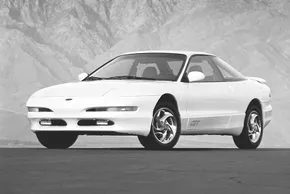
Ford might have had a heart attack if they’d actually renamed the Probe the Mustang.
It’s a funny twist of fate. In 1989, Ford dropped this sleek, Mazda-engineered coupe onto the market. It was the fruit of a 25-percent stake Ford had bought in the Japanese automaker. Detroit trusted Mazda with all small-car development for North America. The Probe was the first result.
The name itself came from Ford’s exciting early-’80s series of aerodynamic concept cars, but proved to have unexpectedly offensive connotations.
Ford almost killed it before it started. They considered calling it the Mustang. The idea died only because Mustang loyalists screamed at the concept. They wouldn’t accept a Japanese design. Front-wheel drive? In a Mustang? No way. So they kept the Probe name. A name that, ironically, had strange double meanings in some circles.
The car was built in Flat Rock, Michigan. Auto Alliance. A joint venture. It also made the Mazda 626 and MX-6 for US dealers. But let’s be clear. The Probe was half-American at best. It had Ford styling. Midrange LX models got the 3.0-liter Taurus V-6. The base GL had the Mazda 2.2-liter four. The GT had a turbo.
Then came 1993.
The Probe got a redesign. New MX-6 platform. The wheelbase stretched to 102.9 inches. The styling got aggressive. Dramatic. The powertrain? Pure Mazda. A 2.0-liter four for the base. A 2.5-liter V-6 for the GT.
It was a timely weapon.
Toyota Celica. Honda Prelude. Nissan 200SX. These were the rivals. And yes, the Mazda MX-6. Sales were good initially. Over 117,000 by 1990. Then the market shifted. Sporty coupe demand evaporated. The second-gen Probe was the last. Production ended in 1997.
But before it died, the Probe symbolized something bigger. It was the Phoenix. Donald E. Petersen led this charge. He was president from 1980, chairman after 1984. His team was young. Enthusiastic. They turned a collapsing automaker into a trim, efficient machine. The Probe was part of that resurgence.
The Truck Boom
While the Probe was fighting for survival, Ford was eating the truck market alive.
- Ford was still pushing “better ideas.” But it was also selling some of the best cars in America. The trucks were the real story, though.
Light-truck demand was exploding. It started in the mid-80s. It didn’t stop. Ford won here. Harder than they did with cars.
The F-Series full-size pickup began its reign as America’s top-selling vehicle in 1982. It stayed there. The Ranger took the compact pickup crown in 1982 too.
Then came the SUV boom.
The Explorer. Launched in 1991. It replaced the two-door Ranger-based Bronco II. It was upscale. It was a four-door. It was a hit.
Ford messed up the minivan space. The 1986 rear-drive Aerostar was outpolled by Chrysler’s front-drive models. But sales were consistent. High enough to keep the Aerostar running until 1994. They let the old van sit next to the new front-drive Windstar.
By the mid-90s, Ford was everywhere.
- Full-size pickups: F-Series
- Midsize car: Taurus
- Sport-utility: Explorer
- Subcompact: Escort
- Compact pickup: Ranger
The Taurus took over as the country’s top-selling car line in 1992. It broke the Honda Accord’s three-year streak. Ford didn’t just sell cars though. They used cash rebates. Sales incentives. They did whatever it took.
Ford Division was “USA-1.” They sold over a million cars a year. A million light trucks.
Chevy tried to compete. In calendar 1991, they sold about 40,000 more domestic cars than Ford. That was the only time they beat Ford in these years. It was close. But Ford held the line.
The Leadership Shift
Two regimes ran this show.
Don Petersen handed the gavel to Harold A. “Red” Poling in 1990. Poling was the number-two guy. Phillip Benton, Jr. took over as president. The role had been dormant for two years. Both were veterans. But they were just a transition.
Late 1993 changed everything.
Alex Trotman arrived. He was president and chairman. A veteran of Ford Europe. He brought an international outlook to the Glass House headquarters. He brought his European colleagues with him.
Their first big project?
Ford 2000.
Announced in 1994. An ambitious reorganization. The goal was simple. Mobilize global resources. Improve quality. Shorten development times. Achieve manufacturing efficiencies.
It was a massive shift. A global strategy for an American company. The Probe was gone. The truck sales were peaking. And the machinery was being rebuilt for a new era.
The rest of the decade would be defined by how that transition played out.
The Escort’s Quiet Evolution
The 1990 redesign wasn’t just an update. It was Ford’s answer to the globalized car market. You might not have seen the impact on the road immediately, but the strategy behind the 1990 Ford Escort signaled a shift. Ford needed a world car. The Probe had tried it. Now the Escort followed.
Built on Mazda’s 323/Protege platform, the new Escort borrowed heavily from Taurus styling cues. Mini-Taurus vibes. Clean lines. Aerodynamic efficiency. It was a competent Japanese-style subcompact designed to beat Toyota, Honda, and Nissan at their own game. The sales appeal was undeniable.
Under the hood, things stayed mostly familiar. The base model kept the old CVH engine. But the GT? The GT got a new heart. A 1.8-liter Mazda four-cylinder with twin cams and 16 valves pushed out 127 horsepower. That was lively. That was fun.
The base CVH engine? Not so much. It gained sequential-port fuel injection and distributorless ignition, but it remained a gruff, noisy slogger. Just 88 horses. It wasn’t fast. It wasn’t refined. But it was cheap.
Production efficiencies in Mexico and Michigan drove prices down. You could walk away with a basic three-door Pony for $7,976. Want the GT? You’d pay just over $11,000. More than enough to make you think twice about the refinement you were sacrificing.
In 1992, a four-door notchback arrived in LX trim. Then came the LX-E. This wasn’t just a badge job. It came with the GT’s engine, firm suspension, and rear disc brakes. It was a pint-size Taurus SHO. A serious little hatchback for those who wanted pace without the GT’s three-door constraint.
Changes were evolutionary through 1996. Safety improved, though. A standard passenger airbag joined the driver’s side restraint in 1995. An optional fold-out child safety seat also appeared that year. Practical. Useful. But the real story was pricing.
Ford launched a “one price” program in 1992. Copying Saturn’s no-haggle policy. The LX models came in at $10,899 with a five-speed manual. $11,631 with the four-speed automatic. Popular options were included. No haggling. No games.
It was a direct counter to Chevy’s Cavalier, which was doing the same thing. And against Japanese imports that were moving upmarket due to a strengthened yen. The Escort held its ground. Sales remained strong despite the yearly sameness.
But let’s be honest. The everyday Escort couldn’t match the pep or refinement of its import rivals. It was competent, sure. But it wasn’t exciting. That’s why the 1997 redesign arriving in early 1996 was such a relief. The old guard had to go.
The Crown Victoria Reborn
While the Escort was tweaking its pricing, Ford’s flagship sedan was undergoing a massive transformation. The 1992 Ford Crown Victoria marked the end of an era for the Panther platform’s first generation. The new body style was cleaner. Heavier. More modern.
This wasn’t just a facelift. It was a complete redesign. The Panther platform had been around since 1979. By the early 90s, it showed its age. The new Crown Victoria brought updated styling that aligned with the Taurus sedan. Sweeping lines. Integrated bumpers. A more cohesive look.
Underneath, the chassis was reinforced. Suspension geometry was revised for better handling. The old leaf-spring rear suspension was gone, replaced by a coil-spring setup. This improved ride quality significantly. It also made the car more stable at highway speeds.
The interior got a overhaul. The dashboard was redesigned with a more driver-focused layout. Materials improved. Noise isolation got better. Ford knew
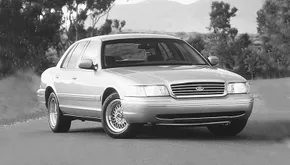
The 1992 model year saw Ford finally retire a vehicle that had outlived its own generation. The 1979 Crown Victoria was a relic. Ford replaced it with a machine that looked new, though it sat on the same rear-drive Panther platform and wheelbase. It hit showrooms in March 1991, disguised as a gentle update but actually a nearly complete overhaul.
Dearborn applied its new aerodynamic styling language. The result was smooth and rounded without the chunky “jellybean” aesthetic GM favored. Gone was the dated standup eggcrate grille. In its place sat a Taurus-inspired face, devoid of a traditional grille structure.
Other outdated features vanished. Vinyl roof covers? Gone. Opera lights? Deleted. Wire-wheel covers? Forgotten. The LTD name disappeared entirely, along with the Crown Victoria wagon. Ford figured minivans and SUVs had won the family hauler wars. This left a four-door sedan. The base and LX trims featured an airy “six-light” roofline. In the fall, Ford added the Touring Sedan for buyers wanting sportier vibes.
Chassis Overhaul and Engine Upgrades
Ford didn’t just rebody this car. They overhauled the chassis. Unlike General Motors, which often just slapped new sheetmetal on aging architectures, Ford tweaked steering, springs, shocks, and suspension geometry. The car gained standard all-disc brakes with optional antilock control.
The result was surprisingly agile. For a traditional full-size Detroit sedan, it was responsive. It was a vast improvement over the old Crown Vic.
Power came from the 4.6-liter overhead-cam V-8. This engine debuted in the 1991 Lincoln Town Car. It was the first member of Ford’s new “modular” engine family. Standard output was 190 bhp. Dual exhausts bumped that to 210 bhp. That is a gain of 40 to 50 horses over the old pushrod 302 V-8.
Performance Package Details
This uprated engine was part of the Handling and Performance package. It was standard on the Touring Sedan and optional elsewhere. The package included firmer damping. Wider wheels shod in performance tires wrapped the new look. ABS and traction control were also included.
Washington D.C. mandated a driver-side airbag. A passenger-side restraint was available.
Sales and Market Impact
All these updates lit a fire under sales. Crown Victoria volume jumped past 152,000 units in 1992. That was the highest since 1985. Volume later dropped below 110,000 but stayed healthy through the decade.
Buyer feedback forced changes. For 1993, Ford added a conventional grille. The Touring model was dropped. Passenger airbags became standard for 1994.
The 1995 models received a mild facelift. Gullwing taillights replaced the old units. Climate controls were revised. A rear defroster became standard. Heated door mirrors followed. The radio antenna moved into the rear window. A “battery-saver” feature was added. Displays for outside temperature and “gallons to empty” now appeared on the dash.
Despite all these additions, the base price stayed comfortably below $25,000.
CAFE Compliance and Canadian Assembly
The Crown Victoria became an “import” for a few years in the early ’90s. It was built north of the border. Canadian content was high. The reason was CAFE (Corporate Average Fuel Economy). This law took effect with the 1978 model year. It had relaxed somewhat by the early ’90s, but it still hurt.
The Crown Victoria drank about 17 mpg in the city. The EPA rated it at 25 mpg on the highway. That was a drain on Ford’s domestic fleet average.
To comply, Ford counted the Crown Vic as a non-domestic vehicle. It was offset by the tiny South Korean-built Festiva. The Festiva’s high mileage canceled out the Crown Vic’s thirst.
Later, Ford didn’t need such tricks. Parts and labor were re-sourced to make the Crown Vic truly “American” again. Regulations create silliness sometimes.
1992 Redesigned Ford Taurus
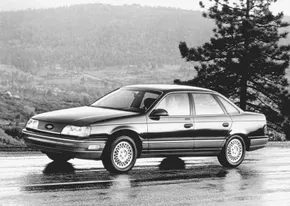
The 1992 Taurus: A $650 Million Refinement
Ford didn’t just tweak the 1992 Taurus. They dumped $650 million into a freshening of the top-selling sedan. The original 1986 mold was stale. Competitors were closing in. Ford needed to make the car better, even if buyers couldn’t immediately see it.
Most of that cash vanished into noise, vibration, and harshness (NVH) reduction. The unibody got stiffer. The suspension was retuned for smoother travel without sacrificing handling precision. Power steering became more responsive. Strategic sound-deadening was added everywhere it could fit. Engine management was tweaked for better drivability. Even the SHO got a more precise solid-rod shift linkage.
They also killed the weak four-cylinder engine. Rent-a-car companies hated it. Enthusiasts liked it less. But the market moved on.
Inside, the dashboard changed. It was subtle, but ergonomic refinements mattered. There was now space for an optional passenger airbag.
Outside? It was a disappointment. Every body panel was new except the doors. Yet the ’92 Taurus looked nearly identical to its predecessor. Critics loved pointing this out.
“Though every body panel was new save the doors, the ’92 was hard to tell at a glance from previous Tauruses.”
Buyers didn’t care. They kept buying.
The 1992 model year saw the Taurus seize the title of America’s best-selling car line. Calendar-year sales smashed 397,000 units. Model-year production hit a record 368,000. That was just the warm-up.
1993 changed everything. Output surged to nearly 459,000 units. It wasn’t a peak, but it was high water. The 1995 tally settled at just over 410,000. Like the Escort, the Taurus wouldn’t see a major redesign until the late decade.
The big interim news for 1994? Standardizing the passenger airbag. By 1995, Ford introduced the SE (Sport Edition) sedan. Think of it as a budget SHO. It came with alloy wheels, a rear spoiler, sport front seats, and other extras.
Pricing for the SE sat around $18,000 with the base 3.0-liter V-6. Jump to the punchier 3.8-liter, and you were looking at just under $20,000. Meanwhile, the smaller “Vulcan” V-6 got needed NVH improvements. Ford knew they were prepping for the all-new second-generation Taurus.
The SHO: Bolder Styling and a New Transmission
The 1992-95 SHO gained visual aggression. The front and rear styling became sharper. Lower body cladding got bolder. It looked faster than it was, which is a good thing for sales.
But the real change happened under the hood in 1993. Ford finally offered a four-speed automatic with the SHO. Before that, it was all five-speed manual.
To keep pace with the manual, the 3.0-liter Yamaha V-6 was enlarged. The automatic SHO got a displacement bump to nearly 3.2 liters (192 cid). Torque jumped by 20 pound-feet, hitting 220 total. Horsepower stayed flat.
“Sho pricing remained unusually steady in these years, but neither that nor the automatic was much help to sales.”
Sales didn’t budge much. The base sticker hovered around $25,000. That put it in the crosshairs of formidable foreign sports sedans. The Taurus SHO lost the image war. It also lost the performance war when V-8 successors arrived.
It was a rewarding driver’s car nonetheless. A pleasing blend of American bulk and European feel. But at that price point, buyers had options. And they chose those options.
The V-6 SHO was great. It just wasn’t enough.
The 1995 Ford Contour: European Styling, American Pricing Errors
The early ’90s Ford Tempo was a ghost. It blended into the gray monotony of Detroit’s front-wheel-drive fleet, the kind of sedan you’d rent for a week and forget by the time you returned the key. It wasn’t bad. It just wasn’t interesting. Sales stayed steady, pushing past 100,000 units annually through its final 1994 run. In 1993, it even hit a surprising peak of 238,000 units.
Changes were sparse. The all-wheel-drive “Four Wheel Drive” option vanished after 1991. The top-tier GLS got a 3.0-liter Taurus V-6 in 1992, a move that disappeared quickly. Base prices stayed low, hovering in the low $12,000s. That cheapness was a crutch, masking an aging platform that had long since been paid off. Ford needed a replacement. Fast.
Enter the Ford Contour.
Born from the “Ford 2000” initiative, it was meant to be a global platform. The American Contour was essentially the European Mondeo, translated for US roads. Unlike the compromised Escort that preceded it, the Contour stayed true to its transatlantic cousin. The styling was smooth, tight. The body structure was rigid. The suspension was fully independent, delivering handling that felt crisp and taut.
Inside, however, the translation wasn’t perfect. The dashboard was nearly identical to the European Mondeo. The seating position was snug. Despite a wheelbase half-an-inch longer than the Taurus, rear passenger space was cramped. Footroom under the seats was minimal. Knee, leg, and headroom were marginal at best.
Critics loved the driving dynamics, ignoring the back seat. Road & Track called it a “giant step forward.” Car and Driver deemed it “stunningly satisfying.” These reviews focused on the top-line SE model.
Under the hood, the SE featured a new 2.5-liter Duratec V-6. It produced 170 horsepower. Paired with a five-speed manual, Consumer Guide measured 0 to 60 mph in 8.9 seconds. It was quick enough to silence skeptics.
Lower trims used the 2.0-liter Zetec inline-four. This twin-cam multivalve engine was derived from Ford Europe’s Zeta family. It prioritized efficiency. Both the Duratec and Zetec engines were designed to go 100,000 miles without a tune-up. A four-speed automatic was optional on both.
The stakes were astronomical. Ford spent $6 billion developing the Mondeo, Contour, and the Mercury Mystique. That figure doubled the cost of the original Taurus program. It covered two brand-new engines, new manufacturing facilities, and extensive tooling. Internally, the project was code-named CDW127—”World car” in the C/D size class. The letters had to mean success.
And it did. Sort of.
The Contour succeeded in engineering but failed in the market. A minor recall delayed early deliveries. The real killer was the price. Buyers were flocking to well-equipped Japanese sedans. Ford, trying to compete, overloaded the Contour with standard features like dual dashboard airbags. This pushed the car upmarket, away from the Tempo’s value proposition.
The starting price hit $13,300. That was over $1,000 more than a fully loaded late-model Tempo. Opt for an SE with ABS and traction control, and you were looking at over $20,000. That was Taurus territory.
Ford had miscalculated the price sensitivity of its target demographic. The tight back seat was a design flaw; the pricing strategy was a fatal one.
For 1997, Ford attempted a correction. They introduced a lower-priced, stripped-down Contour. They scooped out the front seatbacks and rear cushion to squeeze out a bit more legroom. A modest reskin arrived in 1998. The low-line models were dropped, and the LX and SE trims were realigned on price and features.
It didn’t work.
Sales continued to stagnate. Ford pulled the plug on the Contour after the 2000 model year. The Mondeo lived on in Europe, becoming popular enough to warrant a full redesign a few years later. In America, the Contour was just another footnote in the war for the midsize sedan. A brilliant car with a terrible price tag.
The Stealth German Killer: SVT Contour
Ford’s Special Vehicle Team (SVT) didn’t just want to sell fast cars. They wanted to prove Ford could build them. By the mid-90s, SVT had already burned rubber with the Cobra Mustang and the Lightning pickup. So, when the company looked at the mid-size Contour, they saw a sleeping giant. The goal for 1998? Turn a grocery-getter into a genuine driver’s car.
The result was the Ford SVT Contour, and it was a shock to the system.
Most people knew the Contour as a boring sedan. The SVT version knew better. It hid in plain sight. At a glance, it looked subtle. Maybe different wheels. Maybe a slight lip on the bumper. But underneath, the chassis was completely reworked. Stiffer springs. Heavier shocks. Bigger brakes. The car rolled on 16-inch rims that gave it a planted, aggressive stance.
“Ford has finally produced a genuine European sports sedan right here in the U.S.A.”
This wasn’t just marketing fluff. The handling was near-neutral for a front-wheel-drive car. That’s a huge deal. Most domestic FWD cars understeer into oblivion when you push them into a corner. The SVT Contour? It bit. The ride remained supple enough for daily driving, but the body roll was tamed. It felt European. It felt expensive.
Power came from the 2.5-liter Duratec V-6. Ford tweaked the compression ratio and improved the breathing. Output jumped to 195 horsepower, later bumped to 200. Mated to a short-throw five-speed manual gearbox, the car sprinted to 60 mph in roughly 7.5 seconds. That is serious performance for a front-drive sedan.
The interior was leather-upholstered, with only two options available: a power moonroof or a CD player. No complex packages. Just the car. The base price? Around $23,000.
Compare that to a BMW 3-Series or a Mercedes-Benz C-Class in the same era. Those German sedans cost thousands more. Yet, on a road course or a dragstrip, the SVT Contour held its own. It wasn’t just competitive. It was equal.
Collectible Automobile magazine recognized the shift. They called it a coveted keepsake for the future. They asked diehard “Buy American” fans to pay attention.
But the market didn’t bite. Too many enthusiasts dismissed the Blue Oval badge as “proletarian.” They couldn’t look past the logo. Production was cut short. About 10,000 units rolled off the line in 1998 and 1999, with a few more in 2000 as the model phased out. It became a niche legend rather than a volume seller.
The Windstar: Catching Up to Chrysler
While the Contour was chasing German prestige, Ford was fighting for survival in the minivan segment. The old Aerostar was an embarrassment. It looked like a truck. It drove like a boat. Ford needed a replacement that didn’t make buyers feel like they were piloting a delivery van.
Enter the 1995 Ford Windstar.
Unlike the Mercury Villager—which was essentially a rebadged Nissan Quest built in Ohio—the Windstar was pure Dearborn engineering. Ford used a modified Taurus platform and drivetrains to create a front-drive minivan. The goal was simple: a car-like driving feel in a people-hauler.
The result was a vehicle that was significantly larger than its competitors.
- Wheelbase: 120.7 inches, slightly longer than Chrysler’s extended-length Grand models.
- Length: Eight inches longer than a Dodge Grand Caravan. Nearly a foot longer than the Mercury Villager.
- Seating: Standard seven-passenger configuration.
Pricing for the GL and LX trims sat between $20,000 and $24,000. It looked nice. It was useful. It had a full suite of passenger-car safety features. Sales were healthy.
But here’s the catch. The Windstar was catching up. It wasn’t advancing the art. Chrysler, Dodge, and Plymouth had already defined the segment. The Windstar could compete, but it could never lead. Even the light restyle for the 2005 model year, rebranded as the Freestar, couldn’t change the fundamental reality. Ford was always playing defense in the minivan wars, never quite able to overtake the Chrysler Dynasty.
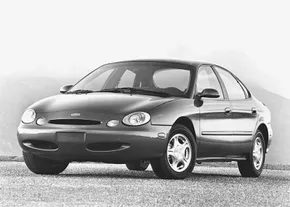
The Oval Obsession That Cost Ford the Crown
It wasn’t subtle. The 1996 Taurus looked like it had been carved out of a single, massive lozenge. Concave lower body sides. Ovals on the nose. Ovals on the rear. Ovals everywhere. One critic called it “pre-dented,” as if the car had been hit by a giant, smooth hammer before it even left the factory.
Alex Trotman, the Ford chairman, wanted a shock to the system. He needed the Taurus to grab attention again, just like the original revolutionized the market in the late ’80s. He wanted to out-design the new “cab-forward” Chrysler and Dodge sedans that were eating Ford’s lunch. Rumor has it Trotman walked through the styling studio, stared at the clay models, and told his team, “You’re not scaring me enough.”
The design did scare people. Just not in the way he hoped.
Buyers stayed away. The Taurus immediately lost its title as America’s best-selling car. It never got it back. People joked that if Ford could have made oval wheels work, they would have. Inside, the joke continued. The dashboard featured a giant oval in the center console, packed with oddly curved, look-alike pushbuttons for the radio and climate control. It was confusing. It was ugly.
Under the Metal: Better Engineering, Wrong Package
Here is the tragedy of the ’96 Taurus. It was a better car.
Ford finally improved the drivetrains. The entry-level GL sedan and wagon got an updated Vulcan pushrod V-6. It was reliable. It was decent. The higher-end LX trims received a serious upgrade: the 3.0-liter DOHC Duratec V-6.
This engine made 200 horsepower. That was a solid number for the mid-90s. It cost a $500 premium over the V-6 option, but for many buyers, the extra power was worth every penny. At the top of the heap sat the new SHO (Super High Output). This was a Ford-Yamaha collaboration, packing a 3.4-liter V-8 that churned out 235 horsepower.
The platform itself improved, too. The wheelbase stretched by 2.5 inches. That added space in the back seat. The revised suspension tightened up handling. It was a more mature, better-driven vehicle than its predecessors.
The Japanese Squeeze
If the engineering was good, why did it fail?
Rivals were catching up. The Honda Accord and Toyota Camry had refined their ride quality. Their build quality was superior. They were also fighting harder for the #1 sales spot. Ford raised prices by about $1,000 across the board. That price hike chilled early demand. Ford was forced to introduce a stripped-down “G” sedan mid-year just to have a price leader.
Despite the bad press and the odd styling, sales actually rose by 11 percent in 1996. Volume held steady at around 400,000 units through 2000. But here is the catch. Taurus relied heavily on fleet sales. Fleets buy in bulk, but they negotiate hard. Ford made less profit per unit. Trade-in values for owners were lower compared to the Japanese competitors. The Taurus was still a volume king, but it was a less profitable one.
Escort: The Quiet Success Story
While the Taurus was struggling with identity, the Escort found its lane.
Redesigned for 1997, the Escort shed its old Mazda Protege roots for a smooth new wrapper. Under the hood, Ford finally killed the outdated CVH engine. It was replaced by a 2.0-liter single-cam Zetec four-cylinder making 110 horsepower.
The lineup started with two sedans and a wagon. By 1999, it was just a single sedan offering. It wasn’t trying to be a hero car. It was economical. It was stylish enough. It was affordable.
Sales reflected this clarity. The Escort moved more than 655,000 units between 1997 and 1998. It crossed the 100,000 mark in both 1999 and 2000. Pricing was aggressive. Even with options loaded, these rarely broke the $17,000 barrier. They were more refined than older Escorts and could stand toe-to-toe with some import rivals.
It was a bridge. A short-lived bridge leading to a bigger, more ambitious small car in 2000. But it sold well enough that Ford kept the Escort alive for fleet customers in 2001 and 2002, well past its intended retirement.
The ZX2: Another Missed Connection
For the youth market, Ford needed speed. The spunky GT hatchback was gone. In its place came the 1998 Escort ZX2.
It was a coupe. It had a separate trunk. It looked sporty, borrowing styling cues from the controversial Taurus. Underneath, it shared architecture and components with the standard Escort. The engine was the twincam Zetec found in the Contour, making 130 horsepower.
Weight mattered here. The ZX2 tipped the scales at a light 2,470 pounds. Light weight plus 130 horsepower means frisky performance. It wasn’t a neck-snapper, but it was fun. Ford launched it with “Cool” and “Hot” trim levels, clearly trying to woo younger buyers with limited cash.
It failed to catch on.
Consumer Guide and other critics noted the pricing was off. A base ’98 Cool model started at $12,580, and that didn’t even include air conditioning. It felt expensive for what you got. Ford dropped the price by $1,000 for the ’99 model, but the sentiment remained. The ZX2 looked sportier than it performed.
It brought back memories of the unloved EXP from the early ’80s. Ford tried to fix it with a zippy SR package for 2000. That added 13 horsepower, tuned suspension, four-wheel disc brakes, alloy wheels, performance tires, and special seats. It cost extra. It didn’t spark sales.
By 2002, the ZX2—now stripped of its Escort badging—had dropped to roughly 52,000 orders. Then it slid below 25,500. For a car in the low- to mid-teens price range, that is poor showing. Ford stayed the course for one more year. Then it abandoned the shrinking sporty-coupe market completely.
The turn of the millennium looked like the golden age for Ford Motor Company. In 1999, corporate profits smashed records, hitting a staggering $7.2 billion. The economy was booming, the stock market was riding high, and demand for new vehicles was insatiable. Ford Division wasn’t just participating; it was dominating.
The USA-1 Dominance
Ford held the title of “USA-1” for a reason. The brand owned five of the top ten best-selling vehicles in the country. The crown jewels were the F-Series pickup and the Explorer SUV. These weren’t just popular; they were high-profit cash cows in a market that had gone completely mad for trucks and SUVs.
Dearborn kept pumping out yearly updates to maintain their class-leading status. The Explorer, redesigned in 1995, got an optional V-8 engine in 1996. When competitors started sniffing around the SUV segment, Ford responded with speed. They dropped the Expedition, built on the F-150 platform, followed by the massive Excursion and the compact Escape.
The Luxury Gamble
While domestic sales soared, Ford got big in the luxury sector. They didn’t just buy one brand; they went on a spree. Jaguar and Aston Martin, acquired in the 1980s, were joined by Land Rover and Volvo. In 1999, Ford consolidated these four makes along with Lincoln and Mercury into a new division: the Premier Automotive Group (PAG).
It was an expansive move. Expansive, and expensive.
The Management Shuffle
1999 also brought historic changes at the top. Chairman Alex Trotman retired. The reins went to William Clay Ford, Jr., a 42-year-old great-grandson of the company founder and nephew of the late Henry Ford II. Simultaneously, Jacques Nasser was elevated to president and CEO. He had spent two years running North American operations and arrived with a hard-charging reputation.
The plan seemed solid. The products were selling. The luxury brands were prestigious. Then the rug was pulled out.
The Tire Disaster
The economy unraveled first. Overpriced tech stocks tanked, dragging Wall Street and the broader economy down with them. But the real killer hit in 2000.
The Explorer and its original-equipment Firestone tires were implicated in rollover crashes. The numbers were horrifying. Almost 300 deaths. Scores of injuries.
Nasser didn’t stay quiet. He traded charges with Firestone officials in the media and before Congressional investigators. The cost was massive. Ford ponied up $3.5 billion to replace some 6.5 million tires. But money didn’t fix the reputation damage. Months of damning publicity clobbered Dearborn’s image. The stock price took a hit.
A String of Misfires
The publicity wasn’t the only problem. A string of recalls and launch glitches followed. The new Escape. The 2001 Thunderbird. The redesigned 2002 Explorer. The small Focus, Ford’s latest attempt at a “world car.” It all felt like a cascade of failures.
New models like the Lincoln LS and the sister Jaguar S-Type simply didn’t sell as expected. To make matters worse, longtime Japanese affiliate Mazda was also in trouble. That was a further drain on corporate coffers.
The Bottom Line
The financial hit was catastrophic. After burning through more than $15 billion in 1999-2000, Ford lost a staggering $5.45 billion in 2001. They lost almost a billion more in 2002.
Part of that loss came from having to match GM’s zero-percent financing program. It was a desperate move to jump-start a stunned market after the September 11 terrorist attacks. Equally ominous, Ford’s near-term domestic product pipeline looked dry. Jaguar was gushing red ink.
The Sacking of Nasser
Many things had obviously gone wrong. Most pundits blamed CEO Nasser. The Ford board agreed. They sacked “Jac” in October 2001. A reluctant Bill Ford took command.
Nasser had overreached.
Buying Volvo and Land Rover was costly enough. But Nasser also splurged on wispy e-commerce ventures. He opened a chain of auto repair shops in Britain. He funded Norwegian-built electric cars. He even bought junkyards.
“The plan, theoretically, had promise… but the acerbic Nasser left out a couple of ingredients: building reliable vehicles, and keeping the troops happy.”
— Automotive News
Glass House
Could Bill Ford turn the company around? He silenced many skeptics by moving swiftly. He put Ford’s “Glass House” in order.
From now on, the directive was simple. Ford would build great cars and trucks. Period. No more of Nasser’s grand vision for a cradle-to-grave “transportation company.”
Bill Ford shuffled key executives. He drew up a new organizational chart. Then came the recovery plan. The goal was to achieve $7 billion in pretax profit by 2006.
The strategy relied on “leaner” manufacturing and “smarter” engineering. It involved plant closures. Worker layoffs. Supplier concessions.
New models were supposed to help. Particularly new cars. Ford heralded this shift by proclaiming 2004 as “The Year of the Car.”
But recovery proved stubbornly elusive.
The 2006 Ford Sales Decline Reality Check
By 2006, Dearborn was staring down the barrel. Five straight years of shrinking sales. Over a million units lost in that span alone. Detroit’s worst performance in modern memory. Market share, sliding for a decade, hit 17.4 percent. Lowest since 1927. And it looked like it was going to keep dropping.
The Economist didn’t mince words. The 2002 plan failed because it didn’t see import brands rising or healthcare costs exploding. Raw materials got expensive too. Then came the gas spike in 2005. Over $3 a gallon in many places. Demand for Ford’s most profitable SUVs crashed.
It was a perfect storm. General Motors was getting battered by the same weather. They still relied too heavily on trucks. Trying to “shrink their way back to profitability” didn’t work. You can’t downsize your way out of a structural problem.
Pension and healthcare bills were massive. But there was another hidden cost. Job banks. Laid-off workers still drawing most of their former pay because of lush contracts from better days. Weaning buyers off purchase incentives was another headache. They’d been used to deals for years.
Then came the brain drain. Talented people left. Not unexpected, but painful. Constant personnel shuffling made it look like Ford and GM were heading toward bankruptcy. Ford cycled through four executives in five years just for the president of North American operations. That’s not stability.
The struggle was simply to make the car business profitable. This could be the last chance to fix Ford before bankruptcy courts. Ford said Chapter 11 was not an option. In January 2006, they announced the “Way Forward” plan.
The plan lacked specifics but had hard targets. Close 14 North American plants by 2012. Erase some 30,000 jobs. Cut build capacity by more than a fourth.
They promised vehicles “people will really want.” To execute, they installed Mark Fields as president of the Americas. He’d turned around Mazda. Anne Stevens became his chief operating officer. “We lost our way,” Fields admitted. “We lost touch with our customers, particularly our car customers.”
The result? Chevrolet became America’s top-selling nameplate in 2005. It wrested the crown from Ford after 19 years. Honda and Toyota were eclipsing them. But some Ford cars still shined.
The front-drive Focus was a success despite recalls. It drew over 389,000 orders in its debut year in 2000. Around 300,000 each calendar year from 2001 to 2004. It had a big job. It needed to fill the market shoes of the Escort, ZX2, and Contour.
The Focus was a masterpiece of space utilization. More passenger and cargo space than those earlier small Fords. More than most rivals too.
Initial engines were the proven 2.0-liter Zetec fours. 110-horsepower single-cam. 130-horsepower twin-cam. But everything else was different.
The styling was “New Edge.” A parting gift from corporate design chief Jack Telnack. Avant-garde mix of curves and creases. Didn’t work on every car. But it worked here. Gave the Focus visual personality. Set it apart.
Engineering was artful. All-independent suspension. Rave reviews for smooth ride and class-leading handling. It was the sort of small car you expected from Europe. Developed over there. Brought to North America with minimal change for local production.
Why the Ford Focus Mattered
The Focus wasn’t just a car. It was proof that Ford could still build something desirable. In a market where everyone else was building bloated SUVs, the Focus offered agility. It offered style. It offered value.
Mark Fields knew they had lost touch. The Focus was an attempt to reconnect. Not just with buyers. With the engineering soul of the company.
It didn’t save Ford in 2006. The sales declines continued. The plant closures loomed. But the Focus held the line. It kept the brand relevant in the small car segment. A segment GM and Chrysler were abandoning.
The all-independent suspension made it handle like a go-kart. The New Edge styling made it stand out in a sea of bland sedans. The 2.0-liter Zetec was reliable. Affordable.
It was the kind of car that reminded people why they liked driving. Before the financial crisis hit. Before the industry changed forever.
The Focus remained a staple. A bestseller. A reminder that sometimes, the right car at the right time can make a difference. Even if it doesn’t save the company.
The plant closures happened. The jobs were lost. The market share dipped. But the Focus stayed. Strong. Sharp. Relevant.
For a brief moment, Ford looked like it might actually recover. The Focus was part of that hope.
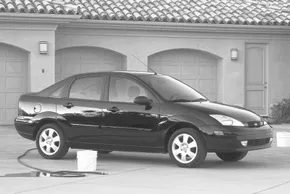
The Ford Focus strategy in the early 2000s was a study in segmentation. You got the two-door hatchback for the budget-conscious and the sport seekers. The four-door sedan and wagon were for those who cared about practicality and comfort, with option packages creeping up into luxury territory. Then, in 2002, Ford added a four-door hatchback to the mix. Broad market coverage became the goal.
It worked. The Focus won critical acclaim across Europe and took home the 2000 North American Car of the Year trophy. Consumer Guide® named it a “Best Buy” for the 2001-04 model years. That was impressive given Ford was fighting off fresh import competition with only evolutionary tweaks. The packaging was messy. The model names were confusing. The equipment shuffles made little sense. But the car itself held up.
The Short-Lived SVT Focus
The exception to the conservative styling was the SVT Focus. It arrived in 2002 as a two-door hatchback aimed squarely at the exploding sport compact market. A four-door version followed in 2003.
SVT, Ford’s factory tuner division, kept prices surprisingly modest. The starting price was $17,480. Inside, you got a twincam Zetec engine bumped to 170 bhp. They used new pistons, a revised cylinder head, variable intake-valve timing, and new manifolds. You had to take the six-speed manual gearbox. The suspension was firm. The wheels were 17-inch alloys. The brakes were four-wheel discs.
Standard safety features like ABS, electronic traction control, and front side airbags were included. Most other Focus trims charged extra for these. The SVT also got unique front and rear fascias, side sills, and a rear spoiler. Standard “hot hatch” theater. The interior had special gauge graphics, extra gauges, bolstered leather/cloth seats, aluminum pedal caps, a shift knob, and a leather-wrapped wheel.
Enthusiasts liked it. But the SVT Focus was gone after 2004. Ford needed to refresh the small car line to keep interest alive. The result was a 2005 lineup with more orthodox styling and lower, more competitive pricing.
The PZEV Coup Nobody Noticed
The sportiest 2005 Focus was the ZX4 ST sedan. It wasn’t an SVT, but it mattered. The engine was a new 2.3-liter twincam four-cylinder rated as a Partial Zero Emissions Vehicle (PZEV). This met the ultratight standards in California and four northeastern states.
You could get this PZEV engine in other Focus models in those five regions. It was as clean as a gasoline engine could get with existing tech. It wasn’t far behind the Toyota Prius or Honda Civic Hybrid, which were stealing headlines and profits.
The difference? Price. The PZEV Focus cost far less. It was simpler to maintain. It had more low-end torque, which helped acceleration, especially with an automatic transmission. It was a huge win for Ford’s engineering credibility. And it went almost unnoticed. Dearborn was drowning in other problems.
The Dying Embers of the Crown Victoria
The Crown Victoria was already ghosting long before the crisis hit. It was a relic. Taxi and police fleets bought them. The Mercury Grand Marquis, its sister car, took the retail lead. But Ford kept the “Vicky” around. They splurged on a Grand Marquis-like restyle in 1998. They bumped horsepower to 220 in 2002. They added minor features.
Sales dropped to the high 70,000s in 2002. Ford tried a youth tonic: the LX Sport model. It had a nostalgic bucket-seat interior with a floor shifter. The V-8 was bumped to 235 bhp. The suspension was firmer. It was meant to attract mom-and-pop buyers who also bought the standard LX.
2003 brought extensive revisions. Ford celebrated its centennial with a redesigned frame and altered suspension geometry. They switched from recirculating-ball to rack-and-pinion steering. Ride and handling improved, just a little. Antilock brakes became free. Front side airbags appeared, except on the basic Standard trim.
The price stuck around $24,000 to $30,000. It was good old-fashioned American metal for the money. But it was old-fashioned. Sales fell below 64,000 in 2005. The end was inevitable.
The Taurus Drift
The Taurus was becoming passé. The basic 1995 design soldiered on. Meanwhile, the Honda Accord and Toyota Camry had done clean-sheet makeovers. The competition was intense. Buyers were more knowledgeable. “New or die” was the rule, even for family cars. But Ford bet on trucks, not cars.
The Taurus wasn’t completely ignored. The 2000 restyle looked like a less radical Mercury Sable. The dashboard was more user-friendly. Safety features like airbags and seatbelt pretensioners were improved. The SHO performance model was canceled due to lack of interest. Otherwise, the car changed little for six years.
Sales were surprisingly good. Low 100,000s through 2002. Then a jump to over 200,000 in 2003 and 2004. But you can guess where those sales came from. Fleets and cheap buyers. Heavy incentives. “Cash on the hood.”
The Taurus was supposed to leave after 2005. Just two variants of sedan and wagon were left as a transition. But uncertainty in Dearborn changed that. Planners let the Taurus hang on through 2006. Reduced to just two sedan models with the old pushrod V-6. The end of an era.
2005 Ford Five Hundred and 2006 Ford Fusion Sedans
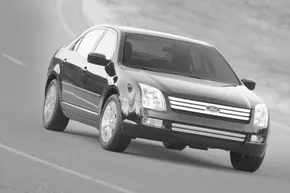
The 2005 Five Hundred: A Tall, Narrow Escape
Hopes were sky-high for the 2005 Five Hundred and the outgoing 2006 Fusion sedans. They bracketed the Taurus in size and price, representing a clever end-run around the problem of competing head-on with the perennially popular Accord and Camry.
The Five Hundred could have replaced the Crown Victoria. It was over a foot shorter overall and some 500 pounds lighter, yet no less spacious on a wheelbase just 1.8 inches trimmer. The secret was high-profile styling. The overall height sat at 61.5 inches, up 3.2 inches on the Crown Vic and 5.4 on the Taurus.
Ford used this to elevate seating some four inches above that in most other cars. The tall body also provided a more natural seating posture front and rear, plus vast trunk space. Another talking point was a new unibody corporate platform.
Under the Skin: Safety and Drivetrains
Known within Ford as D3, it was designed in collaboration with Volvo to be very strong except in a crash, when it would absorb energy in a controlled, protective fashion. Optional “passive safety” pluses were front torso side airbags, plus curtain side airbags that deployed from the ceiling above the side windows. Serving “active safety” were standard antilock four-wheel disc brakes and traction control.
Though classed as a large car by Consumer Guide®, the EPA, and others, the Five Hundred arrived with a midsize-car engine: a modestly improved “Duratec 30” twincam V-6 with 203 bhp. Drivelines were brand-new, however.
Most front-drive models employed a six-speed automatic — Ford’s first — and there were all-wheel-drive versions with a “gearless” continuously variable automatic transmission (CVT).
The AWD/CVT combination was unique among family cars and thus somewhat risky, but many buyers took a liking to Five Hundreds so equipped for their all-weather traction and promise of good fuel economy.
Mileage was at least respectable at 19-20 mpg, but power was lackluster despite respectable 0-60-mph times of 7.5-8.0 seconds with either powertrain. A new 250-bhp 3.5-liter V-6 was planned for 2007 to address the lack of zip.
“The AWD/CVT combination was unique among family cars and thus somewhat risky.”
The Freestyle Crossover Misfire
Most all the above also applied to Freestyle, essentially a Five Hundred wagon marketed as a “crossover” SUV in a market where “station wagon” rivaled “minivan” as a kiss of death for sales.
Slightly larger than Explorer, with lots of room, nice looks, pleasant driving manners, and competitive $25,000-$30,000 pricing, the Freestyle should have sold like 25-cent Starbucks lattes. Instead, it managed fewer than 85,300 orders from launch through the end of 2005.
That was so far below expectations that Ford briefly considered dropping the Freestyle after just three model years. Cooler heads prevailed, however, and the twenty-first-century Country Squire was given an indefinite reprieve.
The Five Hundred fared better at more than 122,000 sales for the same period, but that didn’t help Ford’s bottom line very much. Some critics blamed tepid buyer response on me-too styling, citing a close resemblance with the six-year-old Volkswagen Passat.
The similarity was easy to explain. J Mays had succeeded Jack Telnack as Ford design chief in 1997, and Mays had helped shape the Passat in his previous job at VW/Audi.
The 2006 Fusion: Mazda Roots and Better Looks
There was no visual cribbing in the 2006 Fusion, the second prong of Ford’s latest assault on the high-volume family car market. A good thing, too, because this “new” midsize sedan was already familiar, amounting to a slightly enlarged Mazda 6 without the “zoom zoom” pretensions.
Most everything hidden was the same or very similar: adept all-independent suspension, standard four-wheel disc brakes, even engines: base 2.3-liter four (originated by Mazda) and available Duratec 3.0 V-6.
But it wasn’t a complete copy. The Mazda, for example, offered both engines with manual and automatic transmissions, while V-6 Fusions were confined to automatic.
The Ford also had somewhat softer suspension tuning because it wasn’t trying to be as sporty as the Mazda. It also claimed more rear-seat room, thanks to an extra 2.1 inches in wheelbase.
Styling, of course, was the most obvious difference, and many thought the Fusion was better looking. It was certainly hard to miss with its bold three-bar grille, a signature destined for future Ford cars (plus an early Five Hundred facelift) and a dim nod to 1966 Galaxies.
Fusion bowed in S, SE, and top-line SEL versions. The last were the nicest inside, with contemporary metal-look accents, tasteful “piano black” panels instead of the usual test-tube wood, easy-read gauges, and convenient, logical controls. Regardless of trim, Fusion showed the same good workmanship as the Five Hundred, the best ever from Ford and fully competitive with Accord and Camry.
Even materials were better than expected for the prices. The prices were right, running from just over $17,000 to near $22,000 before options. Ford held back on some standard features to make those numbers, charging extra for traction control, torso and curtain airbags, and antilock brakes, but at least the charges were reasonable.
Though Fusion was just emerging as this book was prepared, first reviews and early sales reports suggested Ford had come up with a winner. Car and Driver, for one, thought that with “stylish looks, fine road manners, practical configuration, and aggressive pricing, the Fusion should make a strong impact in the mainstream-sedan segment — and truly put Ford back in the car game.”
Dearborn must have rejoiced, because upscale Fusions with different styling and feature mixes would have the daunting task of luring new buyers to Lincoln and Mercury, nameplates already given up for dead in many quarters.
The 2007 Ford Edge didn’t just show up; it arrived with a plan, leveraging the CD3 platform that had already proven itself in the Fusion sedan. Ford was late to the mid-size crossover party compared to rivals, but timing wasn’t entirely a disadvantage. The Edge hit the market right after a refreshed Toyota RAV4 and before the new Honda CR-V arrived, carving out a space with bold styling and a 111.2-inch wheelbase. It was bigger than the Japanese contenders and sat comfortably next to the Chevrolet Equinox and Pontiac Torrent in terms of footprint.
Being the underdog gave Ford a clear view of the competition’s weaknesses. The Edge matched their features and added a few critical ones. The standout was Advance Trac with Roll Stability Control (RSC). Volvo had pioneered this tech in the XC90, but Ford brought it down to the Explorer, Expedition, and now the Edge. The system used sensors to monitor vehicle attitude, automatically intervening to prevent a rollover. For a company still recovering from the Explorer stability fiasco, this wasn’t just a feature; it was a necessary insurance policy for survival.
Safety wasn’t limited to stability control. Ford borrowed heavily from Volvo’s crash safety expertise, creating a rigid unibody structure. Front torso side airbags and full-length curtain airbags—branded as “Safety Canopy”—were available. Antilock four-wheel disc brakes came standard across the board.
Under the hood, the debut model featured a single powertrain: a 3.5-liter V-6 producing 250 horsepower. This engine paired with a six-speed automatic transmission, developed jointly with General Motors. It was a pragmatic move in Detroit, sharing engineering costs where possible.
Inside, Ford pushed for versatility. The five-passenger layout included a center console large enough to accommodate a laptop. Lifestyle tech was prioritized with plug-ins for digital music players, rear-seat DVD entertainment, and satellite radio.
The most visible unique feature was the “Vista Roof.” A full-length, twin-panel glass roof included a tilt/sliding forward section measuring 2×2.5 feet. It wasn’t just about style; it was about openness. With the RSC, the safety features, and the tech, the 2007 Edge looked like a serious contender in a segment Ford was desperate to win.
2004, 2005, 2006 Ford GT
The Ford GT was never meant for the masses. It was a halo car, a nod to the Le Mans-winning GT40s of the 1960s, but built with modern engineering. The first generation, produced from 2004 to 2006, was a mid-engine supercar that defied the typical American muscle car template.
At its heart was a 5.4-liter supercharged V-8 engine, derived from the Ford Modular engine family but heavily modified. It produced 550 horsepower and 550 lb-ft of torque. This power was sent to the rear wheels through a six-speed manual transmission, a choice that emphasized driver involvement over automatic convenience.
The chassis was a monocoque aluminum body, light and stiff, designed to handle the immense power. Carbon-fiber components were used extensively to reduce weight further. The suspension was double wishbone with pushrod-actuated coil springs, providing precise handling that belied the car’s size.
Ford limited production to 4,035 units, making it a collector’s item almost immediately. The 2005 and 2006 models received minor updates, including improved cooling and slight aesthetic tweaks, but the core formula remained the same. The GT was a statement: Ford could build world-class performance cars, not just family haulers. It was a bridge between the heritage of the past and the technological capabilities of
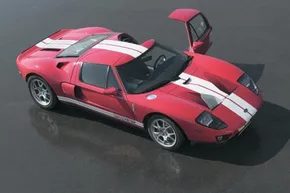
The 2004-06 Ford GT: A Modern Le Mans Legend
Saving the best for last brings us to the 2004-06 Ford GT. One of the most charismatic road-going sports cars ever built, it was nothing less than a modern but faithful, street-legal reincarnation of Ford’s legendary mid-engine GT40 endurance racer. That original car won the grueling 24 Hours of Le Mans four times between 1966 and 1969, cementing Ford’s “Total Performance” legacy.
The car was previewed as an engineering prototype at the 2002 North American International Auto Show in Detroit. A small, dedicated team developed it for production with a tight deadline: ready for Ford Motor Company’s centennial gala in Dearborn in June 2003. They had just 16 months. They kept the appointment. The first three production examples delighted thousands of attendees.
Fixing the Flaw Before It Was Too Late
The arrival of the GT came with one major glitch. Lower suspension control arms proved prone to cracking due to faulty casting. Ford swallowed its pride and recalled all 448 GTs built in 2004, the first full production year. The arms were replaced. A new casting method was devised. This early recall didn’t hurt the car’s mystique; if anything, it showed Ford was serious about quality.
The GT looked nearly identical to the GT40, but it sat on a wheelbase 10.7 inches longer, stretching to 106.7 inches. That extra space was rationalized by the need for acceptable road-car passenger room, though the cockpit remained race-car cozy for six-footers. Overall dimensions measured 182.8 inches long, 76.9 inches wide, and 44.3 inches high.
Why not call it the GT40? The original was named for its rakish 40-inch height. “GT44” sounded wrong. Plus, another company held legal claim to “GT40” and wouldn’t budge. Hence, the simple Ford GT moniker.
“The GT looked nearly identical to the GT40, but was built on a foot-longer wheelbase… Acceptable road-car passenger space was the rationale.”
Aerodynamics and Chassis Stiffness
Despite sharing classic lines, the GT was better than the GT40 in many ways. Forty years of technical progress helped. Take aerodynamics. The basic body shape of the original acted like an inverted wing, making it infamous for instability at racing speeds. The new GT avoided this.
Small front air “splitters” created downforce at the nose. Side splitters beneath the doors worked with an enclosed bellypan to smooth airflow toward rear “venturi” exits. These modifications were effective and very hard to spot.
Both cars used an aluminum space-frame overlaid with aluminum panels. But the GT benefited from manufacturing techniques unknown in the 1960s. It was claimed to be 40 percent stiffer than Ferrari’s formidable F360 Modena, a key rival. Curb weight sat just under 3400 pounds. That is respectable for a fully dressed road car.
The Supercharged 5.4L V-8
Power by Ford was a must. The GT received a supercharged version of Ford’s all-aluminum 5.4-liter V-8. Unique twin-cam heads with four valves per cylinder, dual fuel injectors at each port, and heavily fortified internals boosted output to rarefied levels.
- 550 bhp
- 500 lb-ft of torque
Ford proudly noted these numbers were comparable to those of 7.0-liter racing GT40s. A twin-disc clutch and Ricardo six-speed manual transaxle conveyed all the might to the rear wheels through a helical limited-slip differential.
Braking was handled by massive Brembo-brand four-wheel discs. They measured 14 inches across in front and 13.2 inches in the back. All were cross-drilled and clamped by four-piston monoblock calipers under antilock control.
Rolling stock was suitably beefy but not “bad boy” outrageous. Goodyear Eagle F1 Supercar tires wrapped 18×9-inch cast-alloy rims in front and 19×11.5s in the rear. Suspension was the same at each end: upper A-arms, lower L-shaped arms, coil-over monotube shocks, and thick antiroll bars.
This wasn’t just a tribute. It was a functional, modern supercar wearing a classic face. The engineering beneath those panels proved that heritage could drive innovation rather than hinder it. The GT stood as a bridge between eras, proving that old-school styling could meet new-school physics without compromise.
It sits there now, rare and loud, a reminder of what happens when a company decides to build exactly what they want, regardless of cost or convention. The suspension cracks were fixed. The weight was managed. The downforce was tamed. What remains is a machine that demands attention not just for its looks, but for what it represents.
The Ford GT: Performance Specs and Market Reality
The chassis didn’t care about the speed limit. While carrying the weight of race-car heritage, the mid-engine supercar was surprisingly docile at low speeds. Road & Track noted it could “soak up road imperfections with ease.” Inside, the cockpit balanced function and luxury. Racing-style seats hugged your sides. Leather upholstery covered the surfaces. A dashboard bristled with gauges and toggle switches that looked straight out of a prototype.
It wasn’t just a track weapon. It had automatic climate control. Power windows worked. Keyless entry was standard. Options were scarce but specific. You could add a booming 260-watt McIntosh sound system. Lightweight BBS forged wheels were available. Painted brake calipers? Sure. Traditional “LeMans” striping running nose to tail? Also an option.
Commuting had costs. Clutch effort was high. Thighmaster-high. Visibility was non-existent. Midships cars always suffer this. But once you hit the open road, those grievances vanished.
Acceleration was explosive. 0-60 mph in just under 4.0 seconds. 0-100 mph in less than 9.0. The quarter-mile took low 12s at over 120 mph. Top speed sat around 190 mph.
Handling was sharper. It offered race-car precision with road-car forgiveness. Understeer was mild. Lift off the throttle or turn in? It transitioned to power-on oversteer. Skidpad grip hit near 1g. In slalom tests, the GT moved 2 mph faster than a Ferrari Modena.
“It is about time that a U.S. automaker enters the supercar ranks,” Road & Track concluded. “Watch out. America is roaring back to the top.”
Magazines pitted it against Ferraris, Lamborghinis, and Aston Martins. The verdict was consistent. The Ford GT offered stunning abilities. It was the best value.
Value and the Secondary Market
“Value in a supercar” sounds like an oxymoron. But at just five bucks shy of $150,000 before destination and the Gas-Guzzler Tax, the price tag was aggressive. EPA ratings were low, triggering the tax. Most didn’t sell at list. Supply was capped at about 4,000 worldwide. Demand was multiples higher.
Checkbooks waved. Dealers saw windfalls. Market prices soared overnight. Some accounts put them at a quarter-million or more. Owners flipped barely used units for fat profits.
The mystique grew. Then it ended. The “Way Forward” cuts hit. The Wixom, Michigan plant closed. The cars were built carefully, largely by hand. Gone way too soon.
Will we see its like again? The Shelby GR-1 concept of 2005 was a spiritual successor. A starting point. But first, Ford needed to survive.
Ford’s Strategic Pivot and Future Outlook
Can Ford succeed? The answer wasn’t clear at the time of writing. There was a better-than-even chance. Planned products held promise. Hybrid versions of the Fusion followed. Other models would too.
The 2005 Escape Hybrid set the stage. It was the first gas/electric SUV from an American manufacturer. Popularity surged. Ford staked its reputation on innovation. The future depended on “better ideas.”
For the sake of the company and car lovers, hope was high. The GT was a symbol of what was possible. A bargain in its class. A race car for the street. A fleeting moment of American automotive dominance.
Frequently Asked Questions
What safety features were pioneered by Ford in the early years?
Ford introduced safety glass and hydraulic brakes to enhance passenger safety in its vehicles.
How has Ford’s market position fluctuated relative to competitors over the years?
Ford has seen periods of both leadership and second-place standings in the auto industry, often closely competing with Chevrolet.