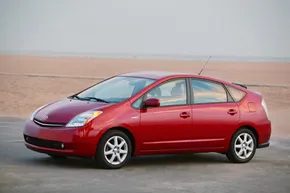
For the last decade, the Toyota Prius has dominated the hybrid market. It isn’t just a car. It’s a statement. But what exactly is it? And why do eco-conscious drivers keep buying it?
At its core, the Prius is a full hybrid. That means it has a gasoline engine and an electric motor. They work together. You can drive on pure electricity at speeds up to 42 mph (68 km/h). Above that threshold, the gas engine kicks in. The electric motor also assists during acceleration. Regenerative braking captures energy to recharge the battery. It’s a closed loop. Efficiency is the goal.
The car has a long history for such a cutting-edge vehicle. Toyota launched the Prius in Japan in October 1997. It went on sale there in December of that same year. The U.S. didn’t see it until July 2000. That was for the 2001 model year.
It hit Hollywood fast. Celebrities bought them in droves. The first generation had a jerky ride. Nobody cared. The Prius became a badge of green credibility.
In that first year, it won everything:
- Greenest Gasoline-powered Passenger Sedan in the U.S. (American Council for an Energy-Efficient Economy)
- Best-Engineered Car of 2001 (American Society of Engineers)
- 10 Best Engines for 2001 (Ward’s Auto World magazine)
- Best Compact Cars (EPA’s 2001 Fuel Economy Guide)
- Reader’s Choice for Eco Cars (WomanMotorist.com)
The second generation arrived in the U.S. in 2003. This is the shape we know. Short hood. Sloped front. Nearly vertical rear. The hybrid system improved massively. The ride was smoother. Acceleration was quicker.
Then came 2007. Toyota announced the Touring Edition. It was a refinement. The next generation followed in June 2009.
Toyota has sold over a million Priuses worldwide. Most carmakers offer a spread. Base. Sport. Touring. EX. The Prius only has two. The base model and the Touring Edition.
What does “Touring” mean here? In the auto world, it usually signals extra amenities. A better driving experience. The Prius Touring fits the bill.
So, what are the differences between the Prius and the Prius Touring? Let’s break down what the Touring adds to the package.
Prius and Prius Touring Comparison
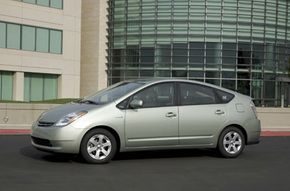
The base Prius and the Touring Edition are practically twins on the road. Under the hood, they share the same heartbeat: a 4-cylinder aluminum gasoline engine paired with a 50 kW electric motor. The power source? Nickel-metal hydride (NiMH) batteries. Together, they push out 110 horsepower. It’s not exactly a sports car. But speed isn’t the point here.
Fuel economy is.
You get 48 mpg in the city and 46 mpg on the highway. That’s roughly 20 km/L and 19 km/L respectively. Both trims use a continuously variable transmission (CVT). It replaces traditional gears for smoother acceleration and deceleration across the entire speed range. Safety and comfort features are standard across the board. Anti-lock braking systems (ABS), traction control, power windows, push-button ignition, and air conditioning come with every model. You can bolt on options like backup cameras, premium audio, Bluetooth, navigation, and leather trim. But those don’t change the car’s fundamental character.
What the Touring Edition Actually Adds
The Touring Edition isn’t a performance overhaul. It’s a styling and handling tweak. The list is short:
- Sport-tuned suspension
- 16-inch alloy wheels
- A larger rear spoiler
- High-intensity discharge (HID) headlights and fog lights
That’s it. These additions don’t touch fuel economy. Emissions stay the same. The hybrid system remains unchanged. Most awards given to the Prius over the last decade went to the base model, not the Touring trim. If the judges cared about specific trims at all, they picked the standard version.
Price is the next logical question. Without options, the 2009 base Prius started at $22,000. The Touring Edition? $24,270. Roughly a $2,200 gap. Neither price includes destination charges or federal/state tax incentives. For most buyers, that premium gets you look and feel, not value.
The Real Shift: 2010 Generation
The 2009 Touring Edition is a footnote. The story you actually need to care about is the 2010 Prius. It hits the U.S. market in June 2009. This is the third generation. And it changes everything.
Why does this matter? Because the third-gen Prius isn’t just a refresh. It’s a complete re-think. The platform is new. The aerodynamics are sharper. The interior space is bigger. The technology is more advanced. The base model finally sheds its “boring” reputation, at least partially. The Touring Edition? It becomes less relevant. Why pay extra for a bigger spoiler when the new base model looks this good?
The market response has been immediate. Enthusiasts who dismissed the Prius as a grocery getter are now paying attention. Is it faster? Yes, somewhat. Is it more efficient? Also yes. Does it handle better? Significantly. The third generation takes the hybrid formula and tightens every screw.
What does this mean for you? If you’re waiting for a price drop on the 2009 Touring Edition, think again. Supply might be tight as dealers clear inventory for the new model. And if you’re comparing the old Touring trim to the new base model, the gap narrows. The new Prius offers more car for less money. The Touring Edition’s niche disappears.
The third-gen Prius
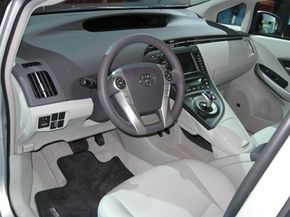
The silhouette hasn’t changed. It still looks like a Prius. But under the skin, the third generation is a different beast entirely, even if the profile remains identical to its predecessors. Toyota didn’t just tweak things; they reworked the heart of the car.
The inline-four gasoline engine is still an inline-four, but it’s now equipped with four valves per cylinder instead of two. More valves mean more breathing room, which translates directly to power. The electric motor got a similar upgrade, jumping to 80 kW. That’s not just a bump; it’s a significant torque contribution.
Put the two together and you’re looking at 134 combined horsepower. That’s up from previous iterations. But for the eco-conscious buyer, the real headline is efficiency. The fuel economy numbers are solid. You get 51 mpg in the city. That’s 22 kilometers per liter. On the highway, it drops slightly to 48 mpg, or 20 kilometers per liter. It’s efficient. Consistently efficient.
One Trim Level, But With Options
There’s a catch, or maybe a feature, depending on how you look at it. There is only one version of the 2010 Prius. No XLE. No LE. No SE. Just one trim. But that doesn’t mean you’re stuck with a barebones interior. The base model comes loaded with safety tech that was once premium-only. We’re talking standard Anti-lock Braking System (ABS), stability control, and traction control. All of it.
The stereo system got an overhaul, too. It can now handle MP3 files natively. There’s an auxiliary audio jack for your old-school iPod or phone. And satellite radio capability is included as standard. You’re also getting cruise control and High Solar Energy Absorbing (HSEA) glass right out of the box. The glass helps keep the cabin cooler by blocking out infrared heat. It’s a small detail that adds up.
Upgrading the Tech Stack
If the base spec isn’t enough, you can build it up. The 2010 Prius offers factory packages for buyers who want more than just the standard eco-chic look.
The first option is a voice-activated navigation system. It’s practical. You don’t have to take your eyes off the road to punch in an address. There’s also a solar roof panel option. This isn’t just for show. It powers interior fans that circulate air when the car is parked, reducing the interior temperature before you even start the engine.
Then there’s the “Advanced Technology” package. This is where things get serious. It includes everything in the navigation package plus a suite of driver aids. You get a pre-collision system that can warn you of imminent impacts. Lane assist keeps you centered. Park assist helps you squeeze into tight spots. And radar cruise control maintains a set distance from the car ahead, adjusting speed automatically. It’s a lot of tech for a car that doesn’t look like a spaceship.
Adding Some Bling
Finally, for those who want a little extra flair without compromising the hybrid ethos, there are cosmetic upgrades. You can option the 2010 Prius with fog lamps. They’re functional in bad weather, but they also look sharper. Then there are 17-inch wheels. Larger wheels fill out the wheel wells better. They give the car a sportier stance. It’s a subtle change. But for enthusiasts, it matters.
The 2010 Prius isn’t just about saving gas. It’s about offering a complete package. One trim. Multiple choices. A balance of efficiency and technology that was unmatched at the time. It proved that hybrids could be desirable, not just dutiful.
For those digging deeper into the mechanics, there are resources on how the Toyota Prius Works, or how the Honda Civic Hybrid Works. You can also check out lists of Top 10 Selling Hybrid Cars to see how it stacked up against the competition. If you’re wondering if hybrid cars are slower than regular ones, the 134 horsepower output suggests otherwise. And for those curious about the infrastructure, there’s info on how Alternative Fuel Filling Stations Work