Load a few boxes of ceramic tile into a subcompact hatchback and the rear end will sag. You’ll see the bumper drop toward the pavement and the nose lift. It’s an immediate, physical warning that you have exceeded the suspension’s limit. Even in a heavy-duty pickup or SUV, the result is the same, though it takes significantly more mass to compress those stiffer springs. You have to load a freight train of tile boxes to make a truck squat noticeably.
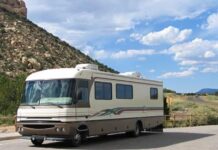
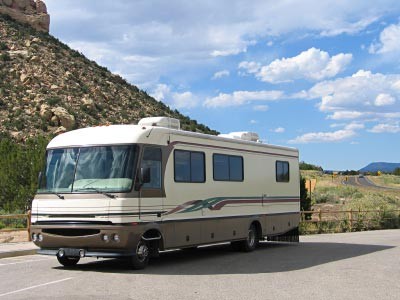
But try that with a massive recreational vehicle. Unless you are hauling an industrial-sized shipment of flooring, you won’t see the vehicle sit lower. The chassis is built to absorb that load without drama. This lack of tactile feedback creates a dangerous illusion of safety. How do you know if you are overloading an RV? The short answer is you don’t feel it. You calculate it.
The metric that matters here is cargo carrying capacity. This is the hard limit on how much stuff you can legally and safely throw into the rig. It isn’t a suggestion. It is a manufacturer-defined ceiling. Exceeding it compromises handling, braking, and structural integrity. To find your specific number, you need to run a simple subtraction sequence using data found on your vehicle’s certification label or in the owner’s manual.
The Math Behind the Limit
You start with the Gross Vehicle Weight Rating (GVWR). This is the maximum loaded weight the RV was designed to handle. From that total, you subtract everything that is already on the scale.
First, subtract the Unloaded Vehicle Weight (UVW). This is the weight of the RV as it leaves the factory, including a full tank of fuel, oil, and coolant. It is the baseline weight before you bring anything else on board.
Next, you must account for the people. The manufacturer provides a Sleeping Capacity Weight Rating (SCWR). They calculate this by multiplying the number of sleeping berths by 154 pounds. Yes, they assume every person weighs 154 pounds. It is a conservative average, but it is the number used for certification.
Then, factor in the fluids that aren’t fuel. Propane weighs 4.2 pounds per gallon. Fresh water weighs 8.3 pounds per gallon. These tanks are rarely empty when you hit the road.
Here is a concrete example based on a typical RV configuration:
Step 1: Start with a GVWR of 20,000 pounds.
Step 2: Subtract the UVW of 14,500 pounds.
Step 3: Subtract the SCWR. If the RV has 6 sleeping positions, that is 924 pounds (6 x 154 lbs).
Step 4: Subtract 12 gallons of propane. At 4.2 lbs/gal, that is 50.4 pounds.
Step 5: Subtract 25 gallons of fresh water. At 8.3 lbs/gal, that is 207.5 pounds.
The Result: 4,318.1 pounds is your total cargo carrying capacity (CCC).
This 4,318.1 pounds is the absolute maximum weight of passengers, pets, gear, food, and storage items. Do not exceed it. If you are wondering where to find these numbers for your specific rig, look for the manufacturer’s certification label, usually on the driver’s side door jamb or inside the cabinet. You can also search online for your model’s specific CCC data.
Vehicle Cargo Capacity Data
For those looking to compare specific models, the following data highlights the available cargo space in cubic feet for various makes and models from the 2006 to 2009 model years. While this list focuses on passenger vehicles and light trucks, the principle of checking manufacturer specs remains the same across all automotive categories.
Acura Cargo Carrying Capacity
| Year | Model | Cargo Carrying Capacity (ft3) |
|---|---|---|
| 2006 | MDX | 81.5 |
| 2006 | RL | 13.1 |
| 2006 | RSX | 25.3 |
| 2006 | TL | 12.5 |
| 2006 | TSX | 13.2 |
| 2007 | MDX | 83.5 |
| 2007 | RL | 13.1 |
| 2007 | RDX | 60.6 |
| 2007 | TL | 12.5 |
| 2007 | TSX | 13.2 |
| 2008 | MDX | 83.5 |
| 2008 | RL | 13.1 |
| 2008 | RSX | 60.6 |
| 2008 | TL | 12.5 |
| 2008 | TSX | 13.2 |
| 2009 | MDX | 83.5 |
| 2009 | RL | 13.1 |
| 2009 | RSX | 60.6 |
| 2009 | TSX | 12.6 |
More Acura Specs:
– Acura GVWR
– Acura GAWR
– Acura GCWR
– Acura Curb Weight
– Acura Payload
– Acura Towing Capacity
Audi Cargo Carrying Capacity
| Year | Model | Cargo Carrying Capacity (ft3) |
|---|---|---|
| 2006 | A3 | 54.6 |
| 2006 | A4 | 13.4 |
| 2006 | A6 | 15.9 |
| 2006 | A8 | 14.6 |
| 2006 | S4 | 13.4 |
| 2006 | TT | 24.2 |
| 2007 | A3 | 54.6 |
| 2007 | A4 | 13.4 |
| 2007 | A6 | 15.9 |
| 2007 | A8 | 14.6 |
| 2007 | Q7 | 88.7 |
| 2007 | RS4 | 13.4 |
| 2007 | S4 | 13.4 |
| 2007 | S6 | 13.9 |
| 2007 | S8 | 14.6 |
| 2008 | A3 | 54.6 |
| 2008 | A4 | 10.2 |
| 2008 | A5 | 16.1 |
| 2008 | A6 | 15.9 |
| 2008 | A8 | 14.6 |
| 2008 | Q7 | 88.7 |
| 2008 | R8 | 3.5 |
| 2008 | RS4 | 13.4 |
| 2008 | S4 | 13.4 |
| 2008 | S5 | 16.1 |
| 2008 | S6 | 15.9 |
| 2008 | S8 | 14.6 |
| 2008 | TT | 8.8 |
| 2009 | A3 | 54.6 |
| 2009 | A4 | 10.2 |
| 2009 | A5 | 16.1 |
| 2009 | A8 | 14.6 |
| 2009 | Q7 | 88.7 |
| 2009 | R8 | 3.5 |
| 2009 | S4 | 10.2 |
| 2009 | S5 | 16.1 |
| 2009 | S8 | 14.6 |
| 2009 | TT | 8.8 |
More Audi Specs:
– Audi GVWR
– Audi GAWR
– Audi GCWR
– Audi Curb Weight
– Audi Payload
– Audi Towing Capacity
BMW Cargo Carrying Capacity
| Year | Model | Cargo Carrying Capacity (ft3) |
|---|---|---|
| 2006 | 325 | 12 |
| 2006 | 330 | 12 |
| 2006 | 525 | 14 |
| 2006 | 530 | 14 |
Buick’s Practical Space Hierarchy
If you are looking for volume, Buick’s strategy in this era was clear: size matters, but segment dictates the limit. The mid-size sedans, the LaCrosse and Lucerne, offered a consistent and modest 16 and 17 cubic feet respectively. That number didn’t budge from 2006 through 2009. It was enough for a weekend bag, not a garage renovation.
SUVs told a different story. The Rainier sat at the lower end with 80.1 cubic feet. The Rendezvous jumped to 108.9. But the Terraza? It dominated the early years with 136.5 cubic feet. When the Terraza was replaced by the Enclave for the 2008 model year, the capacity dipped slightly to 116.2, then settled at 115 in 2009.
The shift from the Terraza to the Enclave marked a trade-off in sheer volume for a more contemporary platform.
Cadillac’s Luxury vs. Utility Split
Cadillac drew a hard line between their sedans and their SUVs. The sedan trunk space was predictable. The CTS and its high-performance V variant held 12.5 cubic feet. That bumped to 13.6 in 2008 and stayed there. The DTS, being a larger sedan, offered 18.8 cubic feet. The STS and STS-V sat in the middle at 13.8. The sporty XLR and XLR-V were tight, holding just 11.6 cubic feet.
The Escalade family was the real volume kings. The standard Escalade grew from 104.6 in 2006 to 108.9 in 2007, where it plateaued. The ESV extended versions pushed that to 131.6 and later 137.4. The SRX offered a middle ground at 69.5. The Escalade Hybrid matched the SRX’s utility at 69.5 in 2009. The EXT pickup? No cargo data available.
Chevrolet’s Volume Champions
Chevrolet covered every base. If you need maximum storage, look at the commercial-grade Express van. It offered a massive 225.1 cubic feet across all years and trims (1500, 2500, 3500). The Sprinter Van 3500 from Dodge later topped this, but for Chevy, the Express was the king of cargo.
Among consumer vehicles, the Uplander minivan provided 120.1 cubic feet. The TrailBlazer EXT SUV offered 107.4 in 2006, settling at 80.1 from 2007 onward. The HHR was versatile, ranging from 57.7 to 63.1 cubic feet depending on the panel configuration.
Sedans were modest. The Impala held 18.6. The Malibu and Malibu Hybrid hovered around 15.1 to 15.4. The Cobalt was tight at 13.9. The Aveo 5 hatchback surprisingly offered 42 cubic feet, matching the Malibu MAXX. The Corvette dropped from 22.4 in 2006 to 11 in 2007-2008 before returning to 22.4 in 2009. The Traverse, introduced in 2009, offered 117.5 cubic feet.
Large trucks like the Silverado 1500 and Suburban 1500 often list dash marks for cargo capacity because bed volume varies wildly by cab and bed length.
Chrysler’s Minivan Dominance
Chrysler owned the minivan segment during this period. The Town & Country was a volume leader, offering 146.7 cubic feet in 2006, then settling around 143.8 through 2009. The Grand Caravan from Dodge (same platform) went even higher, starting at 167.9 and dropping to 144.3 in later years.
The PT Cruiser was a curiosity. It offered 92.2 cubic feet in 2006 and 2008, but dropped to 62.7 in 2007 and 2009. The Pacifica offered 62.7 to 92.2 depending on the year. The 300 and 300C sedans held 15.6, bumping to 17.2 in 2008 before returning to 15.6. The Aspen SUV provided 102.4 cubic feet, including the Hybrid variant.
Dodge’s Truck and Van Utility
Dodge’s cargo capacity is defined by its workhorse lineup. The Grand Caravan minivan offered up to 167.9 cubic feet in 2006-2007, settling at 144.3 afterward. The Caravan minivan was similar at 142.3.
The Sprinter vans were massive. The Sprinter Wagon 2500 offered 321 cubic feet in 2006, then settled at 141.3. The Sprinter Van 3500 grew to 371 cubic feet. The Ram 1500, 2500, and 3500 trucks consistently offered 41 cubic feet in the bed/interior space listed here.
SUVs like the Durango and Nitro held 102.4 and 75.6 cubic feet respectively. The Magnum wagon offered 71.6. The Charger and Challenger sedans held 16.2. The Viper’s tiny trunk was 6.8, growing slightly to 8.4 and then 8.9 in later years.
When comparing these figures, remember that these numbers represent total interior volume. Usable space is always less due to wheel wells and seat mechanisms.
Ford’s Volume Game
Ford’s 2006 lineup was a study in extremes. You wanted space? The E 150, E 250, and E 350 Super Duty vans offered 256.5 cubic feet of cargo capacity. That’s a serious hauler. The Explorer sat comfortably at 85.8 cubic feet, while the Freestar minivan gave you 134.3 cubic feet. Even the Escape hybrid didn’t skimp, offering 65.5 cubic feet with the seats down. The Five Hundred? A modest 21.2 cubic feet. The GT was barely anything—just 1 cubic foot. Not exactly a grocery getter.
By 2007, Ford tightened the screws. The Edge debuted with 69.6 cubic feet. The Expedition EL stretched to 130.8 cubic feet, beating the standard Expedition ’s 108.2 cubic feet. The Freestar gained a bit, hitting 137.2 cubic feet. But here’s where it gets messy. The F 150, F 250, and F 350 trucks showed up with no data listed. Did they just not care? The Explorer Sport Trac managed 44.4 cubic feet. The Focus stayed at 40.2 cubic feet. The Mustang remained a tight 9.7 cubic feet.
2008 saw the E-Series vans drop slightly to 230.6 cubic feet. The Taurus X joined the party with 85.5 cubic feet. The Ranger returned with 18.1 cubic feet. The Focus vanished from the list. The Taurus picked up a little, reaching 21.2 cubic feet. The Escape Hybrid bumped up to 66 cubic feet. The Edge dipped a fraction to 69 cubic feet. The F 450 appeared, but again, no cargo numbers. It’s like they were hiding something. Or just forgot.
2009 brought the Flex into the mix. It offered 83.2 cubic feet. The Expedition gained a tenth of a foot to 108.3 cubic feet. The Escape Hybrid inched up to 66.1 cubic feet. The Focus shrank dramatically to 13.8 cubic feet. Why? Aerodynamics maybe? The Taurus held steady at 21.2 cubic feet. The Ranger disappeared from the list entirely. The F 450 remained silent on cargo. Ford’s truck division seems to operate in a parallel universe where volume doesn’t matter. Or maybe it’s just too big to measure.
GMC’s Consistent Cube Count
GMC was predictable. Painfully so. The Savana 1500, Savana 2500, and Savana 3500 vans held 225.1 cubic feet from 2006 through 2009. Not a single change. Why fix what isn’t broken? The Envoy stayed at 43.7 cubic feet across those same years. The Yukon dropped slightly from 63.6 cubic feet in 2006 to 60.3 cubic feet in 2007. It stayed there until 2009. The Yukon XL climbed a fraction from 45.7 to 45.8 cubic feet in 2007 and never moved.
The Acadia entered in 2007 with 19.7 cubic feet. It grew to 25.5 cubic feet in 2008 and held that number through 2009. The Yukon Hybrid appeared in 2008 with just 16.9 cubic feet. It stayed put in 2009. The Sierra trucks? No data. The Canyon? Nothing. It’s like GMC says, “If you need cargo space, buy a van. If you need style, buy a Sierra. We won’t tell you how much stuff fits in the back.” The Envoy XL appeared in 2006 with 23.4 cubic feet and then vanished. Did they realize it was too small? Probably.
Honda’s Efficient Packaging
Honda plays a different game. Efficiency. The Civic started strong in 2006 with 72 cubic feet. It held that in 2007. Then, in 2008, the Civic sedan dropped to 35.7 cubic feet. By 2009, it shrank again to 11.5 cubic feet. What happened? The hatchback version likely got more love, but the sedan numbers tell a story of decreasing utility. The Accord hovered around 12.8 to 14 cubic feet in 2006 and 2007, then dropped to 11.9 cubic feet in 2008 and 2009. The Accord Hybrid stayed at 11.2 cubic feet from 2006 to 2008. In 2009, the Civic Hybrid took the 11.5 cubic feet slot. The Civic sedan took the 11.5 spot too? Wait, no. In 2009, the Civic listed 11.5 cubic feet. The Civic Hybrid isn’t listed for 2009, but the Fit took over.
The Fit debuted in 2007 with 41.9 cubic feet. It grew to 57.3 cubic feet in 2009. That’s a massive jump. Honda clearly bet on the subcompact segment. The Odyssey remained a king, holding 147.4 cubic feet from 2006 to 2009. Not a change. The Element stayed at 74.6 cubic feet through 2008. The Pilot dropped slightly from 87.6 cubic feet in 2006 and 2007 to 87 cubic feet in 2009. The Ridgeline held steady at 41.4 cubic feet. The CR-V was tiny, just 10.4 cubic feet. The S2000 was a sports car, after all. 5 cubic feet. Barely enough for a helmet.
Hummer’s Brutal Simplicity
Hummer didn’t mess around. The H2 offered 30.7 cubic feet from 2006 to 2009. Constant. Unchanging. The H3 offered 29.5 cubic feet for those same years. The H3T pickup appeared in 2009, but no data. Why? Maybe because it was a pickup. Maybe because they didn’t care. The H1 Alpha in 2006? No data. It’s a tank. It doesn’t have cargo space. It has a mission. The H3T likely had similar issues. Or maybe just poor reporting. The H2 and H3 numbers are so specific yet so unchanging. It’s like they measured it once and never looked again.
Hyundai’s Growing Pains
Hyundai was expanding. The Accent grew from 12.4 cubic feet in 2006 to 15.9 cubic feet in 2007. It stayed there through 2009. The Azera held 16.6 cubic feet from 2006 to 2009. The Elantra grew from 13 cubic feet to 14.2 cubic feet in 2007 and held that. The Tiburon stayed at 14.8 cubic feet. The Sonata remained at 16.3 cubic feet. The Santa Fe grew from 30.5 cubic feet to 34.2 cubic feet in 2007. It held that. The Tucson stayed at **22
If you are shopping for a used utility vehicle from the mid-to-late 2000s, the interior volume numbers tell you more than the badge on the grille. You can have a rugged exterior, but if the cargo volume is anemic, you are stuck with a glorified weekend toy. We are looking at cubic feet of space, specifically how much room you have to haul gear, luggage, or actual stuff once the seats are folded or moved. The data below covers the 2006 through 2009 model years for Jeep, Kia, Land Rover, Lexus, Lincoln, Mazda, Mercedes-Benz, and Mercury.
Jeep Cargo Capacity
Jeep built their lineup around the idea that you would throw almost anything inside. The Jeep Grand Cherokee was the workhorse of the group. From 2006 to 2009, it held a steady 67.4 cubic feet of cargo space. That consistency is rare in this era of shifting platforms. The Commander sat above it in size, offering slightly more room. It started at 68.7 ft³ in 2006, dipped to 68.9 ft³ in 2007, then settled at 68.5 ft³ for the final two years.
The compact options tell a different story. The Jeep Liberty started strong at 69 ft³ in 2006 and 2007, but the numbers dropped to 64.2 ft³ in 2008 and 2009. Why the change? Likely a tweak in seatback angle or interior packaging for the updated model year, but the loss of nearly 5 cubic feet matters if you are hauling kayaks.
The Wrangler and Wrangler Unlimited are the outliers here. The two-door Wrangler held only 45.8 ft³ in 2006. It jumped to 61.2 ft³ in 2007 and 2008, then stayed there in 2009. The four-door Wrangler Unlimited was the real hauler. Introduced in 2008, it offered a massive 86.8 ft³ of space, dwarfing the smaller Jeep siblings. The Compass and Patriot filled the entry-level gap. The Compass held 53.6 ft³ from 2007 to 2009. The Patriot offered 62.7 ft³ in its first two years, matching the Wrangler’s utility despite being smaller on paper.
Kia Cargo Capacity
Kia was expanding rapidly during this period, moving from budget compact cars to full-size family haulers. The Kia Sedona minivan was the clear king of volume. In 2006, it offered a staggering 141.5 cubic feet of space. By 2007 and 2008, that number dropped slightly to 121.3 ft³, likely due to packaging updates or seat design changes, but it remained the largest option in the list by a wide margin.
The Kia Rondo entered the scene in 2007 as a crossover competitor. It held 74.4 ft³ in both 2007 and 2008. The Sorento SUV was consistent, holding 66.4 ft³ across 2006, 2007, and 2008. The Sportage matched the Sorento at 66.6 ft³ for the same years.
Sedans and hatchbacks lagged behind. The Kia Amanti sedan offered only 15.9 ft³ in 2007 and 2008. The Optima held 14.8 ft³ from 2006 to 2008. The Rio 5 hatchback varied wildly, starting at 49.6 ft³ in 2006, dropping to 15.8 ft³ in 2007, then back to 49.6 ft³ in 2008. The Spectra 5 hatchback held 52.8 ft³ from 2006 to 2008. The Borrego SUV appeared in 2009 with 97.6 ft³ of space, making it a serious contender for large loads.
Land Rover Cargo Capacity
Land Rover’s numbers were volatile. The LR3 was the main volume provider, holding 90.3 ft³ in 2006 and 2007. In 2008, the number plummeted to 9.9 ft³, which looks like a data error or a specific measurement condition (perhaps rear seats up?), before recovering to 90.3 ft³ in 2009.
The Range Rover followed a similar erratic path. It held 74.9 ft³ in 2006 and 2007, dropped to 35.1 ft³ in 2008, then recovered to 74.2 ft³ in 2009. The Range Rover Sport was stable at 71 ft³ across all four years.
The LR2 entered the lineup in 2008 with no listed capacity, then offered 58.9 ft³ in 2009. This suggests the LR2 was positioned between the compact hatchbacks and the full-size LR3, offering moderate utility for urban use.
Lexus Cargo Capacity
Lexus prioritized luxury over bulk, resulting in generally lower cargo volumes. The LX 470 and LX 570 SUVs offered the most space. The LX 470 held 90.4 ft³ in 2006 and 2007, and 77.5 ft³ in 2008 and 2009. The LX 570 debuted in 2008 with 15.5 ft³, jumping to 83.1 ft³ in 2009.
The RX 330 and RX 350 crossover SUVs held 84.7 ft³ in 2006 and 2007. In 2008, the RX 350 dropped to 38.3 ft³, then recovered to 85 ft³ in 2009. This inconsistency suggests changes in how space was measured or seat configurations.
Sedans like the ES 350 and ES 330 held minimal space, ranging from 14.5 ft³ to 14.7 ft³. The GS series was tighter, with the GS 300, GS 350, and GS 460 all holding 12.7 ft³. The IS 250 and IS 350 held 13 ft³, while the IS-F offered 13.3 ft³ in 2008 and 2009. The LS 430 and LS 460 sedans offered slightly more, at 20.2 ft³ and 18 ft³ respectively. The SC 430 coupe was the most restrictive, holding only 8.8 ft³ across all years. The GX 470 SUV held a steady 77.5 ft³ from 2006 to 2009. The GS 450h hybrid sedan was surprisingly small at 7.5 ft³ in 2007 and 2008.
Lincoln Cargo Capacity
Lincoln relied on the Navigator for volume. In 2006, it offered 104.8 ft³. In 2007 and 2008, it dropped to 103.5 ft³, then recovered to 104.7 ft³ in 2009. This consistency made it a top choice for large families or towing support.
The MKX crossover held 69 ft³ from 2007 to 2009. The Mark LT pickup truck offered 47.9 ft³ from 2006 to 2008. The Town Car sedan held 21.1 ft³ across all years. The MKZ sedan offered 15.8 ft³ from 2007 to 2009. The MKS sedan debuted in 2009 with **18.
Japanese and European Value Haulers: 2006-2009 Cargo Specs
The late 2000s were a weird time for cargo space. You had the rise of the “crossover,” the death of the hatchback cult, and a lot of weird experimental bodies. If you are hunting for a used daily driver that doesn’t feel like you are squeezing into a shoe box, the numbers matter. We are looking at the cubic footage of usable space behind the rear seats, or where the rear seats would be if they existed.
Scion and Subaru: The Rational Choices
Scion was built for this demographic. The Scion xB was a literal box on wheels. In 2006 and 2007, it offered 43.4 ft³ with the seats up. By 2008 and 2009, that jumped to 69.9 ft³. That is massive for a subcompact. The Scion tC stayed stubborn at 12.8 ft³ across all four years, which is barely enough for a weekend gym bag.
Subaru leaned into utility with the Forester and Outback. The Forester hovered around 57.7 ft³ in 2006, growing to 68.6 ft³ in 2007 and 2008. It disappears in the 2009 data, likely due to a model year shift or redesign. The Impreza Wagon was the compact alternative at 61.6 ft³ in 2006 and 2007, shrinking to 44.4 ft³ in 2008 and 2009 as the platform evolved. The Legacy Wagon offered 66.2 ft³ in 2006, dipping slightly to 65.4 ft³ in 2007, then ballooning to 93 ft³ in 2008 before settling at 65.4 ft³ in 2009. The B9 Tribeca was the SUV option, holding steady at 74.4 ft³ in both 2006 and 2007, then rising to 104 ft³ in 2008, and back down to 74.4 ft³ in 2009.
Need a car that fits a bike? The Scion xB’s 69.9 cubic feet is one of the highest figures for a compact car in this era.
Suzuki’s Utility Spike
Suzuki played a different game. The Grand Vitara started at 24.4 ft³ in 2006, nearly tripled to 68.9 ft³ by 2007, and held that line through 2008. The XL7 was the heavy hitter, starting at 75.1 ft³ in 2006 and climbing to 95.2 ft³ in 2007 and 2008. The SX4 entered the mix in 2007 with 64 ft³, dropping to 54 ft³ in 2008. The Reno offered 8.8 ft³ in 2006, then doubled to 45.4 ft³ in 2007 and 2008.
Smart and the Micro-Market
If you are in a city with tight parking, the smart fortwo was the answer. Released in 2008, it offered a tight 12 ft³ of cargo space. It wasn’t for moving furniture, but for grocery runs.
Nissan’s Range: From Z-Cars to Quest
Nissan had the widest spread. The 350Z was a sports car, not a hauler. It sat at 4.1 ft³ from 2006 to 2008. The GT-R in 2009 offered slightly more at 8.8 ft³.
For families, the Nissan Quest was the king. It started at 148.7 ft³ in 2006, dipped to 145.7 ft³ in 2007, and returned to 148.1 ft³ in 2008 and 2009. That is van space in a car body. The Armada SUV held steady at 97.1 ft³ across all four years. The Xterra remained consistent at 65.7 ft³.
Sedans were tighter. The Altima shrank from 15.6 ft³ in 2006 to 15.3 ft³ in 2007, then dropped significantly to 7.4 ft³ in 2008 and 2009. The Altima Hybrid held at 10.1 ft³ from 2007 to 2009. The Maxima stayed around 15.5 ft³, dipping to 14.2 ft³ in 2009. The Sentra fluctuated, hitting 13.1 ft³ in 2007, spiking to 97 ft³ in 2008 (likely a data anomaly or specific trim configuration, as this seems exceptionally high for a Sentra sedan, but recorded as such), then settling at 50.4 ft³ in 2009? Wait, looking closer at the 2009 Sentra, it lists 50.4 ft³ under Versa, not Sentra. The Sentra in 2009 is listed as 50.4 ft³? No, the table lists Versa at 50.4 ft³ in 2009. The Sentra in 2009 is not explicitly listed with a cubic foot value in the 2009 column, but the 2008 Sentra was 97 ft³ which is suspicious. Let’s stick to the clear data: Versa offered 50.4 ft³ in 2007 and 2009. The Titan truck had 126 ft³ in 2008, but no data for 2009. The Rogue SUV started at 98 ft³ in 2008, then shrank to 28.9 ft³ in 2009.
Mitsubishi and Pontiac: The Disappearing Acts
Mitsubishi offered the Outlander and Endeavor as larger options. The Outlander grew from 60.3 ft³ in 2006 to 36.2 ft³ in 2007, then exploded to 72.6 ft³ in 2008. The Endeavor started huge at 76.4 ft³ in 2006, dropped to 40.7 ft³ in 2007 and 2008. The Montero was a beast at 91.7 ft³ in 2006. The Raider pickup offered 37.1 ft³ in 2006, then vanished.
Pontiac was fading. The Montana SV6 minivan offered 136.5 ft³ in 2006. The Vibe crossover held steady at 54.1 ft³ from 2006 to 2008, dropping to 49.4 ft³ in 2009. The Torrent SUV varied, starting at 68.6 ft³ in 2006, dropping to 32.2 ft³ in 2007, and returning to 68.6 ft³ in 2008 and 2009. The G6 sedan stayed around 11-14 ft³.
Porsche and Saab: Niche Volume
Porsche didn’t do cargo for cargo’s sake. The Cayenne SUV offered 62.5 ft³ from 2006 to 2009. The Boxster and Cayman were tiny, at 9.9 ft³ and 14.5 ft³ respectively in 2008 and 2009. The 911 had no cargo space listed in 2008, but the 911 Carrera in 2009 offered 7.24 ft³.
Saab was quirky. The 9-7X was actually a rebadged GMT900 Chevy/GMC truck/SUV platform, offering 80.1 ft³ from 2006 to 2009. The 9-3 sedan started at 14.8 ft³
Toyota Load Limits: 2006-2009
Toyota’s lineup didn’t just grow in size; it shifted in utility. Look at the 2006 Highlander Hybrid versus the standard Highlander. The hybrid version, hamstrung by battery placement, offered just 10.5 cubic feet of cargo space. The gas-only model? 39.7. That’s a massive gap for a midsize SUV. By 2007, the Highlander Hybrid caught up, offering 80.6 cubic feet, while the standard version jumped to 80.6 as well. But the Land Cruiser told a different story in 2007. It nearly doubled its capacity from 20.8 to 90.8 cubic feet. Then in 2008, it took a step back to 81.7. Why? Engineering trade-offs. Usually weight distribution or suspension changes.
The Prius remained consistent, hovering around 14-16 cubic feet. It wasn’t built for hauling lumber. It was built for efficiency. The Matrix, however, was the practical workhorse. Starting at 53.2 cubic feet in 2006, it climbed to 61.5 in 2009. For a compact car, that’s significant. The Sienna stayed a king of volume, holding steady at 148.9 cubic feet from 2006 through 2008. The Sequoia dropped slightly from 128.1 in 2007 to 120.8 in 2008. Minor loss. Maybe interior packaging.
Tacoma and Tundra lists show hyphens. No data provided for those years in this specific dataset. You have to look elsewhere for truck bed measurements. The Yaris arrived in 2007 with 25.7 cubic feet. By 2009, the Corolla dropped from 13.6 to 12.3. A small car losing space? Or just a measurement update? Hard to say without seeing the door jams. The Avalon saw a weird spike in 2007 to 41.4 cubic feet, then dropped back to 14.4 in 2008. A redesign? Or a typo in the source data? Likely a trim-level change affecting rear seat folding.
VW Volume: Golf, GTI, and the Rabbit
Volkswagen played a different game. The Golf and GTI were twins in 2006, both offering 41.8 cubic feet. The GTI held that line, but then jumped to 46 cubic feet in 2007. Why did the performance model gain space? Interior reconfiguration. The base Jetta sat at 16 cubic feet. It didn’t move. Not until the Jetta Sport Wagon arrived in 2009 with 66.9 cubic feet. A wagon offering four times the space of the sedan. That’s the point of a wagon.
The Rabbit was the volume leader for VW’s smaller cars. 46 cubic feet in 2006. 46 in 2009. Consistent. The Touareg, their large SUV, also stayed at 71 cubic feet. No changes there. The Passat Wagon offered 61.8 cubic feet. The Passat Sedan was a tight 14.2. Don’t try to fit a motorcycle in a Passat Sedan. You can’t.
The Eos, the retractable hardtop convertible, was pitiful for cargo. 10.5 cubic feet. The roof mechanism eats the trunk. That’s physics. The R32, a performance variant of the Golf, offered 43.4 cubic feet. Slightly less than the Rabbit. The Routan, a minivan, arrived in 2009 with 141 cubic feet. Big space. Practical family hauler. The Tiguan, a compact SUV, offered 56.1 cubic feet. Smaller than the Touareg, bigger than the Rabbit.
Volvo Space and Utility
Volvo stuck to its Scandinavian sensibilities. The V70 and XC70 were spacious. 71.4 cubic feet in 2006. 72.1 in 2008. The XC90 SUV offered 84.9 cubic feet. It grew slightly to 85.1 in 2007 and stayed there. The S60 sedan was a mystery. 36.5 cubic feet in 2006. Then it dropped to 13.9 in 2007. A huge loss. Then back to 36.5 in 2008. Did they change the measurement method? Or did the 2007 model have a non-folding rear seat? That would explain the drop.
The V50 wagon held steady around 62.6-62.9 cubic feet. The S40 sedan hovered around 12.6-14.3 cubic feet. The S80 sedan was modest, around 14.4-14.9 cubic feet. The C70 convertible was tiny. 12.8 cubic feet. Convertibles sacrifice trunk space. Always. The C30 hatchback started at 12.9 in 2008 and grew to 15.3 in 2009. A small win for a small car.
Why These Numbers Matter
You might think cubic feet are just marketing fluff. They aren’t. They dictate what you can carry. Can you fit a set of skis in the Corolla? No.