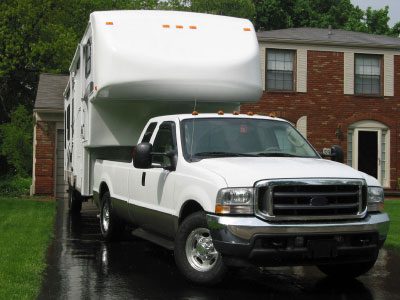
You know your MPG. You can recite horsepower and torque figures from memory. You probably even know your 0-60 time or how many cubic feet of cargo space your sedan offers. These numbers are the bread and butter of car shopping. They tell you exactly what you’re getting for your cash. But there are a few metrics that trip up even seasoned buyers. Most people stare at the window sticker and nod along without understanding the real stakes.
One specific number stands out as a potential safety hazard if ignored: the gross combination weight rating, or GCWR.
If you plan to tow a trailer, understanding this limit isn’t just about avoiding a fine. It’s about not losing control on the highway. GCWR is the manufacturer-defined maximum weight for your loaded vehicle plus your loaded trailer. The total must never exceed this number.
What Is GCWR and How Is It Calculated?
GCWR is similar to Gross Vehicle Weight Rating (GVWR). Both are hard limits set by the maker. The difference is scope. GVWR covers only the vehicle itself. GCWR covers the tow vehicle and the trailer combined.
But how do they arrive at that final number? Ford outlines the calculation clearly. You sum these four elements:
- The vehicle’s curb weight
- The allowable payload capacity
- The weight of the driver and passengers
- The weight of the trailer
This sum creates the ceiling. Remember, GCWR is not a measurement of what you currently weigh. It is the absolute maximum limit before you risk mechanical failure or safety issues.
Why Exceeding GCWR Is Dangerous
Overloading a single vehicle is risky. Overloading the combination is dangerous.
When you push past the GCWR, you stress every component in the chain. The brakes can overheat and fade. You might find yourself unable to slow down. Tires can blow out under the excessive load. The engine and transmission may overheat from the strain, leading to a catastrophic breakdown. Suspension components can bend or snap.
Overload both vehicles and you’ve really got a problem.
The result is often a loss of control. Various failure modes can occur simultaneously. Ignoring the rating invites disaster. Never surpass the manufacturer’s stated GCWR.
Where to Find Your Vehicle’s GCWR
Knowing the number is useless if you can’t find it. Start by looking inside the driver’s door frame. There should be a label near the latch area. This sticker lists vital weight data, including the GCWR.
If the label is faded or missing, check online. Most manufacturers publish this data in their support portals. Use your VIN or model year to locate the specific figures for your rig.
Acura GCWR Data (2006-2009)
The table below shows the gross combination weight ratings for select Acura models from 2006 to 2009. Note that some models, like the 2006 MDX or 2009 TSX, list specific limits, while others lack data in this dataset.
| Year | Model | GCWR (lbs) |
|---|---|---|
| 2006 | MDX | 8,121 |
| 2006 | RL | 5,162 |
| 2006 | RSX | 4,384 |
| 2006 | TL | 4,730 |
| 2007 | MDX | 10,053 |
| 2007 | RL | 5,164 |
| 2007 | RDX | 6,394 |
| 2007 | TL | 4,773 |
| 2007 | TSX | 4,407 |
| 2008 | MDX | 10,053 |
| 2008 | RL | 5,164 |
| 2008 | RSX | 6,394 |
| 2008 | TL | 4,773 |
| 2008 | TSX | 4,407 |
| 2009 | MDX | 10,053 |
| 2009 | RL | 5,233 |
| 2009 | RSX | 5,574 |
| 2009 | TSX | 4,550 |
More Acura Specs:
– Acura GVWR
– Acura GAWR
– Acura Cargo Carrying Capacity
– Acura Curb Weight
– Acura Payload
– Acura Towing Capacity
Audi GCWR Data (2006-2009)
Audi’s lineup shifts during this period. The Q7 appears as one of the few models with a published GCWR in the provided data. Other models like the A4, A6, and TT do not list a rating here, which often implies they are not intended for towing or have model-specific limits not captured in this general list.
| Year | Model | GCWR (lbs) |
|---|---|---|
| 2007 | Q7 | 10,665 |
| 2008 | Q7 | 10,665 |
| 2008 | R8 | – |
| 2009 | Q7 | 10,665 |
| 2009 | R8 | – |
Note: Models marked with “-” in the source data have no listed GCWR for the specified year.
More Audi Specs:
– Audi GVWR
– Audi GAWR
– Audi Cargo Carrying Capacity
– Audi Curb Weight
– Audi Payload
– Audi Towing Capacity
Gross Combined Weight Rating (GCWR) isn’t just a number on a spec sheet. It’s the hard ceiling for what your vehicle can actually pull without breaking its drivetrain or voiding its warranty. When you’re looking at older models from these big American and German brands, the data gets messy. Some entries are blank. Some are surprisingly low. Let’s cut through the noise and look at the actual limits for 2006 through 2009.
German Engineering Limits: BMW
BMW didn’t always publish GCWR for every sedan. You’ll see hyphens across most of the 2006–2009 sedan lineup. The 3-series, 5-series, 6-series, M models, and Z4 roadsters? No data. They likely relied on manual calculations or dealer-specific guidelines that aren’t archived in public tables.
The SUVs tell a different story. If you’re towing, look here.
BMW X3 and X5 GCWR Trends
The BMW X3 held steady at a modest 7,662 lbs GCWR from 2007 through 2009 (it was 7,673 lbs in 2006). That’s tight. You’re not hauling a boat with this thing unless the boat is tiny and the trailer is featherweight.
The X5 had more muscle. It jumped from 10,802 lbs in 2006 to 11,132 lbs in 2007 and 2008. In 2009, it dipped slightly to 11,066 lbs. Why the drop? Likely a recalibration of suspension or transmission thermal limits for the newer engine variants.
BMW X6 Entry
The X6 entered the fray in 2008 with a 11,044 lbs GCWR. It stayed there in 2009. Essentially the same rating as the X5, minus the extra few hundred pounds. A practical choice if you need the coupe shape but don’t want to sacrifice towing capability.
“The X5’s peak towing capacity in this era sat just over 11,000 lbs. Push past that, and you risk overheating the transmission.”
Domestic Luxury: Buick and Cadillac
Buick kept things simple. Their GCWR numbers didn’t budge much year-over-year.
Buick SUV Limits
The LaCrosse and Lucerne sedans were capped at 4,645 lbs and 4,914 lbs respectively from 2006 through 2009. That’s not much. You’re looking at small campers or jet skis on small trailers.
The SUVs were the real workhorses.
* Rainier: A solid 10,500 lbs in 2006 and 2007.
* Rendezvous: Steady at 7,746 lbs.
* Terraza: Hit 8,500 lbs in 2006.
* Enclave: Launched in 2008 with a robust 9,500 lbs rating.
Cadillac offered more variety, especially in the heavy haulers.
Cadillac Escalade Dominance
The Escalade family was the king of this list.
* Standard Escalade: Ranged from 12,902 lbs (2006) up to 14,000 lbs (2007–2009).
* Escalade ESV: The long-wheelbase version maxed out at 14,000 lbs from 2007 onward.
* Escalade EXT: The pickup variant held steady at 13,464 lbs in 2006, then jumped to 14,000 lbs for the remaining years.
If you need to tow a large travel trailer, these are your best bets from the luxury segment.
Cadillac CTS and STS
The sedans were more conservative.
* CTS: Started at 4,659 lbs (2006–2007), then increased to 5,011 lbs (2008–2009).
* CTS-V: Stuck at 5,000 lbs.
* STS: Varied between 5,079 lbs and 5,383 lbs, with the V-model peaking at 5,544 lbs in later years.
The SRX saw a significant jump from 5,314 lbs (2006) to 6,314 lbs (2007–2008), then dipped to 5,123 lbs in 2009. That 2009 drop is an outlier worth noting if you’re buying a used model.
The Volume Leaders: Chevrolet
Chevrolet’s lineup was vast. GCWRs varied wildly depending on whether you were driving a Corolla-killer or a half-ton truck.
Chevrolet SUVs and Crossovers
- Equinox: A consistent 7,252 lbs from 2006 to 2009.
- Traverse: Entered in 2009 with 9,500 lbs.
- TrailBlazer: Hovered around 10,000–11,000 lbs. It started at 11,000 lbs in 2006, dropped to 10,000 lbs in 2007 and 2008, then hit 10,000 lbs again in 2009.
- TrailBlazer EXT: Dropped to 9,921 lbs in 2006.
- Express Van: The 1500-series maxed at 9,500 lbs (2006–2007). By 2009, the Express 1500 jumped to 12,000 lbs, while the 2500-series held at 11,788 lbs. The heavy 3500-series hit 12,000 lbs.
- HHR: A small wagon with a tiny 4,305 lbs GCWR. Don’t expect to tow much.
- Uplander: Improved from 7,734 lbs (2006) to 8,500 lbs (2008).
Chevrolet Trucks and Suburbans
This is where the numbers get big.
Silverado 1500:
* 2006: 10,839 lbs
* 2007: Dropped to 10,000 lbs (Classic models saw 10,798 lbs ).
* 2008–2009: Held at 10,000 lbs.
* Hybrid versions fared better, hitting 12,000 lbs in 2006–2007 and staying there.
* The SS model in 2006 hit 12,597 lbs, jumping to 13,000 lbs in 2007.
Heavy Duty (HD) Trucks:
* Silverado 2500/3500 HD: Rock-solid at 16,000 lbs across all years from 2006 to 2009. If you’re towing a fifth-wheel, this is the truck to get.
Suburban and Tahoe:
* Suburban 1500: Ranged from 13,000 lbs (2007–2008) down to 11,000 lbs (2009).
* Suburban 2500: Climbed from 13,822 lbs (2006) to 14,000 lbs (2007) and finally 16,000 lbs (2008–2009).
* Tahoe: Hit 10,000 lbs in 2007, 2008, and 2009. The 2006 data is missing, but the hybrid version in 2008–2009 hit 12,000 lbs.
Avalanche:
* The 1500 model varied: 12,863 lbs (2006), 13,000 lbs (2007–2008), then dropped to 11,000 lbs in 20
Ford GCWR
Ford’s lineup during this era ranged from small sedans to heavy-duty workhorses, and the Gross Combined Weight Rating (GCWR) tells you exactly how much you can haul without breaking the vehicle’s structural or drivetrain limits. If you’re looking at a Ford F-150 GCWR, for instance, you’re looking at substantial capability that grows significantly as you move up to the Super Duty trucks.
In 2006, the Crown Victoria was limited to a 5,592-pound GCWR, while the E-Series vans offered far more muscle. The E-150 hit 11,318 pounds, the E-250 sat at 10,912, and the E-350 Super Duty pushed out to 13,000. If you were driving an Escape, the numbers were tight: 4,830 for the gas model and 4,777 for the hybrid. The Explorer managed 7,700 pounds, and the F-250 and F-350 both topped out at 15,000 pounds. Smaller cars like the Focus (3,771) and Five Hundred (4,799) had much lower limits. The Mustang, Fusion, GT, and Taurus didn’t have official GCWRs listed for this year, likely due to low towing ratings or lack of factory towing packages.
2007 brought some shifts. The Crown Victoria’s limit rose to 5,751 pounds. The new Edge entered the mix with a 6,248-pound rating. The Expedition gained ground, hitting 14,928 pounds, with the extended EL version slightly higher at 15,078. The Explorer jumped to 8,500 pounds, and the F-150 increased to 11,700. The heavy hitters, the F-250 and F-350, both climbed to 17,000 pounds. The Ranger dropped significantly to 5,820 pounds, and the Mustang finally had a listed GCWR of 4,611 pounds.
By 2008, the F-250 dipped back to 15,000 pounds, while the F-350 stayed at 17,000 pounds. The F-450 appeared with a massive 27,000-pound rating. The Escape Hybrid saw a slight bump to 4,788 pounds, and the F-150 reached 11,765 pounds. The Taurus X joined with a 6,183-pound rating. The Focus, Fusion, and Mustang remained in their previous slots or without specific GCWR listings.
The 2009 model year saw the F-150 climb steeply to 14,950 pounds. The F-450 rating adjusted to 16,983 pounds. The Flex entered with a 6,900-pound rating. The Explorer and Explorer Sport Trac saw minor fluctuations, sitting at 8,110 and 8,233 pounds respectively. The Ranger held steady at 6,000 pounds.
Why GCWR matters more than towing capacity
Towing capacity tells you how much weight you can pull. GCWR tells you the total weight of the truck plus the trailer. You can hit your towing limit but still exceed your GCWR if the truck itself is loaded up. This is where people blow rear axles.
GMC GCWR
GMC’s heavy-duty presence is clear when you look at the Sierra and Yukon lines. The GMC Sierra GCWR values show a tiered approach to capability, separating the light-duty 1500s from the work-capable 2500s and 3500s.
In 2006, the Sierra 1500 started at 8,361 pounds. The Sierra 2500 and 3500 shared a 15,792-pound rating. The Yukon sat at 11,000 pounds, while the larger Yukon XL reached 13,000 pounds. The Canyon had a modest 5,179-pound rating. The Envoy and Envoy XL both hit 10,000 pounds. The Savana vans were split, with the 1500 at 9,500 pounds and the 2500/3500 models at 12,000 pounds.
2007 brought the new Acadia, which debuted with a 9,500-pound GCWR. The Canyon increased to 5,679 pounds. The Sierra 1500 rose to 9,398 pounds. The Sierra 2500 hit 15,858 pounds, while the 3500 dropped slightly to 15,342 pounds. The Envoy fell to 9,854 pounds. The Yukon dropped to 10,000 pounds, but the XL stayed at 13,000 pounds.
The 2008 model year saw the Sierra 3500 climb back up to 16,000 pounds. The Sierra 1500 reached 9,500 pounds. The Sierra 2500 held at 15,858 pounds. The Canyon increased to 5,882 pounds. The Yukon Hybrid appeared with a 12,000-pound rating. The Yukon XL remained at 13,000 pounds.
In 2009, the Sierra 2500 bumped to 15,926 pounds, and the 3500 stayed at 16,000 pounds. The Canyon held at 5,887 pounds. The Yukon XL dropped to 11,000 pounds. The Yukon Hybrid remained at 12,000 pounds. The Sierra Hybrid did not have a listed GCWR.
Honda GCWR
Honda’s approach to towing is conservative, especially in their car lineup. The Honda Civic GCWR numbers are notably low, reflecting the platform’s focus on efficiency over hauling. The Ridgeline and Pilot carry the weight for those who need actual utility.
In 2006, the Accord was rated at 4,206 pounds. The Civic sat higher at 4,968 pounds. The Element managed 5,021 pounds. The Odyssey was the family hauler king at 8,210 pounds. The Pilot followed at 7,914 pounds. The Ridgeline hit 9,653 pounds. The Insight was very limited at 2,250 pounds. The CR-V and S2000 had no listed ratings.
2007 saw the Civic jump significantly to 6,060 pounds. The Element rose to 5,083 pounds. The Odyssey dropped slightly to 8,034 pounds. The Pilot gained ground, reaching 9,700 pounds. The Ridgeline hit 10,085 pounds. The Fit had no listed rating. The Accord rose to 4,274 pounds.
2008 was a holding pattern for many models. The Civic and Element stayed at 6,060 and 5,083 pounds respectively. The Odyssey and Ridgeline held at 8,210 and 10,085 pounds. The Pilot remained at 9,700 pounds. The Accord had no listed rating.
In 2009, the Civic dropped drastically to 3,738 pounds. The Pilot fell to 8,466 pounds. The Odyssey held steady at 8,210 pounds. The Fit, Accord, and Civic Hybrid had no listed GCWRs.
Hummer GCWR
Hummer didn’t do subtle. The Hummer H2 GCWR and H3 numbers reflect vehicles built for size rather than efficiency. The H3T pickup added a practical (for Hummer) option to the lineup.
In 2006, the H1 Alpha was the heavy hitter at 17,300 pounds. The H2 sat at 13,050 pounds. The H3 was limited to 8,000 pounds.
2007 and 2008 saw the H2 increase. It hit 13,150 pounds in 2007 and climbed to 14,000 pounds in 2008. The H3 remained stuck at 8,000 pounds.
In 2009, the H2 held at 14,000 pounds. The H3 stayed at 8,000 pounds. The H3T entered with a 9,461-pound rating.
Hyundai GCWR
Hyundai’s entry into the mainstream market during these years showed steady improvements in capability. The Hyundai Sonata GCWR and Santa Fe numbers indicate a brand learning to handle heavier loads.
In 2006, the Accent had no rating. The Azera sat at 4,779 pounds. The Elantra was 4,434 pounds.
The Truth About Towing Limits
You see the towing hook on the bumper. You see the badge on the tailgate. You assume you can haul the boat.
That assumption is dangerous.
Gross Combined Weight Rating (GCWR) isn’t a suggestion. It’s a hard line drawn in the asphalt by engineers who know what happens when steel meets physics. Ignore it, and you’re not just voiding your warranty. You’re risking suspension failure, brake fade, and a trip to the ER.
We are looking at data from 2006 through 2009. These numbers matter because they tell you the maximum weight your vehicle + trailer + cargo + passengers can have combined. Not the trailer weight. The combined weight.
Kia GCWR Limits
Kia didn’t play in the heavy hauler league back then. Most of their lineup lacks a listed GCWR, which usually means the manufacturer didn’t approve towing for that specific trim or model year.
The 2006-2008 Kia Optima holds steady at 5,292 lbs. That’s light. You could tow a small jet ski with that, maybe a tiny camper.
The 2006-2009 Kia Sportage sits at 4,880 lbs. Tight.
The heavy hitters were the SUVs. The 2007-2008 Sorento jumps to 9,299 lbs. The 2009 Borrego pushes it further to 9,398 lbs. If you’re towing a travel trailer, check if your trailer’s loaded weight plus your car’s weight stays under that number. The 2007 Sedona minivan can handle 8,015 lbs. That’s actually a decent load for a people mover.
Land Rover GCWR Specs
Land Rover vehicles are built for capacity, but the numbers vary wildly by year.
The 2006 Range Rover tops the list at 13,324 lbs. The LR3 follows at 13,165 lbs. The Range Rover Sport is close behind at 13,318 lbs.
By 2009, the LR3 maxes out at 13,662 lbs. The Range Rover climbs to 13,564 lbs.
Smaller vehicles drop significantly. The 2009 LR2 is rated for only 7,905 lbs. Don’t try to tow a house with that. The 2008 Range Rover Sport holds at 13,334 lbs.
Lexus GCWR Breakdown
Lexus separates the heavy haulers from the luxury cruisers.
The LX 470 (2006-2007) and GX 470 (2006-2009) are rated for 11,521 lbs. They are body-on-frame trucks disguised as luxury cars. They can pull their weight.
The LX 570, arriving in 2008 and 2009, jumps to 14,645 lbs. That is serious towing power.
Mid-size SUVs are more modest. The RX 330 (2006) does 7,510 lbs. The RX 350 drops in 2008 to 6,020 lbs. The RX 400h hybrid sits at 8,015 lbs in 2006-2007, then drops to 6,340 lbs in 2008-2009. Hybrid efficiency doesn’t always equal towing capacity.
The LS 430 (2006) is rated for 6,140 lbs. Most other sedans—ES, GS, IS, SC—have no GCWR listed. They aren’t meant to tow.
Lincoln GCWR Ratings
Lincoln leaned into the truck market with the Navigator and Mark LT.
The Mark LT (2006-2008) holds at 14,500 lbs. It’s a pickup. It should be able to haul.
The Navigator climbs over time. 2006 : 11,900 lbs. 2007-2009 : 15,000 lbs. That is a massive number for a luxury SUV.
Smaller Lincolns are limited. The Town Car (2006-2009) stays around 6,460–6,502 lbs. The MKX starts at 6,370 lbs in 2007, jumps to 7,350 lbs in 2008-2009. The MKS (2009) is rated for just 5,277 lbs.
Mazda GCWR Figures
Mazda’s towing capacity shrinks as the models age or change platforms.
The B-Series trucks tell a clear story. 2006 B2300 : 4,744 lbs. 2007 B2300 : 4,800 lbs. 2009 B2300 : 4,749 lbs.
The bigger engines help. 2006 B4000 : 6,973 lbs. 2007 B4000 : 7,000 lbs. 2009 B4000 : 6,952 lbs.
SUVs vary. The 2007 Mazda CX-9 handles 6,826 lbs. By 2009, that drops to 6,484 lbs. The CX-7 stays steady at 5,860 lbs from 2007-2009.
The 2006 MPV minivan does 5,904 lbs. The Tribute (2006): 4,842 lbs. 2008 Tribute : 4,893 lbs. The hybrid version of the Tribute (2008) drops slightly to 4,747 lbs.
Mercedes-Benz GCWR Data
Mercedes divides its fleet into luxury sedans and heavy-duty SUVs.
Sedans—C-Class, E-Class, S-Class, CLS, CLK, SL, SLK—generally have no GCWR listed. They are for driving, not hauling.
The SUVs are where the numbers live.
The 2007-2009 G500 (G-Wagen) handles 12,695–12,661 lbs. The G55 AMG (2008) goes up to 12,783 lbs.
The GL-Class is massive. 2007 GL320 : 12,946 lbs. 2009 GL550 : 13,084 lbs.
The ML-Class is consistent. 2007 ML350 : 12,056 lbs. 2008 ML350 : 12,055 lbs. 2009 ML350 : 12,055 lbs. The ML63 AMG holds at 12,443 lbs from 2007-2009.
The 2009 R-Class is rated for 8,590 lbs. A rare number for a car-based wagon.
Mercury GCWR Specs
Mercury was the Ford Twin before the brand died. The numbers mirror Ford closely.
The Grand Marquis improves over time. 2006 : 5,688 lbs. 2007 : 5,787 lbs. 2008 : 6,000 lbs. 2009 : 6,600 lbs.
The Mountaineer (2006-2009) holds between 8,111–8,217 lbs.
The Monterey minivan does 7,990 lbs in 2006-2007.
The Mariner (2006-2009) stays around 4,935–4,991 lbs. The hybrid version (2006-2009) is slightly less, at 4,937–4,809 lbs.
The Montego (2006-2007) does 4,817–4,820 lbs. The Sable (2008-2009) drops to **4,
Nissan GCWR
Nissan’s lineup across these years shows a clear divide between the daily drivers and the heavy hitters. The 2006 Altima starts at a modest 4,151 lbs, but by 2007, the addition of the Altima Hybrid pushes that number up to 4,632 lbs. It’s a small gap, but it reflects the extra weight of the battery pack. The Armada, however, is in a different league. It jumps from 11,818 lbs in 2006 to 12,800 lbs in 2007, then rockets to 15,100 lbs by 2008. That’s a massive increase. You need a serious hitch setup for the later models.
The Frontier sits comfortably around 10,676 lbs to 11,133 lbs. The Titan is slightly heavier on paper, hovering near 11,500 lbs. Sports cars like the 350Z, GT-R, and the Versa don’t have published GCWRs. Why? Because they aren’t built for towing. If you try to put a trailer on a Versa, the suspension will likely complain before the hitch does. The Murano drops slightly in 2009, down to 7,505 lbs.
Pontiac GCWR
Pontiac had a few tricks up its sleeve before the brand folded. The G8 is the clear standout here. Introduced in 2008 with a GCWR of 6,035 lbs, it was built on the GM Epsilon platform. It could handle a boat or a camper that smaller sedans would struggle with. The G6 and G5 are much lighter, sticking around the 4,141 to 4,530 lbs range. The Grand Prix is similarly capped at roughly 4,627 lbs.
The Montana SV6 is an outlier. In 2006, it had a GCWR of 8,500 lbs. That’s minivan territory. It shared its platform with the Chevrolet Uplander, which explains the robust towing numbers. The Solstice, being a lightweight roadster, has no data. Don’t try it. The Vibe and Torrent are in the 4,350 to 7,407 lbs range.
Porsche GCWR
Porsche keeps it simple. The 911, Boxster, and Cayman have no GCWR. They are performance machines. Towing them is a logistical nightmare that nobody wants. The Cayenne, however, is a luxury SUV that means business. In 2006 and 2008, it holds a steady 12,628 lbs. By 2009, it creeps up to 12,650 lbs. It’s enough to pull a large travel trailer, but you’ll want to check your brakes first.
Saab GCWR
Saab was all about engineering efficiency. The 9-3 sits around 5,380 to 5,680 lbs. The 9-5 is sturdier, holding firm at 7,120 lbs across 2006 to 2009. The 9-7X is the heavy tool here. It’s a rebadged Chevrolet TrailBlazer EXT, and the numbers prove it. It starts and stays at 10,500 lbs. The 9-2X, a Subaru Impreza wagon in disguise, is lighter at 5,220 lbs.
Saturn GCWR
Saturn struggled with consistency. The Ion is light, around 3,902 to 3,946 lbs. The Relay minivan starts at 8,500 lbs in 2006, then drops to 7,918 lbs in 2007. The VUE is the most common model here. It starts at 4,857 lbs, then increases to 5,439 lbs for the 2008 and 2009 hybrid versions. The Outlook is the big one. It starts at 9,500 lbs in 2007, then drops significantly to around 6,852 lbs by 2008. That’s a huge variance. Probably a result of changing powertrain options or regional specifications.
Scion GCWR
Scion doesn’t care about towing. The tC, xB, and xD have no published GCWRs. They are young-driver cars. Light. Agile. Not meant to haul anything heavier than a few bags of groceries and a surfboard. If you need towing capacity, look elsewhere.
smart GCWR
The smart fortwo is barely a car. It’s a city runabout. It has no GCWR. It has no business with a trailer. The weight distribution alone would make any tow hitch a liability.
Subaru GCWR
Subaru is known for all-wheel drive, but that doesn’t always mean high towing capacity. The B9 Tribeca starts at 7,805 lbs in 2006, then drops to 6,290 lbs by 2008. The Legacy and Outback are the bread and butter. The Legacy sedan sits around 6,050 to 6,120 lbs. The wagon is similar, around 6,105 to 6,180 lbs. The Outback edges higher, reaching 6,207 lbs in 2009. The Forester is lighter, hovering near 5,640 to 5,690 lbs. The WRX STI has no GCWR. It’s a performance hatchback. The Baja is an oddball, capped at 6,035 lbs.
Suzuki GCWR
Suzuki’s lineup shrinks over these four years. The XL7 is the workhorse. It starts at 6,788 lbs in 2006, then jumps to 7,536 lbs in 2007 and holds that through 2008. The Grand Vitara is consistent at 6,602 lbs for the first three years, then drops out. The smaller cars like the Forenza and Reno are in the 3,851 to 3,906 lbs range. The Equator, a midsize truck, appears in 2009 with no listed GCWR. It’s a late addition to the US market and likely didn’t qualify for towing ratings in its initial rollout.
Toyota GCWR
Toyota is the most comprehensive list here. The 4Runner is steady at 9,195 lbs. The Land Cruiser is the king. It starts at 12,400 lbs, then jumps to 15,775 lbs in 2008 and holds that through 2009. The Sequoia is similar, starting at 12,000 lbs and jumping to 16,900 lbs in 2008. These are full-size SUVs.
The Highlander Hybrid shows the benefit of hybrid tech for towing. It starts at 6,220 lbs in 2006, then climbs to 7,665 lbs in 2007, and 8,158 lbs in 2008. The regular Highlander is lower, around 5,166 to 6,129 lbs. The Tundra is a beast. It starts at 11,800 lbs, drops to 10,000 lbs in 2007, then stays there. The Sienna minivan hovers around 7,770 to 7,920 lbs. The Tacoma is fixed at 8,100 lbs. The Corolla moves from 4,180 to 4,373 lbs. The Camry stays around 4,413 lbs. The Prius, Matrix, RAV4, and Yaris have no GCWRs. They are not towing vehicles.
More Nissan Specs
-
Nissan GVWR
-
Nissan GAWR
-
Nissan Cargo Carrying Capacity
-
Nissan Curb Weight
-
Nissan Payload
-
Nissan Towing Capacity
More Pontiac Specs
-
Pontiac GVWR
-
Pontiac GAWR
-
Pontiac Cargo Carrying Capacity
-
Pontiac Curb Weight
-
Pontiac Payload
-
Pontiac Towing Capacity
More Porsche Specs
-
Porsche GVWR
-
Porsche GAWR
-
Porsche Cargo Carrying Capacity
-
Porsche Curb Weight
-
Porsche Payload
-
Porsche Towing Capacity
More Saab Specs
-
Saab GVWR
-
Saab GAWR
-
Saab Cargo Carrying Capacity
-
Saab Curb Weight
-
Saab Payload
-
Saab Towing Capacity
More Saturn Specs
-
Saturn GVWR
-
Saturn GAWR
Volkswagen Gross Combined Weight Rating by Model
Volkswagen’s approach to GCWR during this era was… selective. If you’re looking to tow a boat or a trailer in a Jetta or a GTI from 2006 to 2009, you’re out of luck. The data is essentially blank for these compact sedans and hatchbacks. No ratings. No numbers. Just a dash.
The exception is the heavy hitter: the Touareg.
In 2006, the Touareg carried a 12,952 lbs GCWR. That’s serious towing capacity. It dropped slightly to 13,034 lbs in 2007, then settled back to 12,952 lbs for the 2009 Touareg 2. The rest of the lineup? Blank.
Here is the specific breakdown for VW models where data existed:
2006
– Touareg: 12,952 lbs
2007
– Touareg: 13,034 lbs
2009
– Touareg 2: 12,952 lbs
– Routan: 6,771 lbs
– Tiguan: 5,748 lbs
Notice the Routan and Tiguan? Those numbers are surprisingly low for a minivan and a mid-size SUV. A GCWR of 6,771 lbs for the Routan suggests it wasn’t built for heavy hauling. Same for the Tiguan at 5,748 lbs. Don’t try to tow a camper in those.
Volvo GCWR Data: 2006-2009
Volvo’s numbers tell a different story. Every model listed has a rating, which means every model is theoretically tow-capable, even if the engine doesn’t want to.
The XC90 is the king here. In 2006, it sat at 8,694 lbs. By 2009, it had dipped slightly to 8,476 lbs. It’s consistent. It’s heavy. It’s meant to pull weight.
The S80 and XC70 are also strong performers. In 2008, the S80 hit a high of 7,282 lbs, and the XC70 reached 7,549 lbs. These numbers held steady through 2009.
The compact cars? They’re light on their feet but light on towing power. The S40 and V50 hover around the 5,400 lbs mark. The C30? Even lower. In 2008, the C30’s GCWR was just 5,105 lbs.
Here is the full Volvo GCWR table:
2006
– C70: 7,222 lbs
– S40: 5,375 lbs
– S60: 6,843 lbs
– S80: 7,184 lbs
– V50: 5,476 lbs
– V70: 6,746 lbs
– XC70: 7,125 lbs
– XC90: 8,694 lbs
2007
– C70: 5,942 lbs
– S40: 5,384 lbs
– S60: 6,951 lbs
– S80: 6,943 lbs
– V50: 5,494 lbs
– V70: 6,746 lbs
– XC70: 7,125 lbs
– XC90: 8,570 lbs